



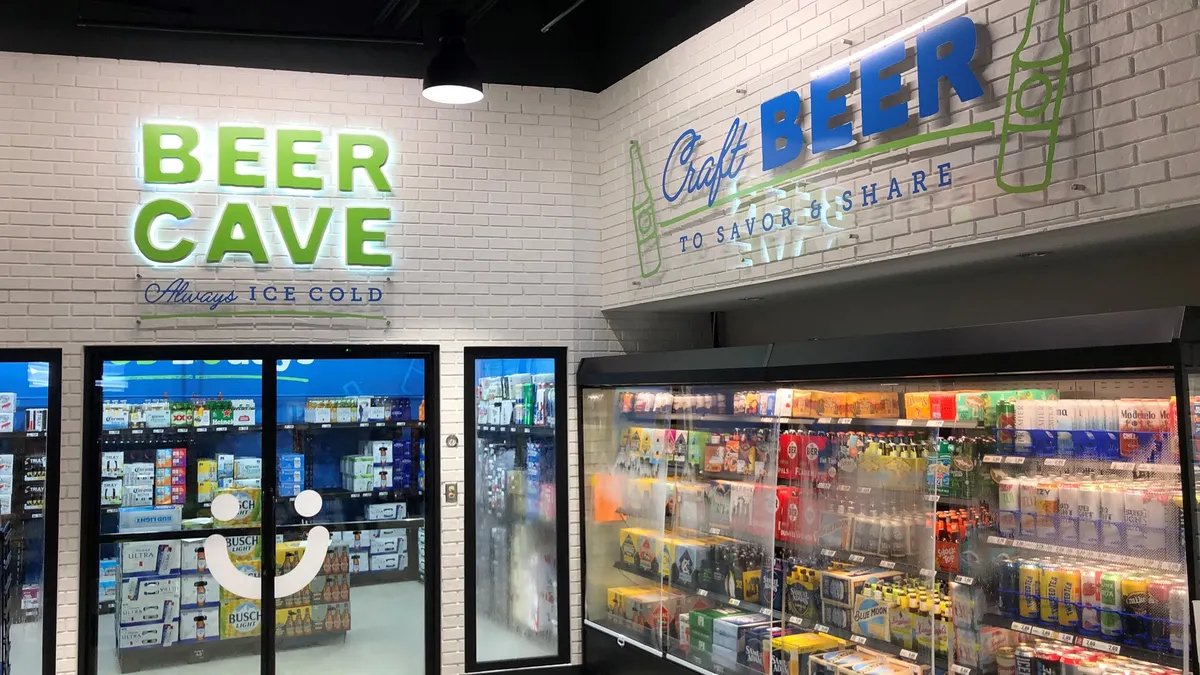
Convenience stores, particularly smaller operators, have little room for error. Margins are often razor-thin, meaning every inch of shelf space has to justify its place. Removing the wrong product or adding an item that does not fit customer demand can result in more than a missed sale. For some retailers, it could mean losing a customer altogether.
Sandeep Chugani, managing director and senior partner at Boston Consulting Group, said in an email to C-Store Dive that BCG research into service stations identified several of the main reasons customers choose these locations: getting in and out quickly, meeting an impulse need and being able to find the few products they came in for.
That makes assortment planning particularly important. Yet the products that perform well can differ significantly not only between towns, but also from one individual store to another. The challenge is becoming even greater as convenience stores dedicate increasing amounts of valuable space to expanding their foodservice operations.
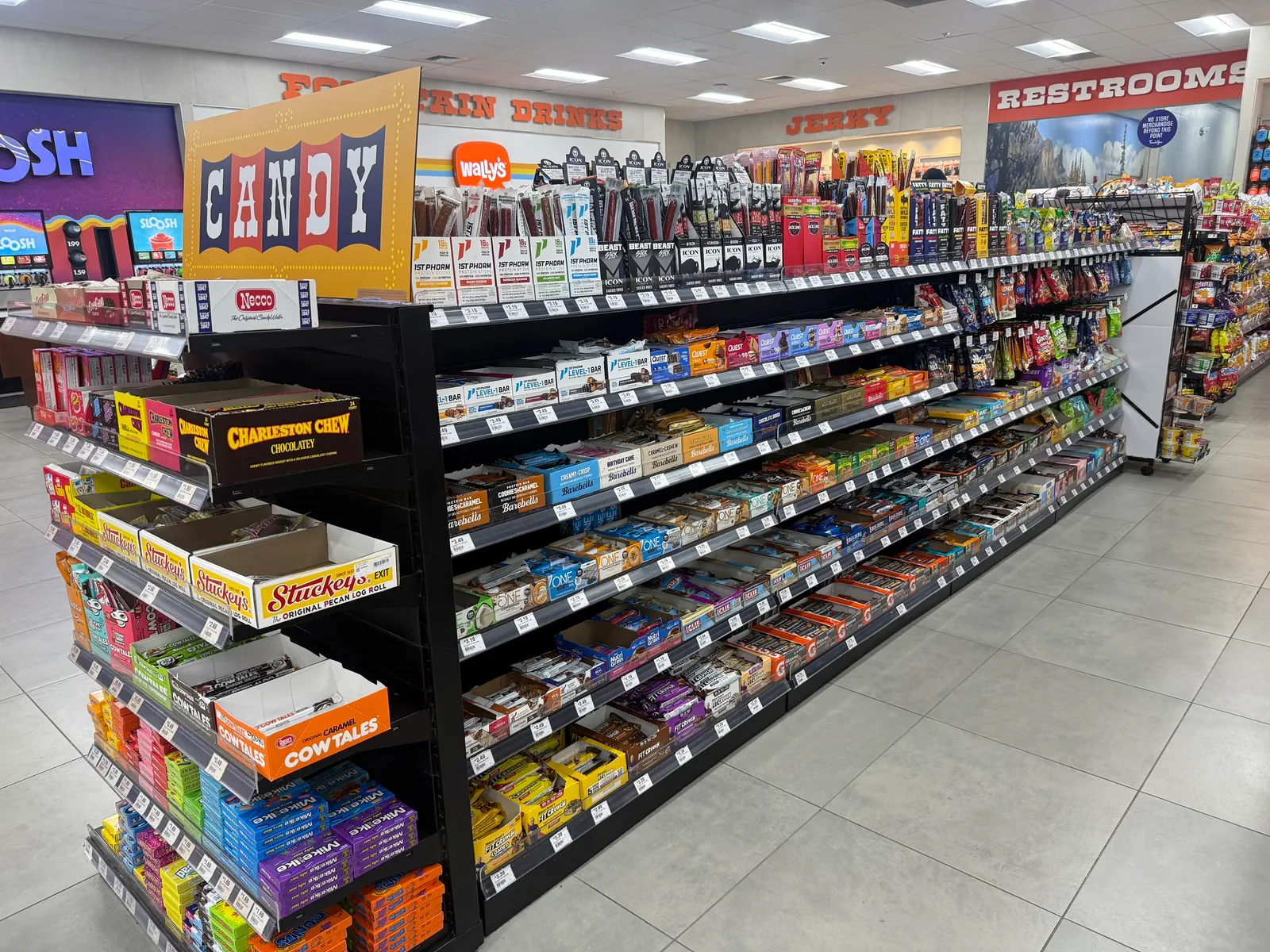
A growing range of artificial-intelligence-powered tools is now helping retailers optimize their assortments using increasingly precise, data-driven insights. Instead of reviewing product performance periodically and looking backward at what happened, retailers can use these systems to make assortment decisions on an ongoing basis.
As the technology becomes more widespread, experts are offering guidance on how convenience stores and especially independent operators can make the most effective use of AI and other technologies for SKU rationalization.
How do retailers pick the right technology?
For retailers considering AI to support merchandising decisions, the starting point should not necessarily be the technology itself. The first step is to understand how assortment decisions are currently being made: who is responsible for them, how frequently they are reviewed and which data is used to make those decisions.
Once that process is clear, operators can determine which parts would benefit most from technological support.
A retailer does not necessarily need an entire assortment and category-management technology suite. Jon Kuether, a partner at Bain & Company in the retail and performance improvement practices, told C-Store Dive that some operators may be better served by selecting only the capabilities that deliver most of the desired results without the expense of a complete platform.
“You don’t always need the Cadillac when the Honda Civic would do,” Kuether said.
Before selecting a particular tool, however, retailers need to ensure that it can connect with their existing systems and financial data. Kuether described that integration as being “just as critical as selecting the right technology.”
That process is becoming easier as cloud-based solutions increasingly connect with existing point-of-sale systems. These platforms can provide capabilities such as analytics-driven item selection, product layouts and promotional scheduling, according to Clementine Illanes, who leads retail strategy merchandising at Accenture.
“Large, multi-chain c-stores may be able to invest in more advanced AI, real time inventory systems and automated replenishment capabilities, while independent operators may see stronger returns from more targeted, flexible assets that address immediate pain points,” Illanes said in an email to C-Store Dive.
What does the financial outlay and return look like?
The technology supporting stocking and assortment decisions is also becoming more accessible from a cost perspective.
One example is electronic shelf labels, which can make changes to product placement and stocking easier and faster. According to Chugani, their cost fell by 67% between 2015 and 2025.
Lower hardware costs have reduced some of the financial gap between large and small operators, although they have not eliminated the difference entirely.
According to Venky Ramesh, chief client officer and head of the CPG, retail and marketplaces divisions at LatentView Analytics, moving from periodic, backward-looking assortment reviews to data-backed planning generally produces a 2%–5% improvement in margins.

The main improvements typically come from reducing out-of-stocks, matching shelf space more effectively with product velocity and limiting waste, Ramesh added.
For retailers undertaking a focused assortment redesign that includes the adoption of new technologies, the potential sales impact can also be meaningful. Kuether said such efforts typically generate a 1%–3% increase in sales — a significant opportunity at a time when convenience stores are dealing with slowing unit growth.
Independent operators, however, may still need support from their suppliers or franchisor networks to make software, integration and ongoing technical support financially viable. Unlike large chains, smaller operators generally do not have the scale to develop and maintain these capabilities independently, Chugani said.
How much can the technology be relied upon?
AI can process large volumes of sales data, identify patterns, highlight underperforming products and point out gaps in an assortment. But the final decision over whether a product should be added or removed remains a responsibility for the merchant.
“AI can get you to a great recommendation, but a human is going to need to layer in their judgment before making the final call,” Kuether said.
Once that decision has been made, however, parts of the process can be fully automated. Chugani said technology can ensure that the selected products are ordered and ultimately placed on the shelves.
There are also factors that AI cannot fully assess. A system cannot negotiate cost terms with a supplier, determine how much marketing support a particular brand might provide or properly weigh a relationship that store leaders may have developed over many years.
For that reason, business leaders should establish clear rules governing when employees can override an AI recommendation and when such decisions require approval from senior management.
“The best retailers are going to still have the merchant making the decisions but with a much more data-driven, insight-led sort of recommendation that they otherwise would not have gotten to,” Kuether said.
What pitfalls should retailers watch out for?
There are several common mistakes retailers should avoid when implementing technology for assortment management.
The first is adopting a system that can identify a problem but cannot provide practical recommendations for solving it.
“If your tech stack tells an associate there’s a problem but not what to do about it, and in what order, you haven’t solved anything,” Chugani said.
In other words, simply highlighting an assortment gap is not enough. The technology needs to help employees determine which action should be taken and how those actions should be prioritized.
Another concern is the so-called “black box” recommendation, Kuether said. When store leaders cannot understand why a system has recommended adding, removing or changing a product, they may quickly lose confidence in the technology.
In that situation, Kuether said, users can simply disregard the recommendations and return to traditional methods.
“[They] just put it aside and say ‘this is garbage, I’m gonna do it the old-fashioned way,’” Kuether said.
Perhaps most importantly, assortment technology should be treated as a merchandising initiative rather than simply an IT project.
That requires buy-in from multiple parts of the organization. Ramesh noted that the return on investment from AI-assisted assortment technology can quickly diminish if employees do not execute the recommendations properly. For example, if workers fail to reset shelves on time, the expected benefits of better assortment planning may not materialize.
Ultimately, the technology still has to serve the customer.
“Ultimately, having the right insights and data around what the customer is looking for at specific locations, at specific times of day, times of year, that is what is going to deliver the results,” Kuether said.