



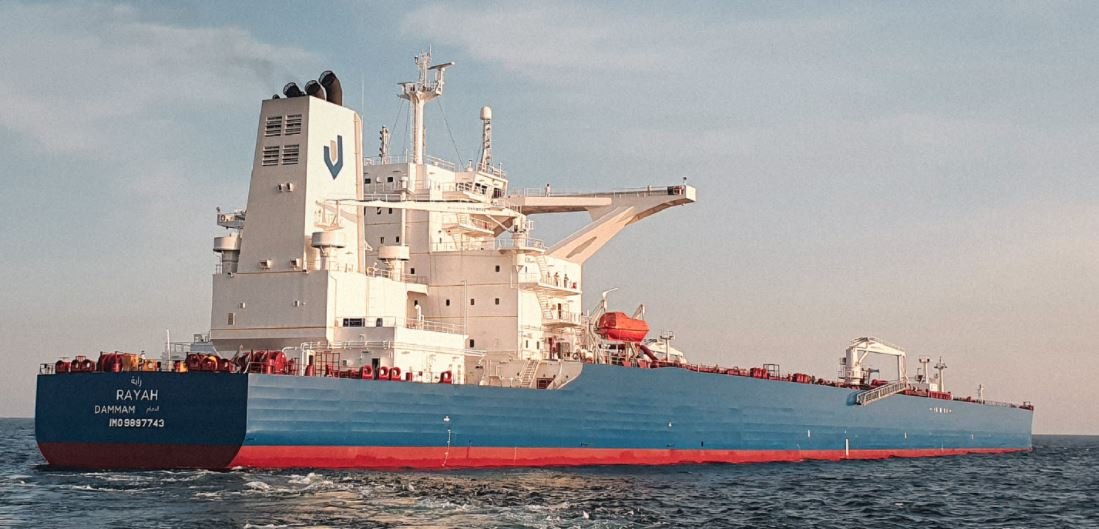
Bahri has confirmed that two Filipino seafarers were killed when its very large crude carrier (VLCC) Sidr came under attack in the Strait of Hormuz on 31 August.
According to the UK Maritime Trade Operations (UKMTO), the incident occurred at 20:50 UTC. Bahri expressed its condolences to the families, friends and colleagues of the two victims and said it was providing full support to those affected by the incident.
“Bahri maintains continuous contact with the vessel and is co-ordinating closely with the relevant authorities and stakeholders in the maritime sector while closely monitoring developments,” the company said in a post on X.
The attack is the latest in a series of incidents involving commercial vessels transiting the Strait of Hormuz, as Iran increases pressure on shipping using the southern corridor near Oman.
Just one day earlier, on 30 August, the VLCC Senegal Prosperity was struck three times by rockets while sailing through the Strait. The vessel has since been abandoned and is listing.
The attacks have followed a series of other incidents involving tankers in the strategic waterway.
On 26 August, the tanker Burgan was struck by an unidentified projectile in its starboard aft ballast tank while transiting the Strait westbound.
On 25 August, the tanker Al Salam II was hit by an unknown projectile, triggering a fire on board. The crew subsequently managed to extinguish the blaze.
A day earlier, on 24 August, the Liberian-flagged Aframax Metro Venetian was struck while using the Omani route through the Strait of Hormuz. The incident caused a fire in the engine room and left the vessel disabled.
The latest casualties come as Iran also expands its list of vessels it says have breached its rules governing passage through the Strait.
The Persian Gulf Strait Authority (PGSA) has added 11 vessels to a previous list of 45 ships that it alleges have violated Iranian transit regulations. The expanded list now covers 56 vessels, with Iran threatening ships on the list with detention, confiscation or fines.
Most of the newly added vessels are owned by companies based in neighbouring countries across the region.
Four of the vessels are owned in the UAE, including two operated by ADNOC Logistics & Services. Vessels belonging to the company have already been repeatedly targeted during incidents in the Strait.
Four additional vessels are owned by Saudi Arabian companies, including three belonging to Bahri.
The growing number of attacks and the expansion of Iran’s non-compliant vessel list are adding further uncertainty for commercial shipping operating through one of the world’s most strategically important maritime chokepoints.