



As fuel prices in the United States climb to new highs, interest is growing around the possibility of using nuclear power to supply commercial vessels and portside infrastructure through small modular reactors (SMRs).
The issue is expected to feature prominently at the upcoming annual convention of the American Association of Port Authorities (AAPA), scheduled to take place in New Orleans at the end of September. For ports and carriers, the discussion is not limited to propulsion: SMRs could also be considered as a source of reliable electricity for landside infrastructure.
In mid-May, the US Maritime Administration (MARAD) issued a request for information (RFI) seeking input on “a single vessel or technology demonstration”. The agency specifically requested comments on system architecture, liability frameworks, insurance pathways, port acceptance, workforce development and the integration of relevant standards.
Over recent months, Maritime Administrator Captain Stephen Carmel has used several public appearances to outline MARAD’s efforts to support a possible transition towards nuclear power in shipping.
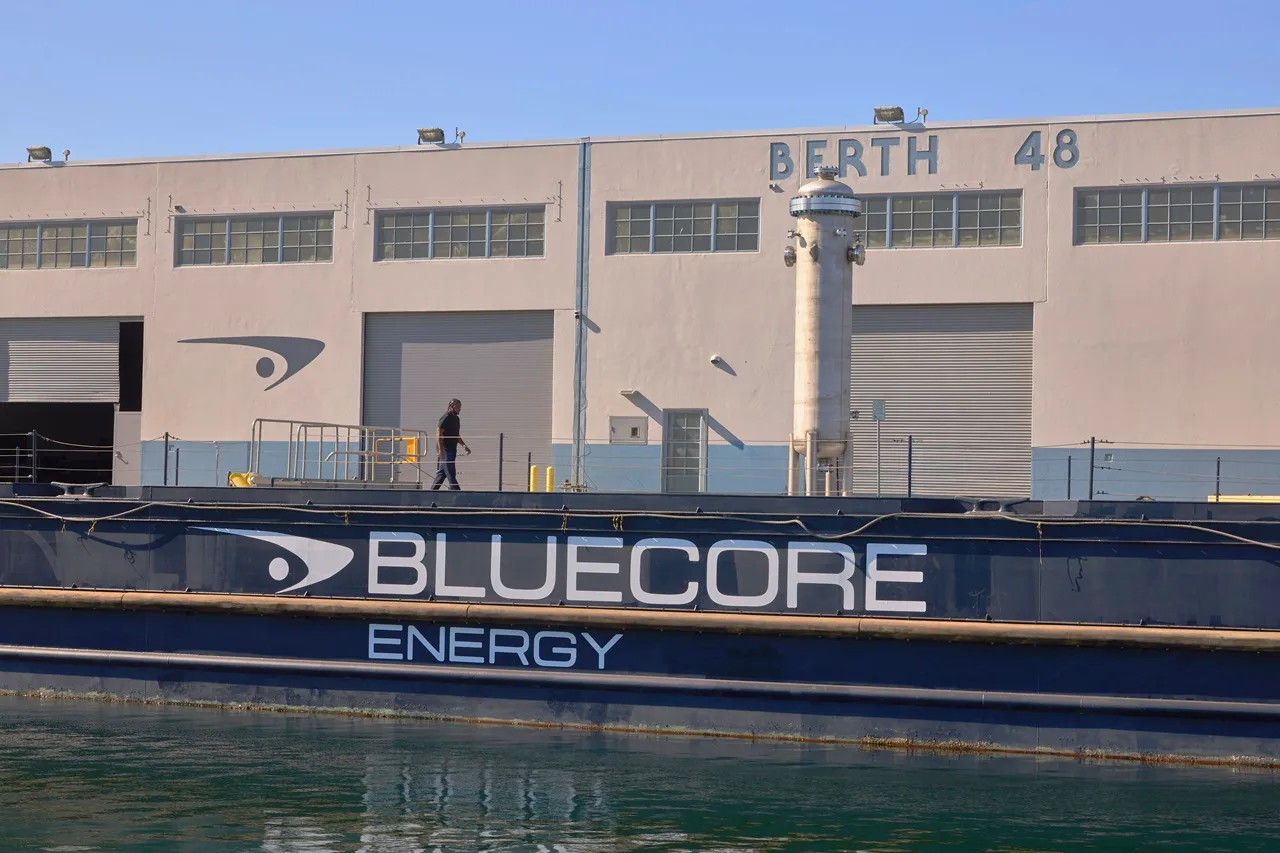
That push was illustrated again late last week during Carmel’s visit to the Port of Long Beach (POLB), where he met senior port officials and toured Cape Island, a US ready reserve roll-on/roll-off vessel. He also met representatives of Bluecore Energy, a company specialising in floating SMR technology and based at the Port of Long Beach.
The visit came as Bluecore announced that it is raising $50 million in a funding round led by Silverton Partners, an early-stage investment firm. Silverton said the combination of established water-cooled reactor technology and a floating modular platform could potentially create a new market for nuclear energy.
AAPA is also placing ports at the centre of the discussion. Its upcoming convention panel, which will include POLB Executive Director Dr Noel Hacegaba, is set to examine how ports could become launchpads for small modular reactors, while securing a dependable energy source and potentially strengthening the United States’ position in shipbuilding and port development.
In its comments submitted to the MARAD RFI, AAPA highlighted two infrastructure priorities. The organisation said MARAD and other relevant federal agencies should adopt a technology-inclusive approach when developing rules and policies for SMRs. It also argued that the federal government should give landside and floating SMRs the same level of attention as incentives aimed at using SMRs for vessel propulsion.
The shipping industry itself is also weighing in.
US shipowner Liberty Global Logistics, a major carrier of government-impelled cargoes, said rapid deployment of SMR propulsion on commercial vessels could directly contribute to the International Maritime Organization’s (IMO) objective of cutting carbon dioxide intensity by 20% by 2030 and achieving net-zero emissions by 2050.
At the same time, EXMAR Offshore Energy, a Houston-based entity within the EXMAR Group that is examining floating nuclear power generation rather than propulsion, stressed that SMR technology remains at an early stage, although its maturity is increasing alongside a growing range of potential applications.
The company pointed to OPTI, its proprietary hull design already widely used in the offshore industry. Under this concept, SMR installations could operate as offshore floating nuclear power plants (FNPPs), moving reactors away from onshore or nearshore sites to locations several miles offshore.
Such facilities would be permanent installations designed for long-term operations on floating platforms moored in deep water. EXMAR Offshore Energy said they would be designed to withstand severe weather and hurricane conditions, while electricity could be transmitted to shore through submarine cables.
The challenges, however, extend well beyond reactor technology.
MARAD’s RFI acknowledges that implementation would require coordination with the Department of Energy, the Nuclear Regulatory Commission, the Department of Homeland Security, including the US Coast Guard, the Department of War, and other relevant federal agencies. Any action would also have to comply with applicable financial, budgetary and statutory frameworks.
MARAD further stressed that, in keeping with longstanding US maritime practice, future measures resulting from the RFI would need to align with international standards, protocols and development processes. That includes engagement through the IMO and relevant frameworks under the International Convention for the Safety of Life at Sea (SOLAS).
One of the most significant areas of uncertainty is liability.
The International Group of P&I Clubs raised the issue sharply in its response to the RFI, noting that there is currently no operative international liability regime or bilateral agreement specifically covering nuclear propulsion reactors.
The Group said it has established a Nuclear Committee to examine the issues associated with nuclear-powered vessels. It also argued that, should MARAD seek to support the scalable deployment of SMRs in commercial shipping, developing appropriate liability frameworks must be central to the process.
For the maritime industry, the growing US interest in SMRs therefore opens a potentially significant avenue for decarbonisation, but the path towards commercial deployment will depend not only on reactor technology. Port acceptance, regulation, insurance, workforce preparation, international rules and nuclear liability will all have to be addressed before the concept can move from demonstration projects to wider use.