


• Latest
  • Trending
US House Votes to Block California Port Emission Rules

US House Votes to Block California Port Emission Rules

September 21, 2026
Postal operators cut CO₂ emissions 41% since 2008

Postal operators cut CO₂ emissions 41% since 2008

September 21, 2026
DHL launches AI tool TradeNavigator to turn customs data into actionable trade intelligence

DHL launches AI tool TradeNavigator to turn customs data into actionable trade intelligence

September 21, 2026
ADVERTISEMENT
VLCC Newbuilding Order Surge Faces a Sharp Capacity Constraint

VLCC Newbuilding Order Surge Faces a Sharp Capacity Constraint

September 21, 2026
Tanker Owners Turn to Gulf of Oman STS Transfers as Rates Reach New Heights

Tanker Owners Turn to Gulf of Oman STS Transfers as Rates Reach New Heights

September 21, 2026
Emirates Shipping Line to Stop Accepting Waste Plastics

Emirates Shipping Line to Stop Accepting Waste Plastics

September 21, 2026
Container and VLCC Rates Surge as Hormuz Risks Escalate

Container and VLCC Rates Surge as Hormuz Risks Escalate

September 21, 2026
Asia-US Container Rates Could Challenge Pandemic-Era Peaks

Asia-US Container Rates Could Challenge Pandemic-Era Peaks

September 21, 2026
Amazon’s Future Freighter Fleet Takes Shape Around the Airbus A330

Amazon’s Future Freighter Fleet Takes Shape Around the Airbus A330

September 18, 2026
Union Pacific pushes back against rival railroads’ trackage rights demands

Union Pacific pushes back against rival railroads’ trackage rights demands

September 18, 2026
Tesla targets end-2027 Europe deliveries for the Semi

Tesla targets end-2027 Europe deliveries for the Semi

September 18, 2026
Diesel Prices Surge Past $6.28 Per Gallon

Diesel Prices Surge Past $6.28 Per Gallon

September 18, 2026
3 tips from Chewy’s COO on gaining a last-mile delivery edge

3 tips from Chewy’s COO on gaining a last-mile delivery edge

September 18, 2026
  • Home
  • About Us
  • Press Room
  • Podcasts
  • Media Kit
  • Contact Us
  • Careers
Monday, September 21, 2026
  • Login
  • Register
The Logistic News
  • Logistic
  • Air
  • Maritime
  • Land
  • World
  • Business
  • Tech
  • Events
  • Advertise
No Result
View All Result
  • Logistic
  • Air
  • Maritime
  • Land
  • World
  • Business
  • Tech
  • Events
  • Advertise
No Result
View All Result
The Logistic News
No Result
View All Result
Home Business

US House Votes to Block California Port Emission Rules

Lawmakers have moved to overturn California’s federally authorised vessel-emission requirements, putting billions of dollars in compliance costs and potential health benefits at the centre of a growing shipping policy dispute.

The Logistic News by The Logistic News
September 21, 2026
in Business, Logistic, Maritime
Reading Time: 3 mins read
0
US House Votes to Block California Port Emission Rules
ADVERTISEMENT

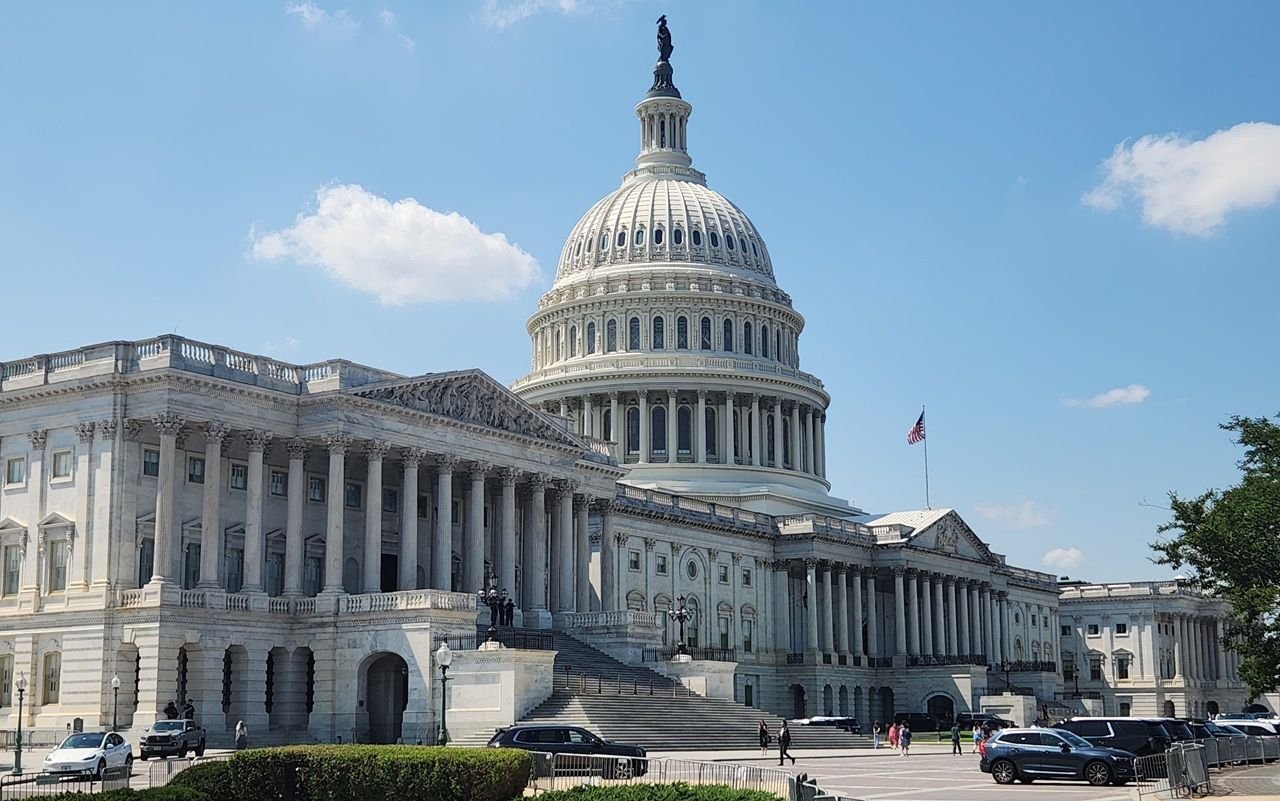
The U.S. House of Representatives has voted to overturn the federal authorisation that allows California to enforce its emissions requirements for oceangoing vessels while they are berthed at ports in the state.

The measure, House Joint Resolution 210, passed on September 15 by a vote of 216-211. Sponsored by Representative Vince Fong, Republican of California, the resolution was introduced in August under the Congressional Review Act. It seeks to invalidate the Environmental Protection Agency’s October 2023 authorisation of California’s expanded Ocean-Going Vessels At-Berth Regulation.

The resolution would still need to pass the Senate and receive the President’s signature before it could take effect.

ADVERTISEMENT

The federal authorisation gives the California Air Resources Board (CARB) authority to apply stringent emissions-control requirements to vessels operating at berth, including containerships, refrigerated cargo vessels, roll-on/roll-off ships and tankers. Under the regulation, operators must reduce diesel emissions by connecting vessels to the electrical grid while in port, using state-approved emissions-control technology, or contributing to a remediation fund. Non-compliant vessels can face penalties of about $50,000 per ship per day.

Billions in compliance costs and health benefits

Fong argued during the debate that the financial impact of the rules would extend beyond shipping companies and could ultimately move through the wider supply chain to consumers.

California’s financial analysis estimates that infrastructure, administrative and other compliance costs for vessel operators, ports and terminals could total about $2.3 billion through 2032. At the same time, the state has estimated health-related benefits at approximately $2.64 billion. California’s regulatory analysis has also identified major reductions in pollution-related health impacts as a key benefit of the programme.

The House debate also focused heavily on fuel prices, which have risen sharply in California and across the United States.

Representative Kevin Kiley, an independent from California, said he was supporting the resolution because of concerns that additional requirements could contribute to higher fuel prices. He pointed to California’s statewide average approaching $6 per gallon and argued that residents already face high living costs.

The resolution has received support from the American Petroleum Institute, the Western States Petroleum Association and the National Association of Manufacturers. Vessel-operator representatives were contacted for comment.

Democrats challenge the measure

Democratic lawmakers opposed the resolution and argued that removing the requirements would increase reliance on diesel rather than reducing emissions at ports.

Representative Zoe Lofgren, Democrat of California, questioned how encouraging ships to use diesel could help households facing high costs.

During the debate, Democrats also linked elevated fuel prices to the war involving Iran and argued that plugging ships into shore-side electricity can be less costly for operators than running engines on marine diesel while alongside.

Lofgren said diesel prices had reached as high as $8.99 per gallon at one station she had recently passed and argued that oil and gas companies, rather than households, would be among the principal beneficiaries of removing California’s rules.

The House action forms part of a broader 2026 congressional effort concerning California’s authority to impose emissions requirements on maritime and other mobile sources. The EPA said in July that it had transmitted California waiver rules covering marine vessels and ports to Congress for review under the Congressional Review Act.

California, meanwhile, continues to defend the environmental and public-health rationale behind its At-Berth Regulation. CARB said its 2020 regulation was designed to reduce pollution from ocean-going vessels while they are docked at the state’s busiest ports and estimated substantial health benefits from the resulting emissions reductions.

The House vote therefore leaves the future of California’s port-emissions framework pending in the Senate, while the debate continues to centre on how the rules should balance vessel operating costs, fuel use, supply-chain impacts and emissions and health objectives.


Previous Post

Asia-US Container Rates Could Challenge Pandemic-Era Peaks

Next Post

Container and VLCC Rates Surge as Hormuz Risks Escalate

Next Post
Container and VLCC Rates Surge as Hormuz Risks Escalate

Container and VLCC Rates Surge as Hormuz Risks Escalate

Leave a Reply Cancel reply

Your email address will not be published. Required fields are marked *

A D V E R T I S E M E N T

Popular News

  • Drone Delivery Takes Flight: Amazon Partners with UPS for Trial Program

    Drone Delivery Takes Flight: Amazon Partners with UPS for Trial Program

    0 shares
    Share 0 Tweet 0
  • Rail Cargo Group Strengthens European Network with Captrain Netherlands Acquisition

    0 shares
    Share 0 Tweet 0
  • Automotive Inbound Logistics Market: Navigating Future Challenges

    0 shares
    Share 0 Tweet 0
  • Global Inflation Cools to Target After Three Years, Central Banks Face Policy Dilemma

    0 shares
    Share 0 Tweet 0
  • Dubai Mercantile Exchange Rebrands as Gulf Mercantile Exchange Following Saudi Tadawul Group Acquisition

    0 shares
    Share 0 Tweet 0

Recent News

Postal operators cut CO₂ emissions 41% since 2008

Postal operators cut CO₂ emissions 41% since 2008

September 21, 2026
DHL launches AI tool TradeNavigator to turn customs data into actionable trade intelligence

DHL launches AI tool TradeNavigator to turn customs data into actionable trade intelligence

September 21, 2026
VLCC Newbuilding Order Surge Faces a Sharp Capacity Constraint

VLCC Newbuilding Order Surge Faces a Sharp Capacity Constraint

September 21, 2026

Discover a new era of logistics reporting with The Logistic News, your go-to platform for breaking news, insightful features, and exclusive interviews shaping the global logistics and freight landscape. Trust us to deliver accurate, timely, and relevant information that empowers professionals and enthusiasts alike in navigating the intricacies of this vital sector.

Navigation

  • Home
  • About Us
  • Press Room
  • Podcasts
  • Media Kit
  • Contact Us
  • Careers
  • Privacy Policy
  • Terms of Use

© 2024 - thelogisticnews.com

Welcome Back!

Login to your account below

Forgotten Password? Sign Up

Create New Account!

Fill the forms below to register

All fields are required. Log In

Retrieve your password

Please enter your username or email address to reset your password.

Log In

SIgn Up Newsletter

This will close in 20 seconds

Manage Cookie Consent
We use technologies like cookies to store and/or access device information. We do this to improve browsing experience and to show (non-) personalized ads. Consenting to these technologies will allow us to process data such as browsing behavior or unique IDs on this site. Not consenting or withdrawing consent, may adversely affect certain features and functions.
Functional Always active
The technical storage or access is strictly necessary for the legitimate purpose of enabling the use of a specific service explicitly requested by the subscriber or user, or for the sole purpose of carrying out the transmission of a communication over an electronic communications network.
Preferences
The technical storage or access is necessary for the legitimate purpose of storing preferences that are not requested by the subscriber or user.
Statistics
The technical storage or access that is used exclusively for statistical purposes. The technical storage or access that is used exclusively for anonymous statistical purposes. Without a subpoena, voluntary compliance on the part of your Internet Service Provider, or additional records from a third party, information stored or retrieved for this purpose alone cannot usually be used to identify you.
Marketing
The technical storage or access is required to create user profiles to send advertising, or to track the user on a website or across several websites for similar marketing purposes.
Manage options Manage services Manage {vendor_count} vendors Read more about these purposes
View preferences
{title} {title} {title}
No Result
View All Result
  • Logistic
  • Air
  • Maritime
  • Land
  • World
  • Business
  • Tech
  • Events
  • Advertise

© 2024 - thelogisticnews.com