



With Saudi Arabia’s East-West pipeline out of service following drone attacks and the Red Sea port of Yanbu effectively closed, Middle East oil flows have once again shifted toward the Arabian Gulf.
Tanker traffic through the Strait of Hormuz has picked up somewhat over the past few days. However, cargo volumes moving from the Gulf toward both eastern and western markets remain well below normal levels.
That shortfall is prompting tanker owners to adopt a more complicated alternative: ship-to-ship (STS) transfers in the Gulf of Oman. Local reports indicate that large numbers of tankers are now waiting in the area, with one source describing the vessels as stretching “as far as the eye can see.”
Clarkson Research Services reported earlier in September that around 15% of the global VLCC fleet was sitting off Oman, compared with 10% at the beginning of July.
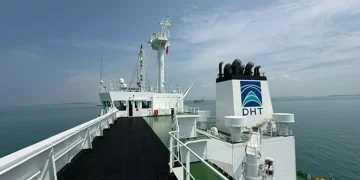
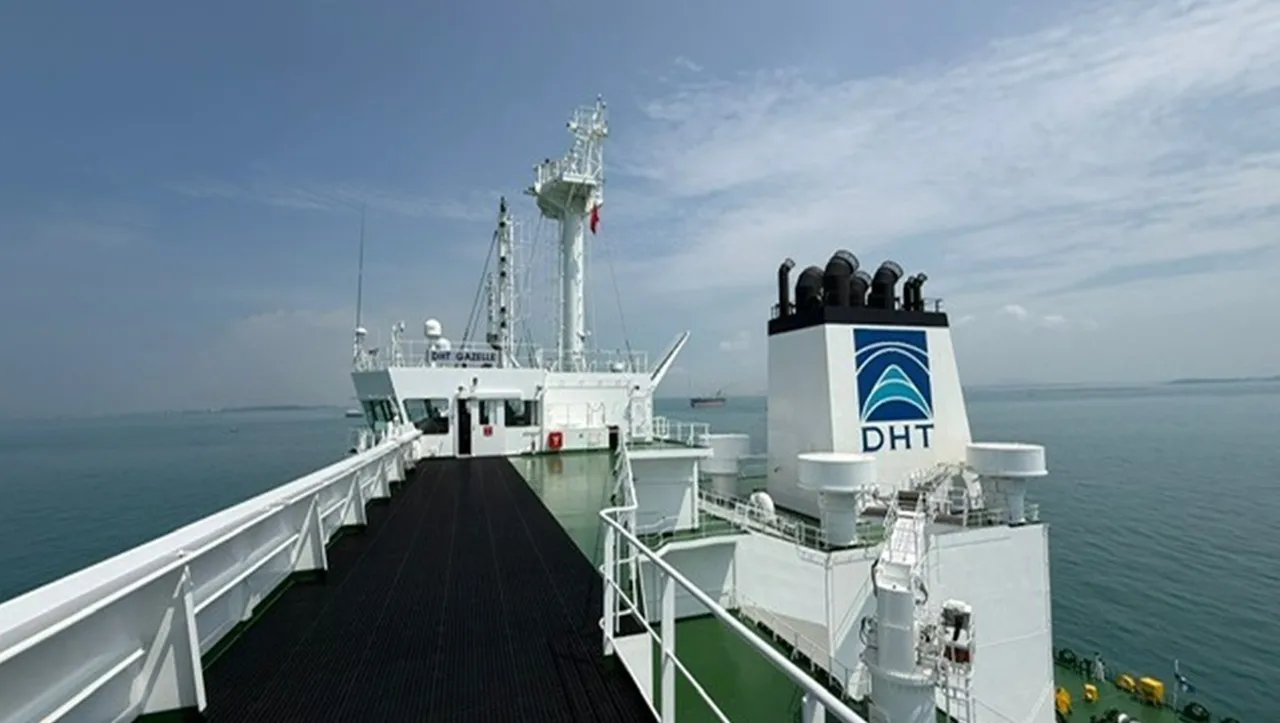
The exceptional freight market is adding to the attraction. On September 17, Tankers International reported that the 2018-built DHT Holdings VLCC DHT Bronco had been fixed by ExxonMobil for an Arabian Gulf-Singapore voyage at $740,000 per day.
On the same day, the 2016-built AMCL VLCC New Caesar was reported fixed to Vitol, loading in the Gulf of Oman for a China voyage, at $830,000 per day.
STS transfers are taking place under relatively benign conditions at present. Weather in the area today is slight to calm, at Beaufort Force 1 to 2. However, experienced mariners familiar with the waters are warning that conditions can change rapidly.
Forecasts show winds strengthening later on Monday, with gusts reaching the equivalent of Beaufort Force 3-4 and wave heights rising to as much as two metres.
STS operations can technically continue at Force 4, which is defined as a moderate breeze with winds of 11-16 knots. The concern is that conditions can deteriorate sharply: mariners familiar with the Gulf of Oman say Force 4 weather can quickly intensify into Force 6 within only a few minutes.
For tanker masters caught in the middle of an STS operation, such a sudden deterioration could leave both vessels in a potentially dangerous situation.
From the perspective of tanker owners operating from shore, STS transfers in the Gulf of Oman offer a practical workaround. The approach allows them to avoid some of the hazards associated with transiting Hormuz, while also reducing the potential exposure of their vessels to damage.
But the strategy cannot replace the volumes of crude normally required to supply energy markets in both eastern and western destinations. The amount of oil that can be moved through these STS operations is expected to remain far below what is needed in the weeks ahead.
As a result, the pressure on energy markets is likely to remain intense, with energy prices continuing to rise in the coming days.
Tanker freight rates were still climbing toward the end of last week. According to the Baltic Exchange market report published on September 18, rates for the TD3C route from Ras Tanura to Ningbo, China, surged to an all-time high of more than $1.2 million per day.
At the same time, the Gulf of Oman-China TD34 index continued to strengthen. Its round-trip timecharter equivalent rate reached almost $871,000 per day.