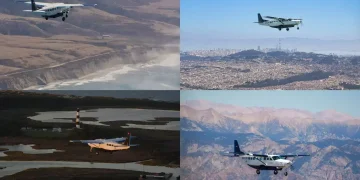




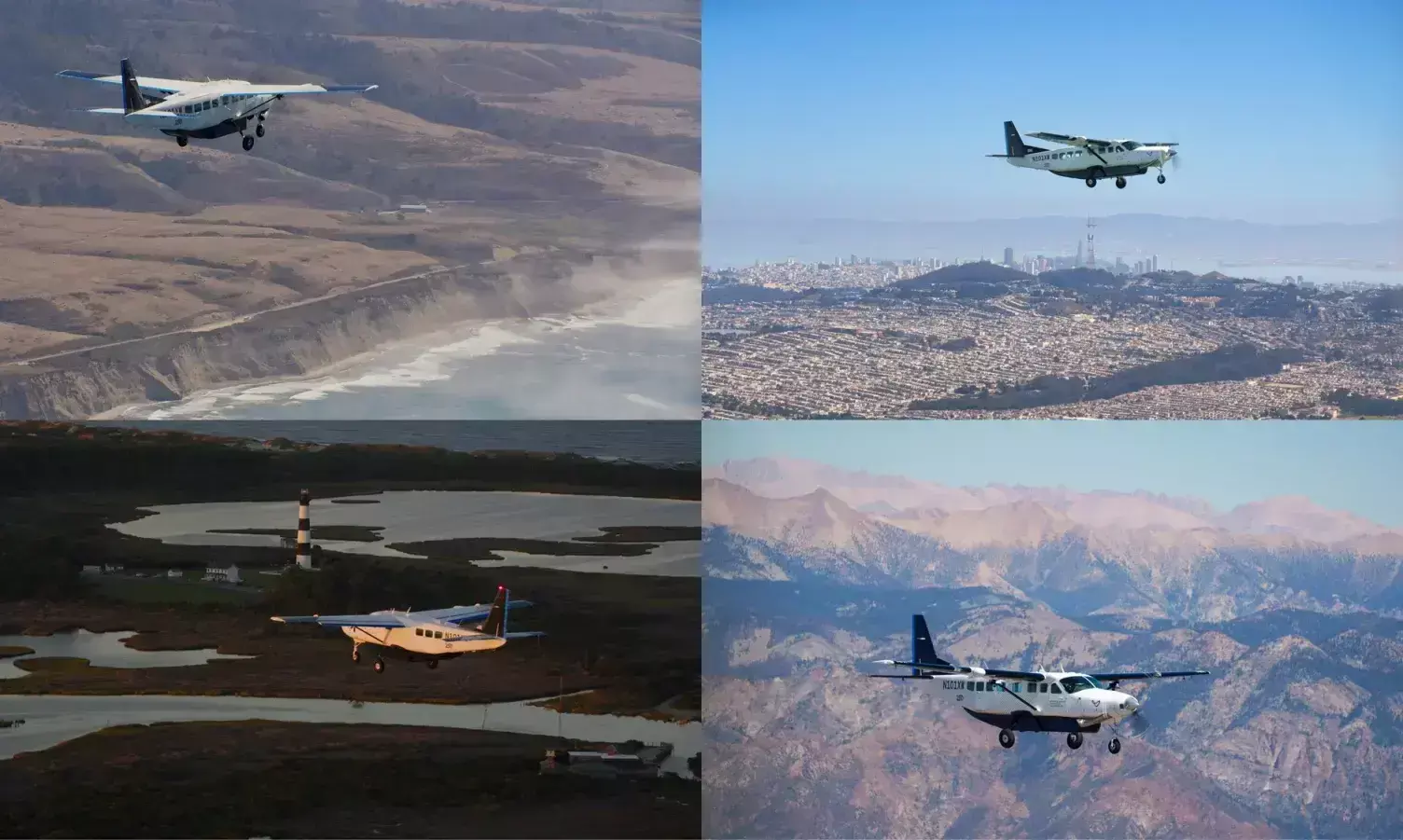
Joby Aviation has completed what it describes as the first autonomous flight across the United States, using a converted Cessna Caravan to demonstrate the capabilities of its autonomous flight technology.
The aircraft covered 3,199 miles on the eastbound leg of a month-long cross-country tour. Throughout the flight, taxiing, takeoffs, navigation and landings were completed without control inputs from the onboard safety pilot. The aircraft was instead supervised remotely from Joby’s Autonomy Headquarters in California and Shaw Air Force Base in South Carolina, with the two supervision locations positioned as far as 2,323 miles from the aircraft.
The demonstration underlined the potential of autonomous aircraft for commercial freight, medical transportation, disaster response and defence logistics. By integrating its autonomous system into an already-certified aircraft, Joby said it is creating a scalable route toward autonomous air logistics operations.
During the journey, the aircraft operated in high-density aviation environments, including Phoenix Deer Valley, one of the busiest general aviation airports in the United States. It also demonstrated real-time rerouting around severe weather and thunderstorms, despite having no prior familiarity with the airports involved.
The eastbound journey concluded in North Carolina’s Outer Banks, close to the location where the Wright brothers conducted the first powered flight.
JoeBen Bevirt, Founder and CEO of Joby Aviation, said the journey demonstrated how autonomy could contribute to the future of aviation, from connecting remote communities and delivering critical supplies to responding to disasters and supporting military operations while reducing the need to put pilots in harm’s way.
Completed eastbound milestones
The eastbound leg formed part of Joby’s 2026 Electric Skies tour, which combined flight demonstrations, logistics showcases and operational milestones at several locations across the United States.
The aircraft departed from Buchanan Field Airport in Concord, California, launching the 3,199-mile autonomous transcontinental flight.
In Phoenix, Arizona, Joby demonstrated dual-use autonomy technologies aimed at defence, first responders and cargo operations through the uFLY coalition.
At Alliance Airport in Fort Worth, Texas, the company demonstrated the potential of autonomous freight operations at a major industrial logistics hub. The stop also marked Joby’s first air taxi eIPP flight under the White House-backed programme.
The aircraft then reached Shaw Air Force Base in South Carolina, where Joby demonstrated representative military flight operations and tactical defence capabilities.
The eastbound leg ended with an autonomous landing at Dare County Regional Airport in North Carolina’s Outer Banks, completing the transcontinental flight.
Honoring aviation history at Kitty Hawk while expanding remote access
After arriving in North Carolina, Joby’s J208 aircraft conducted a low pass near the First Flight Monument at Kitty Hawk, commemorating the Wright brothers’ first powered flight in 1903.
The aircraft subsequently landed at Dare County Regional Airport, providing another demonstration of how autonomous aircraft could support flexible and lower-cost point-to-point air logistics. Potential applications include transporting medical supplies and emergency freight to remote and underserved communities.
The North Carolina flights supported NCDOT’s eLIFT-NC initiative, which focuses on statewide healthcare logistics.
Earlier flights in the western United States contributed to UDOT’s multi-state uFLY coalition. The initiative is evaluating how high-altitude and extreme-environment operations could be integrated into airspace managed by the Federal Aviation Administration (FAA).
Proven operational track record
Joby said its autonomous technology has now completed more than 400 flights and 800 hours of automated flight operations across both controlled and uncontrolled airspace.
The system builds on autonomy technology acquired from Xwing in 2024 and has also been tested during three major US military exercises.
During the Air Force’s Agile Flag exercise, the technology delivered critical replacement parts 24 hours faster than conventional logistics. During REFORPAC, meanwhile, aircraft operating in Hawaii were remotely controlled from Guam, nearly 4,000 miles away.
Following completion of the eastbound journey, the aircraft will begin its return westbound route. Planned stops include Raleigh, Fredericksburg/Washington, D.C., Louisville, Wichita, Oklahoma City, Salt Lake City and Portland.
California-based Joby Aviation is developing aircraft, propulsion systems and autonomous flight technologies for commercial and defence applications. The company also operates Blade, an urban air mobility business providing passenger transportation services in the United States and Europe.