




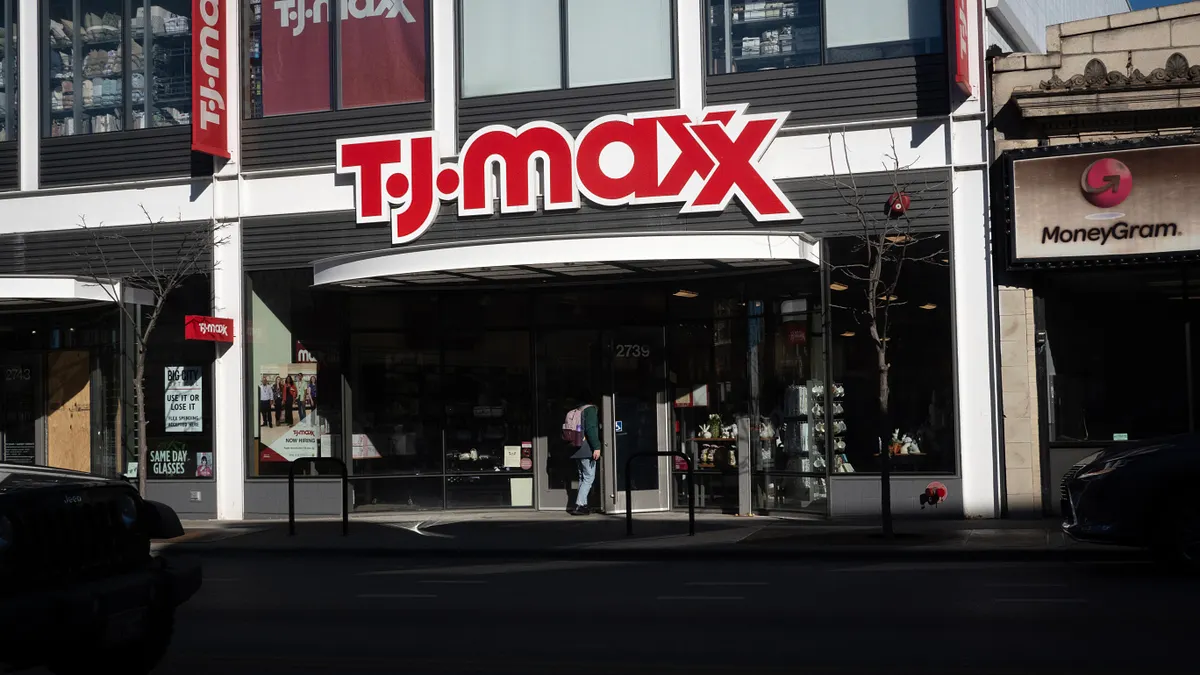
TJX Companies believes its distribution model gives the off-price retailer added flexibility to manage weather-related disruptions, including potential effects from El Niño, CEO Ernie Herrman said during the company’s second-quarter earnings call on August 19.
Herrman said TJX can maintain greater control over its inventory and shipping because merchandise is staged in warehouses rather than being immediately dispatched to stores. That flexibility becomes particularly valuable when the company anticipates unusual weather in a specific region.
Under the model, inventory does not have to move directly from distribution centers to stores. TJX can instead keep goods in its warehouses and adjust the flow depending on changing conditions.
“This is a benefit of our model where we stage goods in our warehouses versus goods at most brick-and-mortar retailers come into the warehouse and have to go out,” Herrman told analysts.
He also highlighted TJX’s ability to respond quickly when conditions change, saying the company’s planning organization is well equipped to react to significant swings in weather, natural disasters and other warning signals.
The approach reflects a broader difference between the supply chain strategies used by off-price retailers and traditional retailers. However, there is no single model that applies universally, according to Dheera Anand, a partner at Bain & Co., who discussed the issue with Supply Chain Dive.
Anand said the strategy described by Herrman is known as a “hold and flow,” or staged, distribution model. In this system, merchandise can remain at a distribution center while retailers monitor sell-through data, weather patterns and other factors before deciding where and when inventory should move.
Rather than sending all available merchandise to stores immediately, inventory can gradually flow toward locations where demand is developing based on real-time information.
“A portion of the inventory, based on predetermined data, stops and sits in the [distribution center] and sits on the racks. And so you don’t send everything right in that moment to the stores,” Anand said.
The alternative is the flow-through, or cross-dock, model. In that setup, products arrive at a retailer’s distribution centers from suppliers and generally leave again within a day or two, rather than remaining in storage for a longer period.
Some retailers also operate with a hybrid approach, combining elements of both distribution strategies, Anand said.
The suitability of each model depends in part on the characteristics of the merchandise. Seasonal products, high-fashion items and categories with greater variability are generally more compatible with a hold-and-flow strategy because retailers benefit from being able to adjust inventory based on changing conditions.
By contrast, products with low complexity, more predictable demand and limited variety are better suited to a flow-through model, according to Anand.
“What we typically see is you look at your assortment, seasonal things, high fashion, things that tend to have more variability are more suitable to hold and flow,” Anand said. “And things that are low complexity, more predictable, low variety, that’s more suitable to the flow through.”
For TJX, the ability to stage merchandise in its warehouses provides an additional layer of flexibility when weather events or natural disasters create uncertainty, allowing the retailer to adjust the movement of inventory rather than committing all goods to stores in advance.