




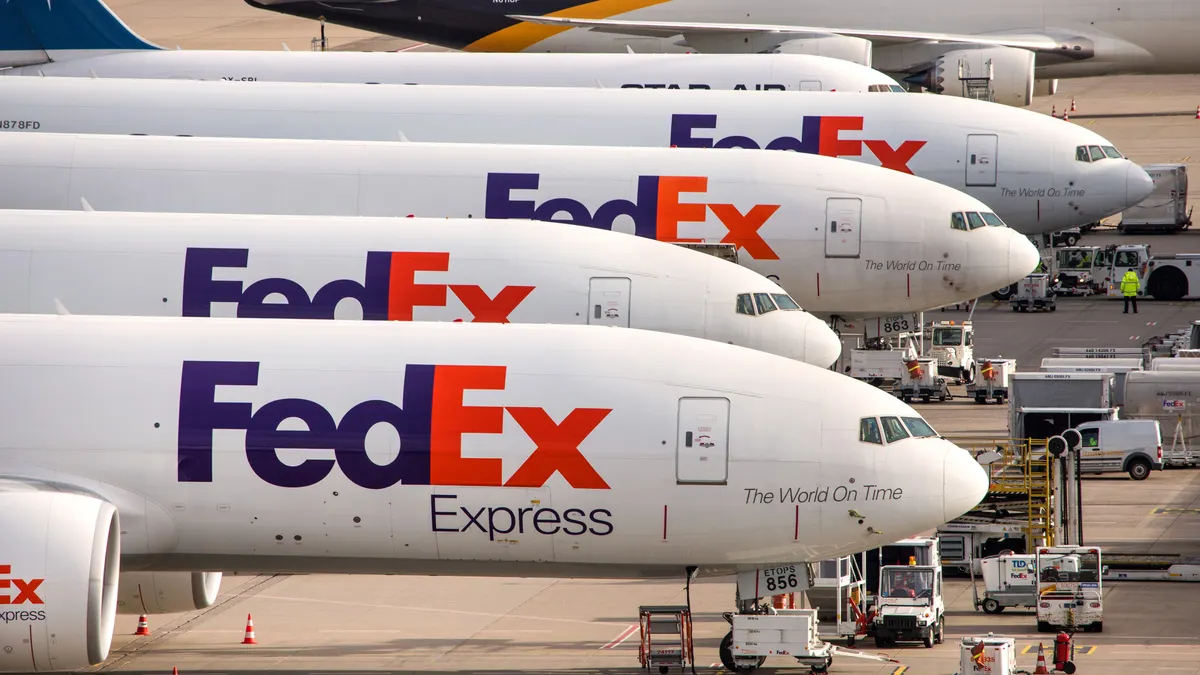
FedEx is introducing new demand surcharges on a range of international shipments entering the United States, adding another layer of cost for shippers preparing for the upcoming peak season.
The new fees will apply from Monday, September 21, until further notice to imports originating in Canada, Europe, Latin America and the Caribbean, according to FedEx. The carrier announced the changes earlier this month.
At the same time, FedEx is increasing existing demand surcharges on shipments bound for the U.S. from several Asian markets, including China, South Korea and Japan. Export shipments originating in the U.S. and destined for Canada, Europe, Australia, New Zealand, Latin America and the Caribbean will also face higher charges.
FedEx said the additional fees are linked to higher shipment volumes, strong demand for network capacity and increased operating costs.
“During times of elevated volumes, high demand for capacity, and increased operating costs across our network, FedEx will implement Demand surcharges,” the company said in an update on its website. It added that the surcharges are determined for each market through regular assessments of shipment volumes and available network capacity.
New export and import fees on FedEx international services
| Origin | Destination | Per-pound demand surcharge effective Sept. 21 |
|---|---|---|
| Canada | U.S. | $0.14 |
| Latin America and the Caribbean | U.S. | $0.12 |
| Europe, Israel | U.S. | $0.25 |
| China, Hong Kong and Macau | U.S. | $0.54 or $0.91* |
| Australia, Cambodia, Fiji, Guam, Indonesia, Japan, South Korea, Malaysia, New Zealand, the Philippines, Singapore, Taiwan and Thailand | U.S. | $0.54 or $0.73* |
| India | U.S. | $0.89 |
| Sub-Saharan Africa | U.S. | $0.60 |
| Middle East, India subcontinent and Africa region (excluding India and Sub-Saharan Africa) | U.S. | $0.70 |
| U.S. | Canada, Latin America and the Caribbean, Europe, Australia and New Zealand | $0.30 |
*The lower rates apply to various economy services, while the higher rates apply to several express services.
The new per-pound charges add to the cost pressures already facing shippers as they contend with rising tariffs and higher logistics expenses heading into the holiday shipping peak.
FedEx has historically used demand surcharges when shipment volumes increase significantly. Last year, the carrier introduced a temporary fee on parcel shipments from China, Hong Kong and the Philippines entering the U.S., as importers accelerated inventory movements ahead of new tariffs and changes to the now-defunct de minimis exemption.
The latest changes come as demand for FedEx’s international cross-border services has been growing. Average daily volume for international export packages increased 5% year over year during the quarter that ended May 31.
For shippers affected by the latest surcharges, the changes will require a closer review of shipping costs and international service configurations.
According to an analysis from ShipScience, affected customers should update their origin-and-service mappings, model their exposure based on chargeable weight and confirm the changes at the country level with FedEx.
ShipScience also noted that customers importing from China, Hong Kong and Macau, as well as those shipping from Japan, South Korea and the other countries included in the applicable group, will experience the largest immediate cost increases.
The impact can be significant depending on shipment weight and service level. For example, ShipScience estimates that the demand surcharge on a 40-pound priority shipment from China would increase by $22.40, before fuel surcharges are taken into account.
The analysis also noted that exporters shipping from the U.S. to Canada, Latin America and the Caribbean, Europe, Australia and New Zealand will face a more uniform 50% increase in the applicable demand fee.
With the new charges taking effect as peak-season volumes begin to build, international shippers will need to account for the additional per-pound costs when planning cross-border shipments and managing transportation budgets.