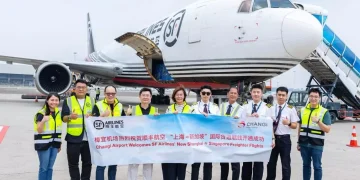




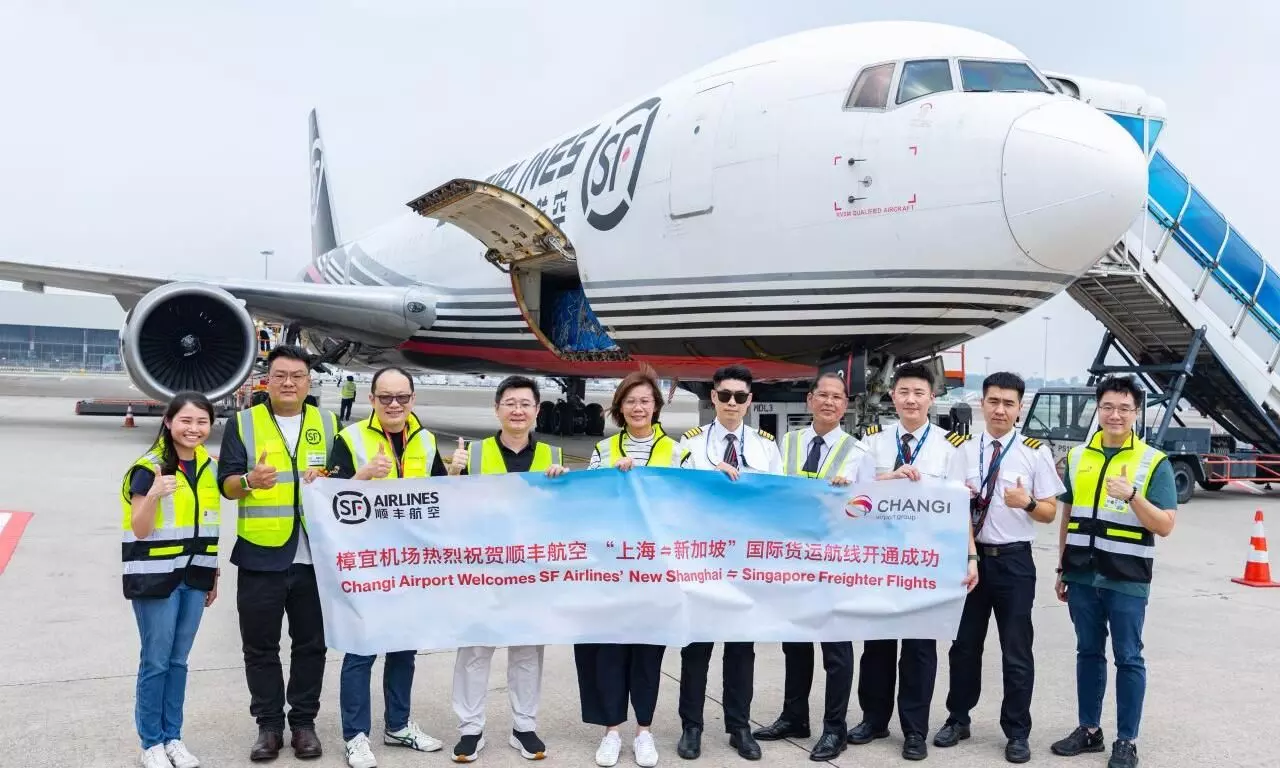
SF Airlines has launched a new Boeing 767 freighter service connecting Shanghai and Singapore, adding another international link as SF Group moves forward with plans to make Singapore its first overseas hub.
The new route is aimed at enhancing air cargo connectivity between Singapore and China, Singapore’s largest air cargo market. It will also facilitate the movement of high-tech cargo between the two countries as trade and logistics flows continue to grow across the Asia Pacific region.
The Shanghai-Singapore service is part of a larger five-year cooperation pact signed in April 2026 between SF Group and Changi Airport Group (CAG). Under the agreement, Changi Airport is helping SF Group build its first overseas hub and to expand its network in Southeast Asia, South Asia and Oceania.
Singapore plays an essential part in SF Group’s global expansion strategy. The partnership with CAG is aimed at enhancing logistics flows across Asia Pacific and beyond, while improving links with markets in Southeast Asia, South Asia and Oceania.
SF Airlines has been based in Singapore for several years. The carrier started flying to Changi in 2018, when it launched its first Singapore service from Shenzhen with a Boeing 767 freighter. Since then, the carrier has continued to expand its international cargo network.
Its network has been expanded to India as well. In March 2025, SF Airlines launched a weekly freighter service with a Boeing 767-300 between Ezhou Huahu International Airport and Bengaluru. The route offered a direct cargo link between China and India and Worldwide Flight Services was in charge of cargo handling and ground operations in Bengaluru.
Ezhou Huahu International Airport is another key element of SF Airlines’ wider cargo strategy. An airframe maintenance, repair and overhaul (MRO) facility was opened at the airport in August 2025 by ST Engineering and SF Airlines.
This facility is part of their joint venture ST Engineering Aerospace (Hubei) Aviation Services, which reinforces Ezhou’s position in SF Airlines’ operational network.
The Ezhou MRO facility will be developed in two phases, with the first phase comprising two hangars with line and heavy maintenance capabilities for passenger and freighter aircraft. Once operational the two hangars will be able to accommodate simultaneously up to four widebody aircraft or eight narrow body aircraft.
SF Airlines already has a large freighter network from China, connecting its home market with destinations in India and other parts of Asia. The launch of our Shanghai-Singapore service further expands that international network and supports SF Group’s ambitions to develop a stronger regional logistics platform out of Singapore.
As the Singapore hub project develops, Changi Airport looks forward to deepening its partnership with SF Airlines and supporting the continued expansion of the carrier’s network through the airport.
The new Shanghai-Singapore connection therefore represents another step in SF Group’s broader international cargo strategy, adding further China-Singapore capacity to its longer-term ambitions to use Changi as a gateway to markets across the wider Asia Pacific region.