



With New York Climate Week underway, the Global Maritime Forum (GMF) has brought renewed attention to the shipping industry’s progress towards its 2030 decarbonisation objectives, highlighting both advances and significant challenges still facing the sector.
The GMF event marked the release of the fifth edition of its report, Climate Action in Shipping: Progress towards shipping’s 2030 breakthrough.
According to the organisation, the latest edition shows mixed progress towards the rapidly approaching 2030 target. Several indicators reflect the impact of economic and political disruption, the crisis in the Strait of Hormuz, energy-security and supply-chain concerns, as well as regulatory uncertainty following the failure to adopt the IMO’s Net-Zero Framework (NZF) last year.
Held at the offices of port and engineering consultancy ARUP in lower Manhattan, the event featured a panel discussion moderated by Jesse Fahnstock, GMF Director of Decarbonization.
The discussion brought different perspectives on how the industry can reach the GMF’s 2030 objective of having the international shipping sector source at least 5% of its fuel from “scalable zero-emission sources”.
The report is jointly produced by the UCL Energy Institute and the Getting to Zero Coalition, which is linked to the Marrakech Partnership, a cooperation framework established during the 2016 COP conference.
IMO framework remains central to the debate
The upcoming IMO MEPC 85 meeting, scheduled for late November, remained a key issue throughout the event.
In a keynote speech ahead of the panel, Albon T Ishoda, Marshall Islands’ Ambassador to Fiji and the Pacific Islands, said that “there remains much to be done”.
He reaffirmed the Marshall Islands’ support for a global levy while recognising that not all countries are prepared to introduce such a mechanism.
Ishoda also expressed support for the Net-Zero Framework as proposed, stressing the need for international coordination.
“Global commons problems need global responses,” he said.
Maersk backs a multi-fuel future
The hour-long panel brought together representatives from AP Moller-Maersk, Mitsui OSK Lines (MOL) and the Panama Canal Authority.
For Maersk, diversification is becoming an important part of the industry’s decarbonisation strategy.
Concepcion Boo Arias, Director of Global Partnerships & ESG, Public & Regulatory Affairs at Maersk, described “diversification” as the way forward.
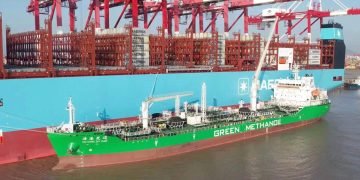
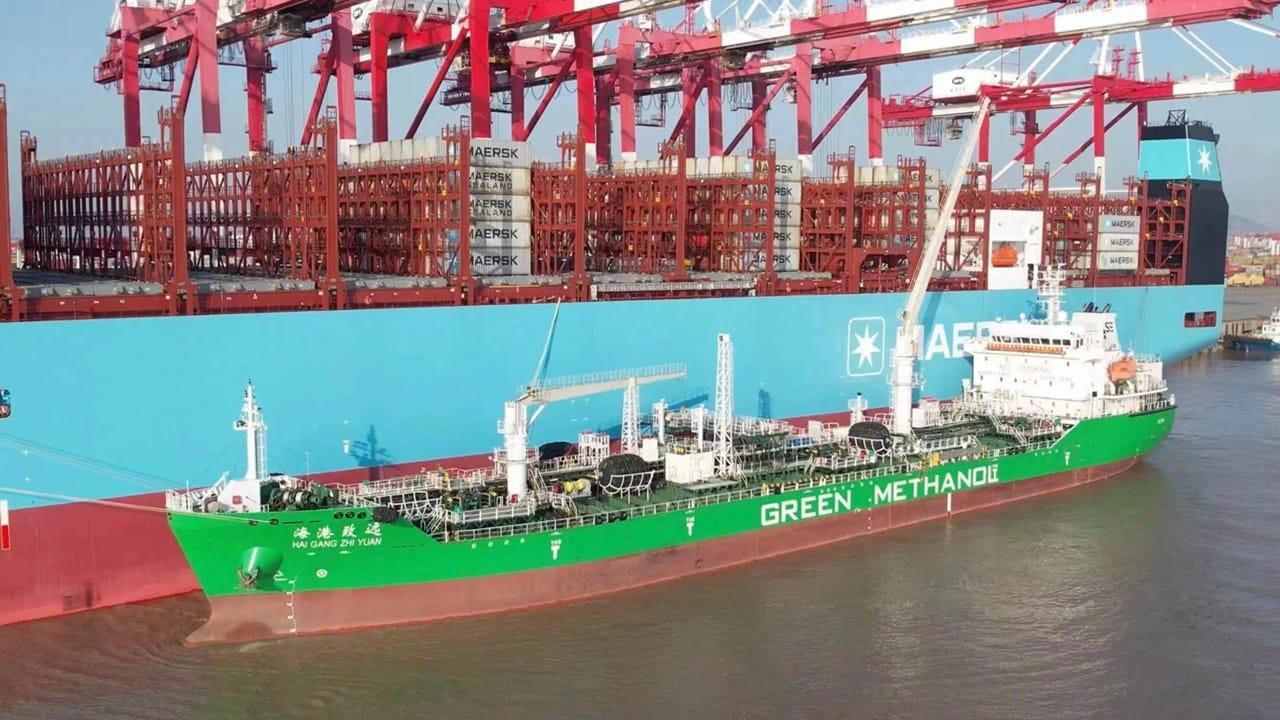
The company has already invested heavily in methanol-fuelled shipping, but Arias stressed the importance of maintaining flexibility and optionality as the fuel transition develops.
Her comments also referenced Maersk’s recent announcement that it had ordered 42 LNG-dual-fuel vessels.
“We believe in a multi-fuel future,” she said.
Arias also pointed to ethanol as another potential fuel option and mentioned the possibility of onboard carbon capture. Alongside technology choices, she emphasised the importance of establishing a global regulatory framework.
Cost remains another major challenge. According to Arias, affordability and narrowing the price gap between conventional fuels and net-zero alternatives will be critical to the transition.
Panama Canal explores green corridors
The Panama Canal Authority is also working on infrastructure and partnerships to support the adoption of lower-emission fuels.
Beatriz Gonzales, representing the Panama Canal, discussed initiatives aimed at establishing Green Corridors as well as extensive discussions with fuel suppliers capable of providing alternative fuels to vessels transiting the canal.
The approach reflects the broader challenge facing shipping: alternative fuels will need not only to be developed but also to become accessible across the major maritime routes where ships operate.
MOL calls for technology diversity
MOL’s Tatsuro Watanabe highlighted another challenge: the uncertain demand for emerging marine fuels.
He called for both immediate and long-term action, urging the industry to focus on measures that can already be implemented.
“Do what we can do today,” he said.
Watanabe also stressed the extraordinary diversity of the global maritime sector. Ships of very different types operate on different routes, serving a wide range of trades and geographical markets.
For MOL, that diversity means the transition should not rely on a single technology or fuel pathway.
Instead, Watanabe called for a broad range of solutions, including wind-assisted propulsion. MOL has already conducted experiments with wind sails that have reduced fuel consumption.
He also referred to the principle of “technology neutrality”, arguing that multiple fuels should have a role in the transition, including some options that are not entirely “green”.
Watanabe further highlighted the many stakeholders involved in maritime transport and suggested that cargo interests should participate financially in the transition by “sharing the green premium” with vessel operators.
GMF says the 2030 target remains achievable
The GMF’s new report concludes that the industry’s 2030 objective remains within reach, but that progress needs to accelerate significantly.
The organisation pointed to developments at the IMO during the previous year and the possibility of renewed action during the current year.
“The 2030 target remains achievable, but only if lost momentum is regained quickly through the adoption of the Net-Zero Framework this year, alongside accelerated industry and national action,” the GMF said.