




US Customs and Border Protection (CBP) is facing growing resistance from importers over proposals to require more extensive supply-chain data disclosures as part of efforts to strengthen cargo security.
The debate is highlighting a clear divide within the shipping and logistics industry. While ocean carriers see advanced technology as a way to improve supply-chain visibility, importers argue that requirements involving foreign export documentation could create obligations over information they neither control nor can reliably verify.
The issue follows an Advance Notice of Proposed Rulemaking issued by CBP earlier this month.
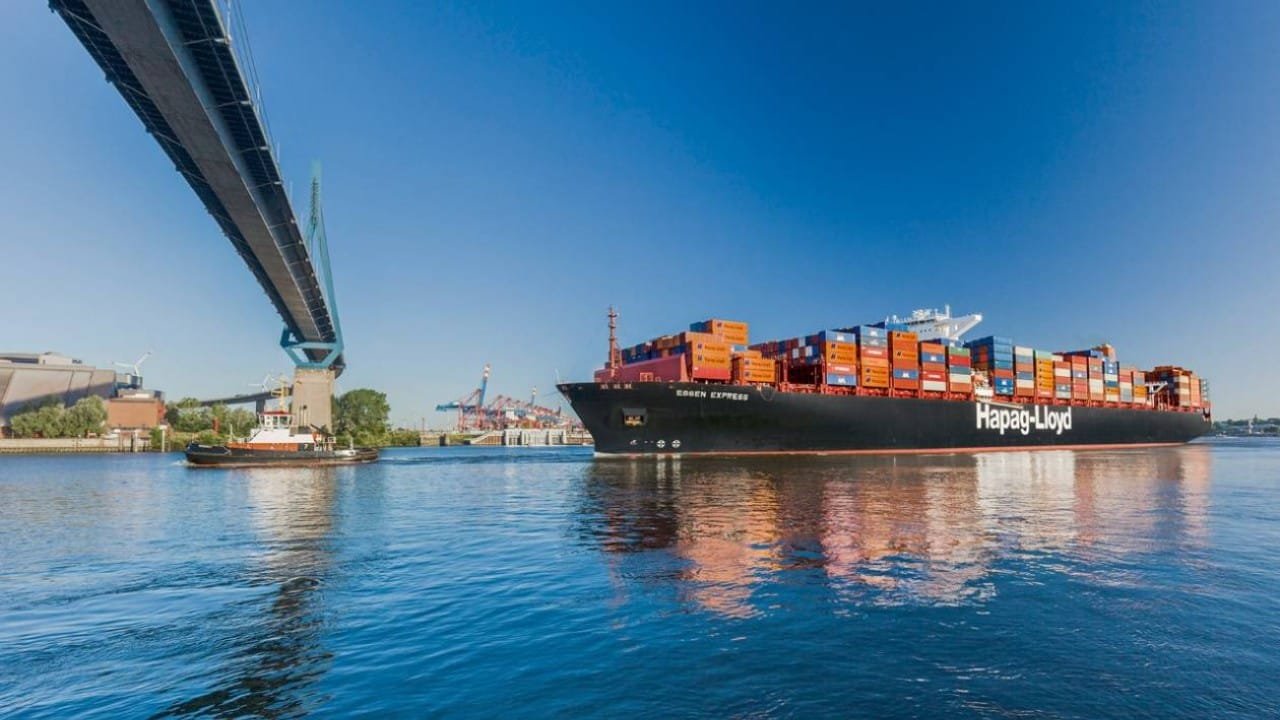
Hapag-Lloyd has urged the agency to move beyond traditional paper-based declarations. The German carrier pointed to its deployment of around two million dry containers equipped with Internet of Things (IoT) technology, arguing that connected equipment can provide real-time, objective and verifiable data.
According to Hapag-Lloyd, this type of telemetry could help CBP identify illicit transshipment and unusual routing patterns without placing additional reporting burdens on legitimate trade.
“As CBP evaluates future supply chain visibility requirements, existing industry investments in connected container technology provide an opportunity to leverage proven capabilities rather than requiring entirely new infrastructure or reporting frameworks,” the carrier stated.
Importers question responsibility for foreign filings
US importers, however, have strongly challenged proposals that could require buyers to obtain, retain or validate export filings originating outside the United States.
Family-owned importer TOV Furniture said it supports government efforts to protect businesses and prevent “bad actors” from gaining an advantage through illegal transshipments. The company nevertheless warned that importers cannot guarantee the quality or availability of documentation prepared by foreign parties.
TOV co-founder Bruce Krinsky told CBP that a US importer cannot guarantee the “accuracy, completeness, format, timing, or availability” of a filing prepared by a foreign exporter, trading company, freight forwarder, customs agent or foreign government.
He urged CBP not to make importers strictly liable for documentation that remains under the control of third parties.
Semiconductor manufacturer Nanoverse Technologies raised similar concerns. The company argued that foreign export filings are generally outside the control of US importers and that forcing companies to reconcile differences between foreign and US data could create unnecessary operational friction.
“An importer generally cannot determine whether a foreign filing is accurate, complete, timely, properly amended, or compliant with the foreign country’s laws,” said Nick Mauro, Nanoverse Technologies’ director of global supply chain.
Nanoverse has instead called on CBP to consider targeted, risk-based measures that concentrate on transactions showing actual customs-risk indicators rather than introducing universal requirements for otherwise compliant importers.
Legal analysis submitted to CBP by the Kelly Legacy Institute also recommended preserving a “reasonable care” standard for importers of record when supplying documentation needed by CBP to assess compliance.
Kelly Legacy Institute founder Delonte Kelly argued that such a standard should not effectively turn into an absolute guarantee of the accuracy of information supplied by independent foreign parties.
Under that approach, an importer could reasonably be expected to investigate obvious inconsistencies, missing documentation, contradictory invoices or materially conflicting information. However, the importer would not necessarily have an authoritative means of guaranteeing the truthfulness of statements made by an independent foreign actor.
The upstream supply-chain reality
The concerns raised by US importers are also reflected in data gathered further upstream in the supply chain.
Supplymo, a supply-chain analytics platform based in Yiwu, China, provided Seatrade Maritime News with an analysis of publicly available data from 1688.com, the wholesale marketplace owned by Alibaba Group and a major source of containerised consumer cargo.
Supplymo examined invoice-related fields across 120 top-ranked product listings on the platform.
The results showed that 72 listings, or 60%, indicated no invoice capability at all. Among the remaining listings, 19 offered general invoices, while 29 offered both general and special VAT invoices.
The findings illustrate the potential gap between the documentation CBP may seek to obtain and the information that is actually generated at the beginning of an international supply chain.
“Whatever a carrier is asked to transmit about a shipment, the paper trail starts with a seller who often shows no invoice capability,” wrote Supplymo Founder Liam Cai in an email to Seatrade Maritime News.
The data therefore adds an upstream perspective to the ongoing discussion over CBP’s proposed requirements, highlighting the practical difficulties carriers and importers could face if new supply-chain visibility rules depend heavily on documentation generated by foreign sellers and other third parties.