


• Latest
  • Trending
New data shows Suez route transits rose 27% in August

New data shows Suez route transits rose 27% in August

September 24, 2026
When Cargo Owners Buy the Ships, Who Pays for the Inefficiency?

When Cargo Owners Buy the Ships, Who Pays for the Inefficiency?

September 24, 2026
Shipping market paradox: cargo growth turns negative while rates soar

Shipping market paradox: cargo growth turns negative while rates soar

September 24, 2026
ADVERTISEMENT
40% of Loss Prevention Professionals Report Annual Cargo Theft Losses Topping $1M

40% of Loss Prevention Professionals Report Annual Cargo Theft Losses Topping $1M

September 24, 2026
45 Mexican Truck Drivers Accuse US Recruiter and Carriers of Forced-Labor Scheme

45 Mexican Truck Drivers Accuse US Recruiter and Carriers of Forced-Labor Scheme

September 24, 2026
Tractor Supply opens $200 million automated distribution center in Idaho

Tractor Supply opens $200 million automated distribution center in Idaho

September 24, 2026
Einride and Nvidia team up to advance heavy-duty autonomous trucking

Einride and Nvidia team up to advance heavy-duty autonomous trucking

September 24, 2026
Ottawa Offers Indigenous Groups 15% Stake in Trans Mountain Pipeline

Ottawa Offers Indigenous Groups 15% Stake in Trans Mountain Pipeline

September 24, 2026
VCC Launches New Construction Electrician Training Model in B.C.

VCC Launches New Construction Electrician Training Model in B.C.

September 24, 2026
Business Groups Welcome Ottawa’s Latest Push to Accelerate Major Projects

Business Groups Welcome Ottawa’s Latest Push to Accelerate Major Projects

September 24, 2026
Maersk and MOL stress multi-fuel and diverse solutions to decarbonise

Maersk and MOL stress multi-fuel and diverse solutions to decarbonise

September 24, 2026
Drones and USVs replace mines as Black Sea’s floating hazard

Drones and USVs replace mines as Black Sea’s floating hazard

September 24, 2026
Importers push back on CBP supply chain data proposals

Importers push back on CBP supply chain data proposals

September 24, 2026
  • Home
  • About Us
  • Press Room
  • Podcasts
  • Media Kit
  • Contact Us
  • Careers
Thursday, September 24, 2026
  • Login
  • Register
The Logistic News
  • Logistic
  • Air
  • Maritime
  • Land
  • World
  • Business
  • Tech
  • Events
  • Advertise
No Result
View All Result
  • Logistic
  • Air
  • Maritime
  • Land
  • World
  • Business
  • Tech
  • Events
  • Advertise
No Result
View All Result
The Logistic News
No Result
View All Result
Home Cargo

New data shows Suez route transits rose 27% in August

Major container lines restore Mideast routings

The Logistic News by The Logistic News
September 24, 2026
in Cargo, Logistic, Maritime, World
Reading Time: 3 mins read
0
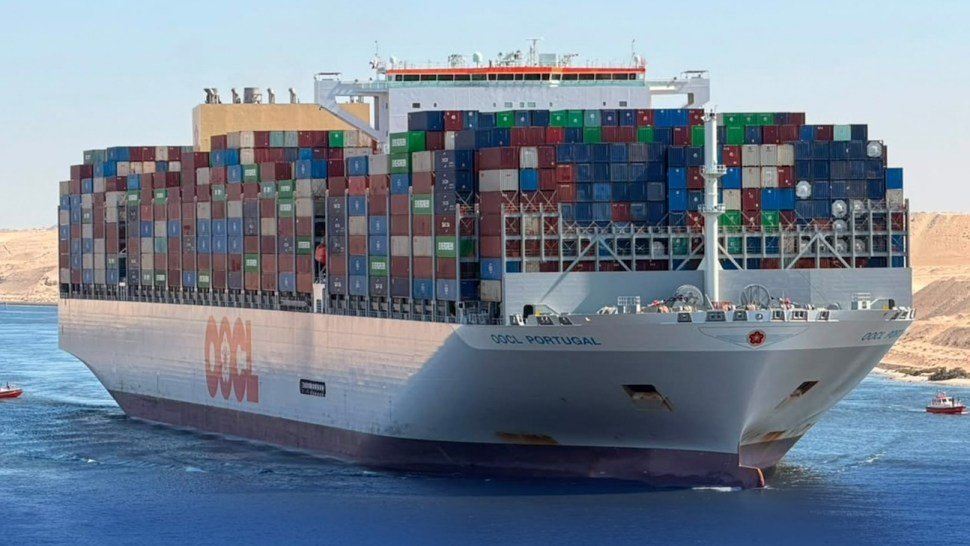
New data shows Suez route transits rose 27% in August
ADVERTISEMENT

In August, traffic through the Suez Canal continued to recover, with vessel transits up 27% on the year as major shipping lines began to selectively restore services through the Red Sea corridor.

Suez Canal Authority Chairman Osama Rabie said a total of 1,358 vessels crossed the canal in August compared to 1,070 vessels in the same month of 2025. Meanwhile, canal revenue went up 56.7% to $567.1 million, while net tonnage rose 51.1% to 68.3 million tons from 45.2 million tons a year ago.

Figures show Suez traffic has recovered more strongly, but not fully, from the prolonged Red Sea disruption which had seen many Asia-Europe and Asia-North America services rerouted onto longer journeys around Africa.

ADVERTISEMENT

The August numbers are an average of nearly 44 vessel passages a day, versus around 35 a day in August 2025. The increase in net tonnage was considerably more rapid than the increase in the number of vessels, suggesting that some of the returning traffic involved larger ships, or ships carrying heavier loads.

Rabie said navigation through the canal was functioning normally and the waterway was safe as the broader shipping environment improved.

But for North American shippers, the immediate impact remains indirect and mixed. The return to Suez will primarily impact Asia-Europe and Middle East networks, but the reinstatement of those routes can gradually free up vessel capacity and containers that could eventually impact trans-Pacific and U.S. East Coast markets.

That alone is unlikely to bring immediate rate relief on Asia-U.S. trades, where capacity and freight rates remain tight.

Create Carrier Returns

The August increase followed a slow and uneven return by container carriers to the Suez route.

Maersk and Hapag-Lloyd have resumed some of the Gemini Cooperation services through Suez, such as the AE15 and AE19 services, after assessing the security situation in the Red Sea.

The changes being targeted were a “measured step” in a phased return to the trans-Suez corridor, Maersk said, stressing that the move was not a full restoration of its East-West network through the waterway.

Even a small number of Asia-Europe loops can have a significant effect on canal traffic, given the size and frequency of the container vessels involved. Using Suez also cuts journeys between Asia and Europe dramatically compared to going round the Cape of Good Hope.

Hapag-Lloyd said its new AE15 service would cut passage time by as much as four weeks compared with the longer routing.

China’s Cosco has also started a cautious return to the Red Sea-Suez corridor, while France’s CMA CGM is already operating through the canal at a materially higher frequency.

The latest numbers give a good indication of the difference between the carriers’ approaches. Sixty vessels have passed through Suez for CMA CGM so far in September, with Cosco’s first return journey on September 16 and three more ships scheduled.

Partial recovery still

But the latest improvement is still well below pre-Red Sea crisis levels of Suez traffic.

Container traffic through the Red Sea was sharply reduced by a Houthi rebel attack in late 2023, but before the assaults the Suez Canal was moving about 80 container ships a week.

By mid-January 2026 that number had dropped to just 26 ships per week, underscoring just how much carriers were still running longer routes around Africa even as individual services began to revert to Suez.

The most recent monthly data suggest the pace of recovery is picking up.

The canal had 1,340 vessel transits in July, generating $505 million in revenue. Traffic in August rose to 1,358 vessels and revenue soared to $567.1 million.

Although the month-to-month growth in vessel numbers was modest, the increased revenue growth points to a changing vessel mix and a more robust toll base.

For the Suez Canal, the figures are another step toward restoring traffic volumes. But the return for carriers and cargo owners is selective, with security considerations still determining how fast more services return on the Red Sea route.


Previous Post

Einride and Nvidia team up to advance heavy-duty autonomous trucking

Next Post

Tractor Supply opens $200 million automated distribution center in Idaho

Next Post
Tractor Supply opens $200 million automated distribution center in Idaho

Tractor Supply opens $200 million automated distribution center in Idaho

Leave a Reply Cancel reply

Your email address will not be published. Required fields are marked *

A D V E R T I S E M E N T

Popular News

  • Drone Delivery Takes Flight: Amazon Partners with UPS for Trial Program

    Drone Delivery Takes Flight: Amazon Partners with UPS for Trial Program

    0 shares
    Share 0 Tweet 0
  • Rail Cargo Group Strengthens European Network with Captrain Netherlands Acquisition

    0 shares
    Share 0 Tweet 0
  • Automotive Inbound Logistics Market: Navigating Future Challenges

    0 shares
    Share 0 Tweet 0
  • Global Inflation Cools to Target After Three Years, Central Banks Face Policy Dilemma

    0 shares
    Share 0 Tweet 0
  • Dubai Mercantile Exchange Rebrands as Gulf Mercantile Exchange Following Saudi Tadawul Group Acquisition

    0 shares
    Share 0 Tweet 0

Recent News

When Cargo Owners Buy the Ships, Who Pays for the Inefficiency?

When Cargo Owners Buy the Ships, Who Pays for the Inefficiency?

September 24, 2026
Shipping market paradox: cargo growth turns negative while rates soar

Shipping market paradox: cargo growth turns negative while rates soar

September 24, 2026
40% of Loss Prevention Professionals Report Annual Cargo Theft Losses Topping $1M

40% of Loss Prevention Professionals Report Annual Cargo Theft Losses Topping $1M

September 24, 2026

Discover a new era of logistics reporting with The Logistic News, your go-to platform for breaking news, insightful features, and exclusive interviews shaping the global logistics and freight landscape. Trust us to deliver accurate, timely, and relevant information that empowers professionals and enthusiasts alike in navigating the intricacies of this vital sector.

Navigation

  • Home
  • About Us
  • Press Room
  • Podcasts
  • Media Kit
  • Contact Us
  • Careers
  • Privacy Policy
  • Terms of Use

© 2024 - thelogisticnews.com

Welcome Back!

Login to your account below

Forgotten Password? Sign Up

Create New Account!

Fill the forms below to register

All fields are required. Log In

Retrieve your password

Please enter your username or email address to reset your password.

Log In

SIgn Up Newsletter

This will close in 20 seconds

Manage Cookie Consent
We use technologies like cookies to store and/or access device information. We do this to improve browsing experience and to show (non-) personalized ads. Consenting to these technologies will allow us to process data such as browsing behavior or unique IDs on this site. Not consenting or withdrawing consent, may adversely affect certain features and functions.
Functional Always active
The technical storage or access is strictly necessary for the legitimate purpose of enabling the use of a specific service explicitly requested by the subscriber or user, or for the sole purpose of carrying out the transmission of a communication over an electronic communications network.
Preferences
The technical storage or access is necessary for the legitimate purpose of storing preferences that are not requested by the subscriber or user.
Statistics
The technical storage or access that is used exclusively for statistical purposes. The technical storage or access that is used exclusively for anonymous statistical purposes. Without a subpoena, voluntary compliance on the part of your Internet Service Provider, or additional records from a third party, information stored or retrieved for this purpose alone cannot usually be used to identify you.
Marketing
The technical storage or access is required to create user profiles to send advertising, or to track the user on a website or across several websites for similar marketing purposes.
Manage options Manage services Manage {vendor_count} vendors Read more about these purposes
View preferences
{title} {title} {title}
No Result
View All Result
  • Logistic
  • Air
  • Maritime
  • Land
  • World
  • Business
  • Tech
  • Events
  • Advertise

© 2024 - thelogisticnews.com