



Most shippers now assume they have a clear view of what is happening across their cold chain. In practice, that visibility often amounts to little more than knowing where a shipment is at a given moment.
The more important question is what happened to the shipment on the way there.
That distinction can expose some of the most expensive weaknesses in temperature-controlled logistics, whether the cargo is a pallet of insulin or a truckload of frozen shrimp. Knowing a vehicle’s location does not necessarily reveal whether the product has remained within specification, whether the shipment was mishandled, or whether a security issue affected its condition.
Cold-chain operations also vary considerably by industry. Pharmaceutical logistics teams handle global, multimodal movements that may pass through dozens of different handlers while operating under strict federal regulations. Food and beverage companies, by comparison, tend to manage more regional transportation networks, where a failed shipment is more likely to result in spoilage on a smaller scale.
Yet the underlying weaknesses are often remarkably similar: disconnected data, alerts that arrive too late or arrive so frequently that teams stop responding effectively, and incidents created by a combination of security and quality-control failures.
To better understand where those weaknesses emerge, we spoke with specialists at Overhaul, which works across temperature-control and cargo-security applications in life sciences, as well as food and beverage. Their perspective points to a recurring problem: some of the most damaging failures begin with assumptions that companies rarely question.
1. Knowing the location does not tell you the condition
For many cold-chain operations, the most familiar visibility tool is still the GPS ping. But knowing where a truck is tells a shipper very little about the condition of what is inside it.
“GPS tells you where a truck is. It does not tell you whether the product inside still meets the temperature spec,” said Todd Thompson, Director of Enterprise Sales at Overhaul.
Thompson works with food and beverage shippers and argues that meaningful visibility requires more than coordinates. Ambient temperature, product temperature, shock and humidity need to be captured, reported and acted upon while a shipment can still be recovered.
A dot on a map cannot provide that level of insight.
2. Chain-of-custody data becomes less useful when it is scattered
Most companies are not actually missing custody information. The bigger problem is that the information is often spread across multiple systems and formats.
“Companies are compliant in capturing the data,” Thompson said. “The responsibility to provide this data is understood, but the problem is that the data is scattered in disparate systems and in different formats, therefore delaying responsiveness.”
Pharmaceutical shipments make that challenge even more difficult. According to Melita Marks, Cold Chain Market Advisor at Overhaul, a single drug shipment going to a pharmacy can involve roughly 50 different handlers across the supply chain.
The data may exist at every stage, but finding and connecting it quickly is another matter.
3. Too many alerts can actually reduce visibility
Sensors are capable of producing enormous amounts of information, but more data does not automatically mean better decision-making.
Pharmaceutical logistics teams are often operating with fewer resources than they once had, and excessive alerting can make the problem worse.
“They’re getting disjointed information, with too many alerts,” Marks said.
Instead of allowing teams to act proactively, a constant stream of notifications can push them into a reactive mode. Over time, alert fatigue itself becomes a risk.
“Pharma companies need smarter systems to pinpoint what to pay attention to,” Marks said.
She points to risk scoring, shipment triage and condition data linked to live events as more effective tools than simply generating additional alerts.
4. A clean arrival does not mean the shipment was never compromised
A shipment can move outside its acceptable temperature range several times during transit and still appear to be in specification by the time it reaches the receiving dock.
If the product temperature recovers before unloading, the problem may no longer be visible during the receiving process.
Without a sufficiently detailed temperature history tied to location data, determining when and where the excursion occurred can become extremely difficult — assuming the shipper realizes an excursion happened in the first place.
“On frozen, a partial thaw and refreeze on a case of fries does not fail at the dock, it fails in the fryer,” Thompson said.
The consequences may emerge much later through reduced shelf life or a claim from a store or restaurant farther down the supply chain.
5. Responding to disruption is about speed, not simply lead time
Major weather events such as hurricanes are disruptive, but they also provide something sudden incidents do not: time to prepare.
The more difficult situations are unexpected events such as a reefer failure or an unplanned facility closure.
In those cases, the issue is not simply deciding whether to reroute the shipment. The first question may be how much of the cargo remains usable.
“In mature cold chain programs, there have been responses, corrective action decisions, and rerouting if needed, that have happened in minutes,” Thompson said.
“More typically you are looking at a few hours from alert to action based on product category,” he added.
The limiting factor is often not the disruption itself. It is how quickly and how completely the relevant condition information reaches the people who have the authority to act.
6. Moving into regulated freight is a financial calculation before it becomes a compliance exercise
Carriers considering a move from conventional refrigerated freight into pharmaceuticals can underestimate the cost of entering the market.
Reefer trailers need to be temperature-mapped both empty and loaded against seasonal extremes. Warehouses also require seasonal temperature and humidity mapping throughout every storage zone.
Pharmaceutical customers will typically require a Technical Service Agreement defining quality standards and operational responsibilities. Those requirements sit alongside annual audits and federal obligations, including current Good Manufacturing Practices and the recordkeeping requirements of 21 CFR Part 11.
“The real question is not the checklist, it’s the math,” Thompson said.
Much of the investment comes before the first shipment moves, while revenue is generally generated shipment by shipment. That means carriers have to determine whether they can secure enough pharmaceutical volume, at the margins those shipments provide, to justify the cost of entering the sector.
“The trap is treating it as something you can do partially,” Thompson said.
A carrier may already have strong food-distribution capabilities and still lack the recordkeeping infrastructure demanded by pharmaceutical customers simply because food operations never required it.
That gap does not disappear merely because a carrier begins moving a few pharmaceutical loads each month.
7. Carrier screening has not evolved quickly enough to keep pace with fraud
Cargo theft techniques continue to change, and high-value temperature-controlled shipments remain attractive targets.
“The largest problem is double brokering and chameleon or phoenix carriers,” said Danny Ramon, Director of Security Intelligence and Response at Overhaul.
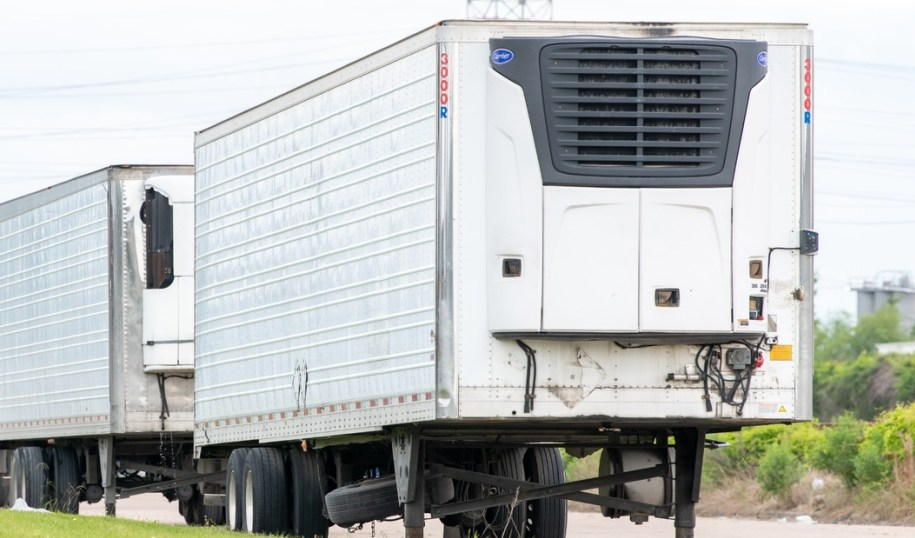
Ramon highlighted practical warning signs that can easily be overlooked. Those include checking a tractor-trailer for altered markings, ghost lettering, taped-over signage or license plates secured with zip ties.
Verifying a carrier is therefore not limited to confirming who is supposed to collect a shipment. Shippers also need to verify what physically arrives at the pickup point.
8. Security failures and quality failures can be the same incident
A shipment that has been diverted, tampered with or otherwise compromised can create problems across multiple departments at the same time.
“A security incident, human or malicious, may trigger a quality risk exposure,” Marks said. “Quality ultimately needs to determine if a security or condition issue requires the product to be destroyed.”
During the incident itself, logistics teams may be focused on restoring operations while security personnel are trying to involve law enforcement.
Afterwards, security, quality and logistics must work together to document the event and determine how to prevent a recurrence.
The handoff between those functions can itself become another failure point when responsibilities are unclear.
Liability can also move from one organization to another throughout the process. In pharmaceuticals, for example, the manufacturer typically carries financial and regulatory responsibility until the product reaches the first wholesaler. From there, risk and compliance obligations shift to the next party in the chain.
9. Compromised products can make their way back into legitimate-looking inventory
Stricter serialization has reduced the frequency of this problem in highly regulated markets, but it has not eliminated it.
Marks estimates that between 3% and 4% of pharmaceutical product is either expired or destroyed because of temperature mishandling somewhere in the supply chain.
That figure does not account for diverted products that later reappear in inventory that appears legitimate.
According to Ramon, visibility gaps are a key factor, alongside black-market demand.
“Many shippers find out about the theft when their customer calls to ask when their shipment should arrive, far past any reasonable chance of recovery,” Ramon said.
By that point, the opportunity to recover the shipment may already have disappeared.
10. Condition monitoring goes well beyond pharmaceuticals and food
Temperature and condition monitoring are not limited to products traditionally labeled as temperature-sensitive.
Humidity can affect tobacco, while wine and spirits can be vulnerable to both temperature and shock because of the fragility of their packaging.
“There is practical applicability of condition monitoring for these industries,” Thompson said.
For those sectors, the level of security controls is generally determined more by risk tolerance than by regulation. The financial consequences of a loss, however, remain significant.
These products are heavily taxed, meaning a lost shipment can represent both the value of the goods and the tax liability attached to them.
Chemical shipments present another version of the same blind spot. Certain composite materials have to remain within narrow temperature ranges to prevent premature curing or a shortened shelf life, even though they do not undergo the same human-safety testing requirements associated with pharmaceutical products.
Closing the gaps
The common thread running through all 10 issues is not a lack of sensors.
Adding another device or generating another alert does not solve the underlying problem. The larger challenge is that shipment location, condition, custody and security information often sit in separate systems, belong to different organizations and are reviewed at different times.
When something goes wrong, companies are then forced to reconstruct the story after the fact.
The first step toward fixing that does not necessarily have to be complicated.
For food and beverage teams, Thompson recommends starting with a shipment that went exactly as planned and reconstructing its complete custody record from beginning to end.
Who had to be contacted? Who had to be emailed or texted? How long did each response take? Was the information detailed enough to support a decision? Could every element of it be verified?
Conducting that exercise on a shipment with no incident and nothing at risk can reveal exactly where the information gaps are.
A similar transition is already taking place in pharmaceuticals, according to Marks. Pharmaceutical manufacturers and their carriers should be moving away from manual, labor-intensive temperature reviews and toward configurable alarm profiles based on the stability data of each individual drug.
The objective is to prevent minor and expected variations from receiving the same level of attention as a genuine temperature excursion.
That principle underpins Overhaul’s platform, which brings logistics, quality and security information for a shipment together in one environment.
Overhaul has previously drawn attention for its role in cargo-theft protection, but its specialists also work with logistics and quality teams on a broader range of cold-chain challenges.
More information is available at Overhaul.com.