




Port Houston had a slight increase in container volumes in August as loaded imports continued to increase with steel imports up more than 50% year over year.
The port’s public terminals handled 373,756 twenty-foot equivalent units (TEUs) last month, a 1% increase from 370,430 TEUs in August 2025. Volumes for the first eight months of 2026 reached almost 2.97 million TEUs, also a 1% increase year on year.
Imports loaded in August totaled 176,016 TEUs, up 4% from 169,631 TEUs in the same period the year prior. Loaded exports went the other way, down 2% to 136,070 TEUs.
Loaded imports are up 5% since January to nearly 1.39 million TEUs while loaded exports are down 1% to about 1.06 million TEUs. For the year to August, combined loaded container activity is up 2%, at 2.45 million TEUs.
Port Houston said the commodities driving the rise in loaded imports included machinery and electronics, retail consumer goods, furniture, automotive products and apparel. Seasonal demand and businesses front-loading cargo ahead of the holiday season are driving some of that momentum, the port said.
East Asia continues to be the main engine of growth. Regionally sourced imports grew 12 percent and now make up 57 percent of the port’s loaded container imports.
Steel takes center stage
Steel was among Port Houston’s best-performing cargo segments in August. Imports came to 502,965 tons, up 54% from 327,258 tons in August 2025. Steel imports and exports tonnage jumped 49% to 529,084 tons, the port’s best steel month since August 2025.
The monthly surge still hasn’t made up for the year-to-date deficit. Through August, steel tonnage is about 2.87 million tons, down 10%, and imports are down 11% to 2.71 million tons.
General cargo went the other way last month, falling 26% year over year to 116,881 tons. But it is up 22% to 913,863 tons so far this year, including a 27% rise in imports.
Total revenue tonnage at the port’s public facilities was approximately 4.68 million tons, essentially flat compared to August 2025. The total through August is about 37.49 million tons, also virtually unchanged from a year earlier.
Traffic rose through the wider Houston Ship Channel. Deep-draft transits increased 9% year over year to 1,607, and barge transits increased 10% to 19,712. Both categories are up 7 percent YTD.
Building for what’s next
The August numbers came out as Port Houston commissioners met Sept. 22 to discuss infrastructure, Houston Ship Channel and trade-development efforts.
Commissioners approved more design work for refrigerated container infrastructure at the future Bayport Container Yard 9. When built and fully equipped, the yard will be able to handle more than 1,800 refrigerated containers, boosting capacity for temperature-controlled imports and exports.
The port also reported it has authorized 10 new Foreign Trade Zone sites this year, equaling the annual record set in 2024, with 11 more applications under review.
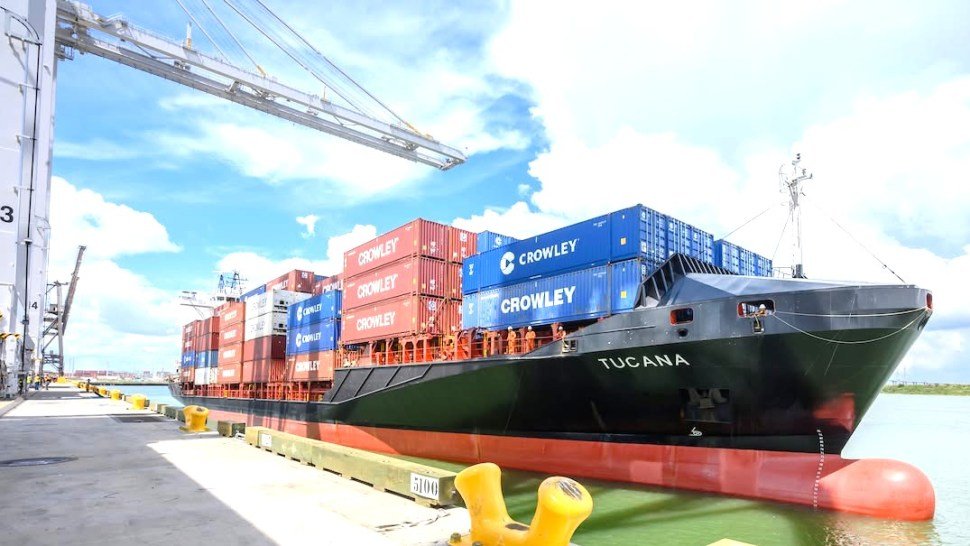
In other news, Port Houston recently welcomed the first vessel of Crowley Maritime’s new weekly container service to and from Houston and Central America.
Why it matters: August’s numbers suggest import demand is holding steady heading into the fall shipping season, while investments in refrigerated container capacity and the Houston Ship Channel are positioning the gateway for longer-term freight growth.