



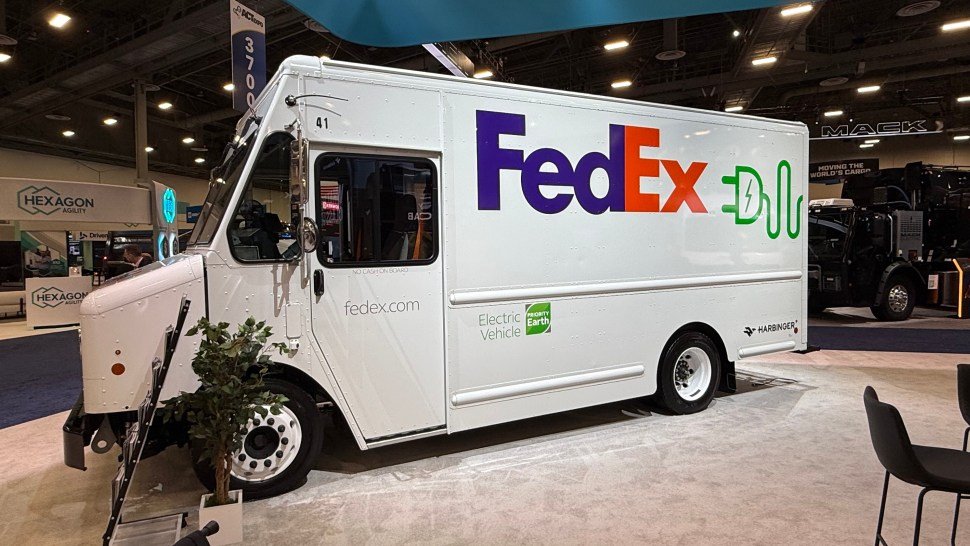
FedEx is putting serious weight behind electrification. Harbinger, the Garden Grove, Calif.-based truck manufacturer, announced Wednesday that the parcel carrier has ordered 2,000 all-electric trucks, a deal worth more than $300 million.
The vehicles are scheduled to arrive by the end of 2027, about 18 months from now, and will be put to work in FedEx pickup and delivery operations across the United States and Canada. Harbinger describes the purchase as one of the largest binding orders ever placed for electric medium- or heavy-duty trucks.
The contract grows out of a partnership that started in November 2025, when FedEx ordered 53 Harbinger electric trucks, a mix of Class 5 and Class 6 models. The carrier also co-led Harbinger’s $160 million Series C round at the time. The two companies are closely tied: Paul Melander, FedEx’s senior vice president of safety and transportation, sits on Harbinger’s board.
The timing is notable for the manufacturer. Co-founder and CEO John Harris told Bloomberg News, in an article syndicated by Transport Topics, that Harbinger had only recently finished building its 1,000th vehicle.
“FedEx is demonstrating that the business case for incorporating electric vehicles into real-world fleet operations at scale makes sense,” Harris said. “Our previous work together gave FedEx firsthand experience with the performance and economic advantages Harbinger vehicles can deliver.”
The new trucks will replace existing conventional vehicles one for one. The order covers a mix of models from Harbinger’s all-electric lineup, although the announcement did not say how many of each FedEx purchased. The deal also fits into FedEx’s longer-term target of running an all-electric parcel pickup and delivery fleet by 2040.
Harbinger leans heavily on the economics. The company estimates that each truck cuts fuel costs by an average of $20,000 a year compared with the diesel vehicle it replaces. Its trucks are engineered for a 20-year service life, which matches the typical lifespan of Class 5 and Class 6 medium-duty trucks. Based on those assumptions, a single North American fleet of 2,000 trucks would save roughly $40 million in fuel each year, or $800 million over two decades, according to Harbinger.
The environmental case is just as large on paper. Drawing on published Department of Energy data, Harbinger estimates that replacing 2,000 diesel trucks would avoid more than 1.7 million tons of carbon dioxide emissions over the vehicles’ operating lives.
Drivers were part of the design brief, too. Harbinger says the trucks come with improved suspension and handling to reduce fatigue, plus advanced driver assistance technology. The company also lists a 42-foot turning diameter, which it says makes the trucks easier to maneuver on tight city and residential streets.
In Canada, Kaizen Automotive Group, Harbinger’s dealer there, will support the Canadian part of the deployment.
For FedEx, Melander framed the order as a question of scale and returns as much as sustainability. “Electrifying a fleet at this scale requires vehicles that can perform the work our robust operations demand while also delivering meaningful economic benefits,” he said.
Expanding the rollout, he added, “gives us an opportunity to continue making progress toward our fleet electrification goals while reducing fuel and operating costs.”