




SAN DIEGO – Nearshoring continues to push freight volumes higher between the United States and Mexico, but companies moving that cargo are facing a growing list of challenges. A shrinking pool of cross-border drivers, tougher customs enforcement, higher operating costs and increasingly sophisticated cargo theft are putting additional pressure on an already complex trade corridor, industry executives said Tuesday.
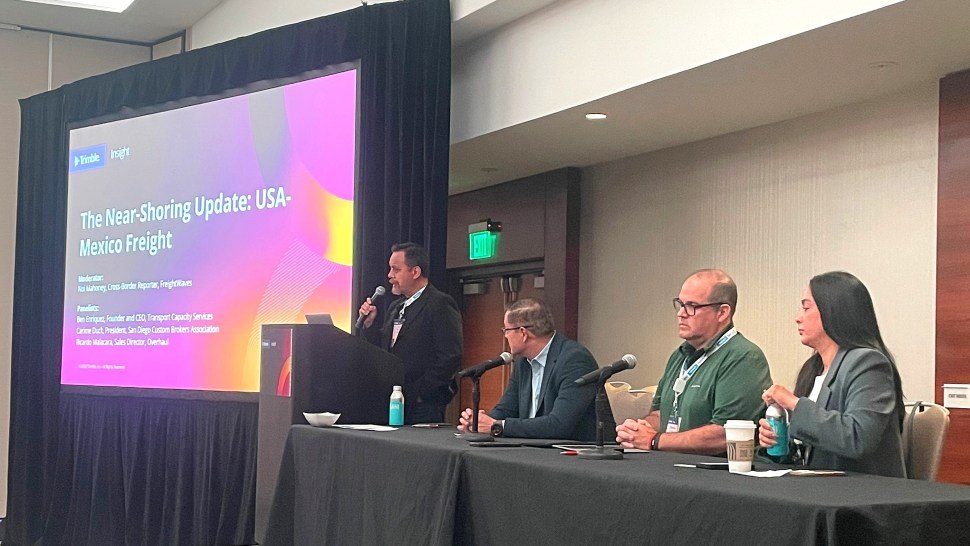
The issues were discussed during “The Nearshoring Update: USA-Mexico Freight,” a panel held at Trimble Insight 2026 in San Diego.
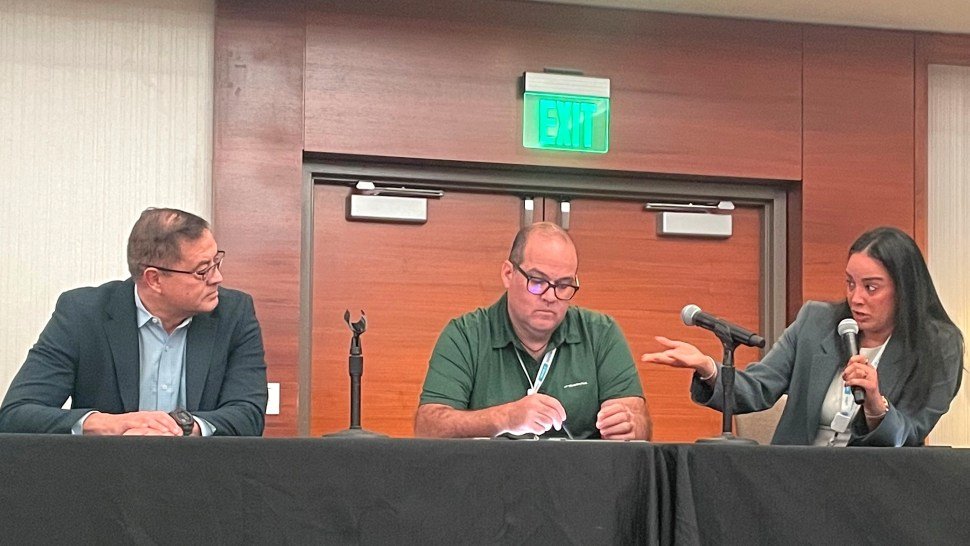
The discussion brought together Ben Enriquez of Transport Capacity Services; Carime Duck, a licensed customs broker and president of the San Diego Customs Broker Association; and Ricardo Malacara, sales director at cargo-security technology provider Overhaul.
Trimble Insight 2026, held Sunday through Tuesday, drew 1,200 attendees and featured more than 200 information sessions and product demonstrations.
Despite tariffs and geopolitical uncertainty that have dominated headlines over the past year, Enriquez said the momentum behind nearshoring has not gone away.
“The reality is that nearshoring, the ball was already rolling,” Enriquez said. “There were already manufacturing plants and expansions being done, and they continue to happen.”
He pointed to continued growth in two-way U.S.-Mexico commerce as evidence that the manufacturing sectors of the two countries are becoming increasingly integrated. In several industries, particularly automotive, products and components can cross the border multiple times before production is complete.
Companies are taking a more cautious approach because of uncertainty surrounding the United States-Mexico-Canada Agreement (USMCA), Enriquez said, but the broader shift in manufacturing remains intact.
“Nearshoring is a reality,” he said.
Driver enforcement tightens an already constrained market
While demand for cross-border freight continues to rise, Enriquez said the available supply of drivers qualified to handle those shipments is becoming more difficult to secure.
He said enforcement involving Mexican B-1 visa drivers, non-domiciled commercial driver’s licenses and English-language requirements has altered both the economics and operating models of cross-border trucking companies.
B-1 drivers generally are permitted to transport international freight into the United States and return with international cargo. They cannot, however, perform domestic point-to-point transportation, a practice known as cabotage.
According to Enriquez, stepped-up enforcement against drivers accused of making improper domestic moves has removed some drivers from the market. Restrictions affecting non-domiciled CDL holders are further shrinking the pool available to cross-border operators as well as domestic carriers.
The changes are also forcing some Mexican trucking companies to reconsider U.S. operating models they had built around direct service.
Some carriers had established U.S. operations to provide door-to-door service. With too few drivers available, some are now returning to a more traditional arrangement in which trailers or freight are transferred to U.S. carriers at the border, Enriquez said.
“The market has changed in a lot of ways, and these issues are making it lose a lot of drivers,” he said.
Fuel costs are adding another layer of pressure, particularly for small and midsize trucking companies. Many operators have to pay for fuel immediately while waiting 30 to 45 days to receive payment from customers.
That combination of driver shortages and working-capital constraints is leading some fleets to reduce the number of trucks they operate.
“We are seeing that the volume is increasing,” Enriquez said, even as the available cross-border trucking supply contracts.
Duck said the capacity squeeze is already becoming visible in Southern California during the fall peak shipping season.
Driver availability is becoming more difficult, she said, while trucking rates are rising. Fuel expenses are contributing to repeated increases in prices.
For Malacara, the reduction in trucking capacity is not only a transportation issue. It also creates additional security exposure.
“The lack of capacity on drivers and trucks that can do cross-border increases the operation, increases the dwell times, increases the handoffs, which in turn increases the risk,” he said.
When freight is waiting for an available driver, it can end up sitting at transfer points that are not necessarily secure. At the same time, companies facing urgent capacity shortages may take greater risks when selecting unfamiliar carriers or drivers.
Nearshoring is concentrating cargo-theft exposure
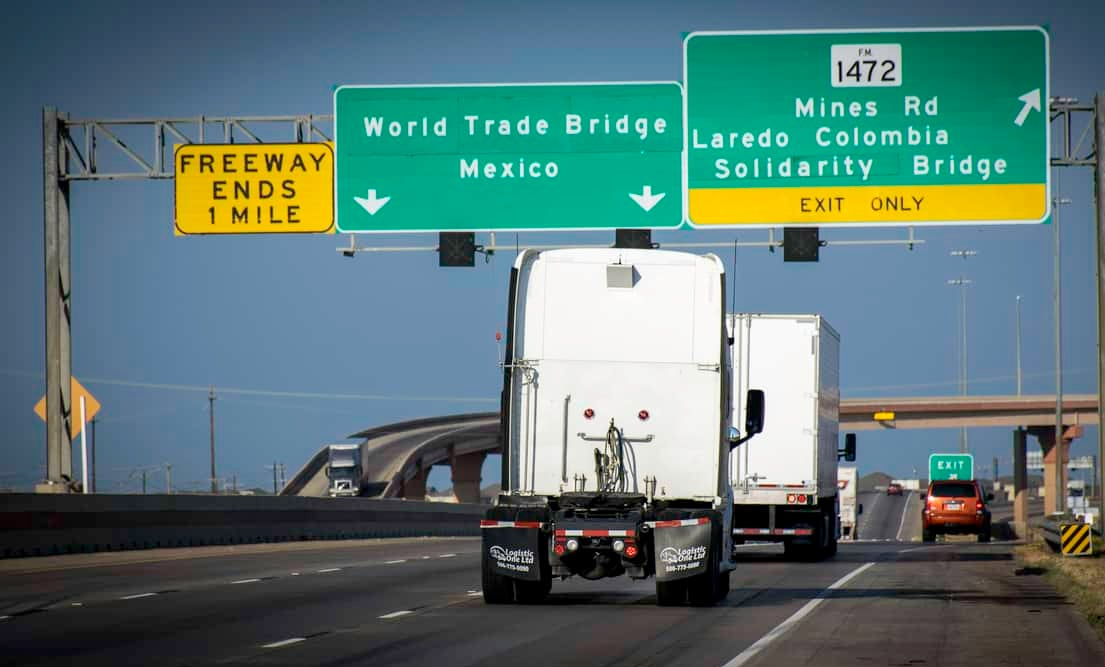
The growth of nearshoring is also placing more freight on existing transportation infrastructure in Mexico, particularly in the Bajío manufacturing region in central Mexico, Malacara said.
Manufacturing investment has grown faster than road, rail, airport and port infrastructure in some areas. As a result, larger volumes of high-value cargo are traveling along many of the same corridors.
“Concentrating freight, concentrating high-value moving goods in the same highway has increased the risk for all the shippers and all the cargo owners,” Malacara said.
The geography of cargo theft is changing as well.
Malacara said theft has declined in some traditional hotspots while increasing in the Bajío region. He cited an 11% year-over-year increase in theft in the region, with approximately 80% of incidents involving violence or threats of violence.
The nature of the criminal organizations involved is also evolving.
According to Malacara, groups targeting commercial freight are increasingly organized and technologically capable rather than operating as opportunistic thieves.
“This is not a casual activity,” Malacara said. “These are organized, or these are structured organizations that plan, that have technology.”
Criminal groups can use GPS jammers, plan routes and operating times, and in some cases obtain inside information that identifies valuable shipments, he said.
Food and beverages remain the most frequently stolen commodities because they are relatively easy to resell and difficult to trace. Construction materials, automotive parts and electronics follow. Pharmaceuticals are also becoming a more prominent target, Malacara said.
Basic tracking technology is no longer considered sufficient protection.
Simply placing a GPS device on a trailer does not guarantee visibility, he said, because thieves using signal jammers can disable basic tracking systems within seconds.
Instead, companies need defined response procedures covering what happens when tracking is interrupted, which authorities should be contacted and how security partners are expected to respond.
“You need to stop treating the GPS, the dot in the map, as your guide,” Malacara said.
That shift from tracking cargo to actively managing risk when something goes wrong is becoming increasingly important as more high-value freight moves through the same corridors.
Customs compliance is moving upstream
Duck said companies considering manufacturing expansion in Mexico also need to revisit a common assumption about the USMCA.
Producing or assembling a product in Mexico does not automatically mean that the finished goods qualify for preferential tariff treatment under the agreement.
“You need to look at your supply chain,” Duck said.
She gave the example of a manufacturer assembling furniture in Mexico while sourcing materials from another country. Depending on the origin of those materials and the applicable rules of origin, the finished product may not qualify for USMCA preferential treatment.
That makes customs expertise relevant much earlier in the manufacturing process.
Duck said customs specialists should be involved in sourcing, engineering and manufacturing discussions rather than brought in only after production and logistics decisions have already been made. She described the approach as “classification engineering.”
“There needs to be someone who understands the customs side or the supply chain aspect of it and be in the conversations of engineering and manufacturing of these products,” she said.
Record keeping is becoming increasingly important as customs authorities request more detailed information about classifications, sourcing decisions and individual transactions.
For manufacturers entering or expanding in Mexico, customs compliance is therefore becoming part of the initial supply-chain design rather than a downstream administrative task.
AI shifts from reacting to preventing problems
As the complexity of cross-border logistics increases, transportation and customs professionals are also turning to artificial intelligence and automation.
Duck said U.S. Customs is using AI as part of its enforcement efforts, while customs brokers are adopting the technology as a secondary compliance check. In that role, AI can help identify missing information and clerical mistakes before they become larger problems.
Transportation providers are automating shipment updates as well. Brokers can receive almost instantaneous notifications when trucks leave ports or cross the border.
“I don’t see like it’s taking jobs,” Duck said. “I think it’s giving us more visibility.”
At Overhaul, Malacara said AI is being used to analyze millions of data points in order to identify higher-risk lanes, times, commodities and individual shipments.
The technology can generate warnings for drivers entering high-risk areas, detect possible GPS jamming and flag potential fraud involving DOT numbers, bills of lading and invoices.
The broader objective, Malacara said, is to move cargo security away from a recovery model and toward prevention.
For security providers, successfully recovering a stolen shipment can also demonstrate that prevention mechanisms failed earlier in the process.
“For us, a recovered load, it’s a sign of our job not being well done,” he said.
Shippers are being urged to secure capacity before demand rises further
With carrier capacity under pressure and nearshoring still expanding, Enriquez said shippers should use the current environment to diversify their transportation networks instead of relying too heavily on a single provider.
He said carriers and shippers should strengthen relationships before another acceleration in freight demand makes capacity even more difficult to secure.
“I think right now, the name of the game is secure capacity and form partnerships,” Enriquez said.
The increase in mini-bids over the past several months is one indication that shippers are already reassessing their transportation networks, he added.
“As a shipper, I would recommend you to get more arrows on your quiver and make sure that you have all your capacity covered,” Enriquez said.
Duck offered a similar message from the compliance perspective.
Companies should understand every participant in their supply chains before a disruption occurs and maintain regular communication with customs brokers, shippers, receivers and transportation providers.
Malacara focused on the security side of the equation.
“Do not leave your security plan for last,” he said.
Security strategies should be tailored to individual lanes, commodities, days and times, and then updated continuously as criminal tactics and geographic risks evolve.
“It has to be a recurring event where somebody at your organization is thinking about the risk of moving cargo within Mexico, within the U.S., and crossing the border,” Malacara said.
Why it matters
Nearshoring continues to generate additional cross-border freight between the United States and Mexico at the same time that trucking companies are dealing with tighter driver availability, higher operating costs and growing security challenges.
For shippers, that combination makes transportation capacity, customs compliance and cargo security increasingly interconnected elements of the nearshoring strategy rather than separate logistics concerns.