



The debate over shipping decarbonisation is moving into a new phase. While the industry continues to advance on technical solutions, political alignment, commercial viability and regulatory certainty are increasingly emerging as the more difficult challenges.
Two years ago, the central issue facing shipping was widely described as an energy trilemma: securing energy supplies, managing the transition to cleaner energy and controlling energy costs. According to Karrie Trauth, president of the UK Chamber of Shipping, the industry has now moved beyond that particular challenge.
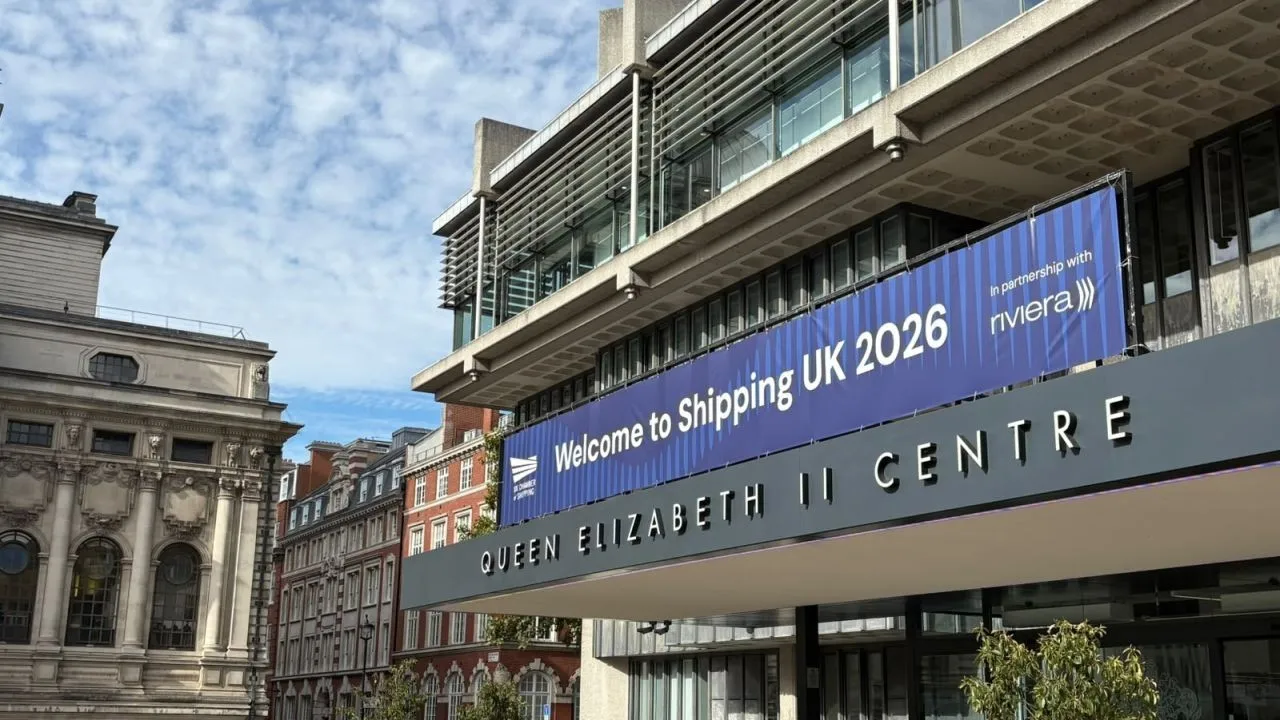
“The conversation has moved on now,” Trauth told delegates at the Shipping UK conference, organised by the UK Chamber of Shipping in partnership with Riviera.
Finding a workable balance within shipping’s energy transition was never going to be straightforward. However, the situation appeared more manageable in 2023, when the International Maritime Organization (IMO) reached broad agreement on a decarbonisation plan, suggesting that the sector had finally found a viable path forward.
That confidence was shaken last year when the extraordinary meeting of the IMO’s Marine Environment Protection Committee (MEPC) failed to deliver the expected approval of the Net Zero Framework (NZF). Instead, the meeting highlighted deep divisions between member states that, according to John Denholm, chairman of the International Chamber of Shipping (ICS) and his own company J&J Denholm, had been developing for some time.
The NZF was designed around both penalties and incentives. Denholm described penalties for greenhouse gas (GHG) pollution as the “stick”, while the proposed Net Zero Fund represented the “carrot” intended to encourage shipping companies to decarbonise.
From a technical perspective, Denholm believes the framework was achievable. The proposed fund, however, became a major obstacle, particularly for the United States.
“I heard the US representative of the IMO say more than 12 years ago that there was no way that the US could accept any mechanism that allowed the IMO to collect money, they said it’s a tax,” Denholm told the UK Chamber of Shipping conference in London.
“We didn’t appreciate that the US was prepared to do anything to stop the net zero fund,” he added.
Denholm now believes the fund could ultimately be replaced by a mechanism that does not involve direct cash payments. One possible alternative would be an offsetting system, similar to the approach proposed by Japan in its submission to MEPC84.
Japan’s maritime industry representative at the London conference did not directly address the NZF or the IMO fund. Instead, Suryan Wirya-Simunovic, CEO and director of MOL Europe and Africa, focused on the broader conditions required for a successful decarbonisation strategy.
MOL has revised its net zero objectives while maintaining its commitment to achieving net zero emissions by 2050. The company’s strategy continues to be guided by five priorities: the environment, safety, people, digitalisation and governance.
“While that destination remains unchanged, we have adjusted our pathway to reflect the realities of a rapidly changing world,” said Wirya-Simunovic.
For MOL, the operating environment has become increasingly difficult to predict. Regulatory developments, fuel markets, technology availability and geopolitical conditions are all changing rapidly, limiting the ability of companies to plan against a stable set of assumptions.
“We believe successful decarbonisation requires strategies that remain robust even under uncertainties,” said Wirya-Simunovic.
The company also views the foundations of international shipping as increasingly important to the transition. Free navigation, maritime security and a shared rules-based framework remain central to the industry’s success, but geopolitical tensions, disruption to trade, open conflicts and the emergence of the shadow fleet are creating new pressures on those principles.
At the same time, the climate emergency has accelerated the introduction of environmental regulations, including carbon pricing. Yet the development of a fragmented regulatory landscape, while global regulation remains stalled, is adding further complexity and increasing investment risk.
MOL is therefore calling for a predictable and globally aligned regulatory framework capable of giving shipping companies the confidence required to make long-term investments.
“At MOL, our position is to maintain technology and fuel optionality while focusing on measures we can implement today,” said Wirya-Simunovic.
One area where the company is already seeing measurable progress is fuel efficiency. Efficiency improvements are expected to reduce emissions from MOL’s fleet by around 30%, with these measures falling directly within the company’s control.
MOL is also continuing to invest in alternative fuels, emerging technologies and partnerships that it believes will position the company for the next stage of the energy transition.
For Wirya-Simunovic, however, decarbonisation cannot be separated from the wider operating environment facing global shipping.
“Ultimately, sustainability, security, and regulation cannot be treated as separate discussions,” he said. “Progress on decarbonisation depends on secure global trade, resilient supply chains, and regulatory certainty.”
The industry’s next challenge, therefore, goes beyond proving that technical solutions exist. The real test will be establishing the commercial and political conditions necessary for those solutions to be deployed at scale.
“The challenge ahead is not simply demonstrating solutions, but creating the commercial and policy conditions that allow those solutions to scale.”