



California trucking companies struggle with record fuel costs
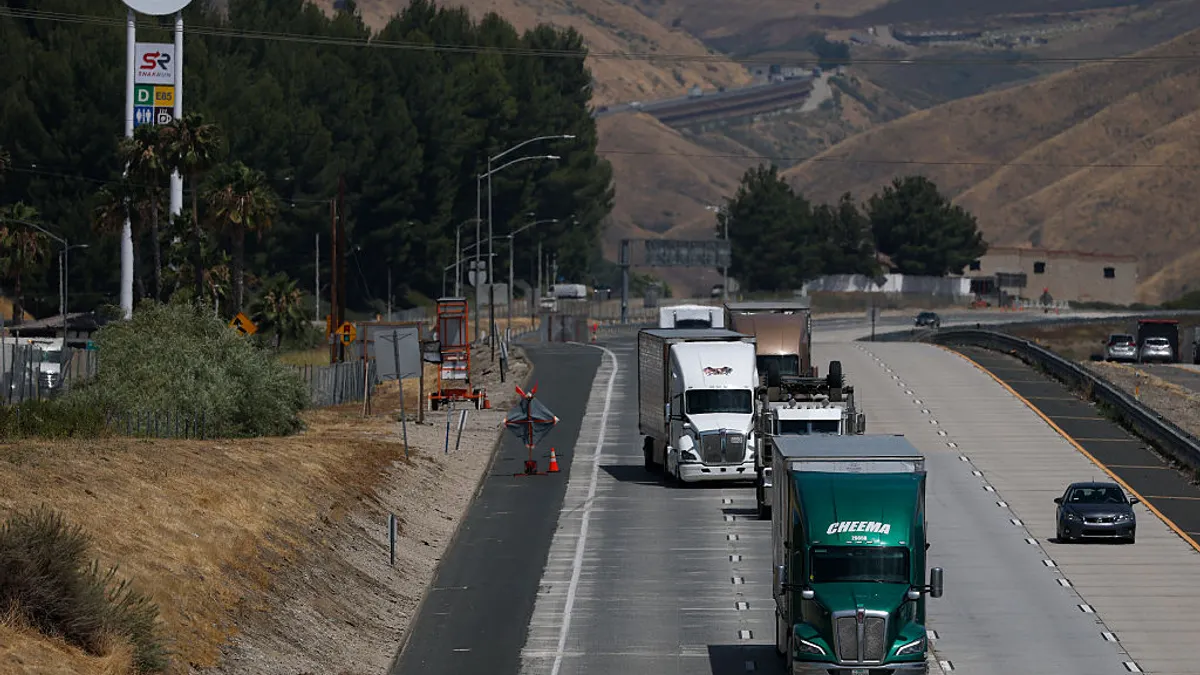
Diesel prices in California remain above $8 per gallon, putting continued pressure on trucking companies, particularly smaller operators with limited financial resources to absorb rising operating expenses. Although prices have edged down from their September peaks, the relief remains limited, according to Tim Pollock, president of the California Trucking Association, who spoke to Trucking Dive on Monday.
The statewide average price for on-highway diesel reached $8.09 per gallon on Monday, marking a one-cent increase compared with the previous week, according to the U.S. Energy Information Administration. During several weeks in September, the average had peaked at approximately $8.25 per gallon, based on figures recorded at the beginning of each week.
Pollock described the situation as a major burden for the sector, pointing out that fuel was already among trucking companies’ largest operating expenses before prices surged to unprecedented levels in both the first and third quarters of the year.
Smaller carriers face the greatest financial pressure
Smaller trucking businesses are particularly exposed because they often lack the cash reserves needed to pay higher fuel bills before fuel surcharges take effect. Even when those surcharges are applied, they may cover only 70% to 75% of the additional expense, Pollock explained. He also serves as vice president of CPS Express.
His company primarily operates throughout California, although some trucks travel to Arizona and Las Vegas. When vehicles leave the state, the company encourages drivers to refuel outside California to manage expenses.
However, smaller operators remain especially vulnerable to sudden price increases because they may not have sufficient upfront capital to cover the additional fuel costs while waiting for compensation through surcharges.
Federal diesel relief offers limited benefits in California
Last week, the Trump administration ordered an expansion of the permitted use of dyed diesel, a fuel traditionally reserved for off-road applications such as agricultural machinery, to include on-road vehicles. The measure is intended to defer certain taxes for the remainder of the year.
Trucking industry groups have questioned whether the initiative will address the underlying causes of the price surge.
In California, the potential benefits are particularly limited. The California Farm Bureau said in an online newsletter published Friday that the state restricts the use of tax-free dyed diesel on public roads. According to the organization, suspending California’s state diesel tax as well could save businesses 73 cents per gallon.
The industry is therefore seeking additional assistance at the state level. Earlier this month, freight and supply chain organizations, including the California Trucking Association, contacted Governor Gavin Newsom to urge his administration to provide relief.
Pollock emphasized that any reduction in expenses would be welcome, while acknowledging that the additional costs ultimately have to be absorbed somewhere in the supply chain.
Damage to energy infrastructure could prolong the crisis
The surge in diesel prices comes as the war involving Iran has disrupted critical trade routes and energy infrastructure. News reports indicate that dozens of refineries and energy facilities have sustained damage during the attacks, raising concerns about the time required to restore global refining capacity.
Matt Kropf, associate professor of engineering technology and director of the Harry Halloran Energy Institute at the University of Pittsburgh at Bradford, warned that repairs could take months. Rebuilding facilities from scratch could extend the recovery period considerably further.
Kropf told Trucking Dive that he personally expects diesel prices to remain elevated well into 2027. His assessment is based on the specialized refining equipment that has been damaged in international conflicts and the time required to repair, rebuild or replace it.
The prospect of prolonged high fuel prices creates further uncertainty for trucking companies, which must manage operating costs while maintaining freight services and meeting customer commitments.
Trump seeks additional diesel supplies from Russia
President Donald Trump has also said he is seeking to secure diesel shipments from Russia, according to a post published on his Truth Social account.
Meanwhile, the pressure on diesel supplies is even more severe in Europe amid the ongoing war between Russia and Ukraine, the Federal Reserve Bank of Dallas noted last week.
For California’s trucking industry, the combination of elevated domestic fuel prices, limited access to immediate financial relief and damage to international energy infrastructure suggests that cost pressures could continue well beyond the current year.