



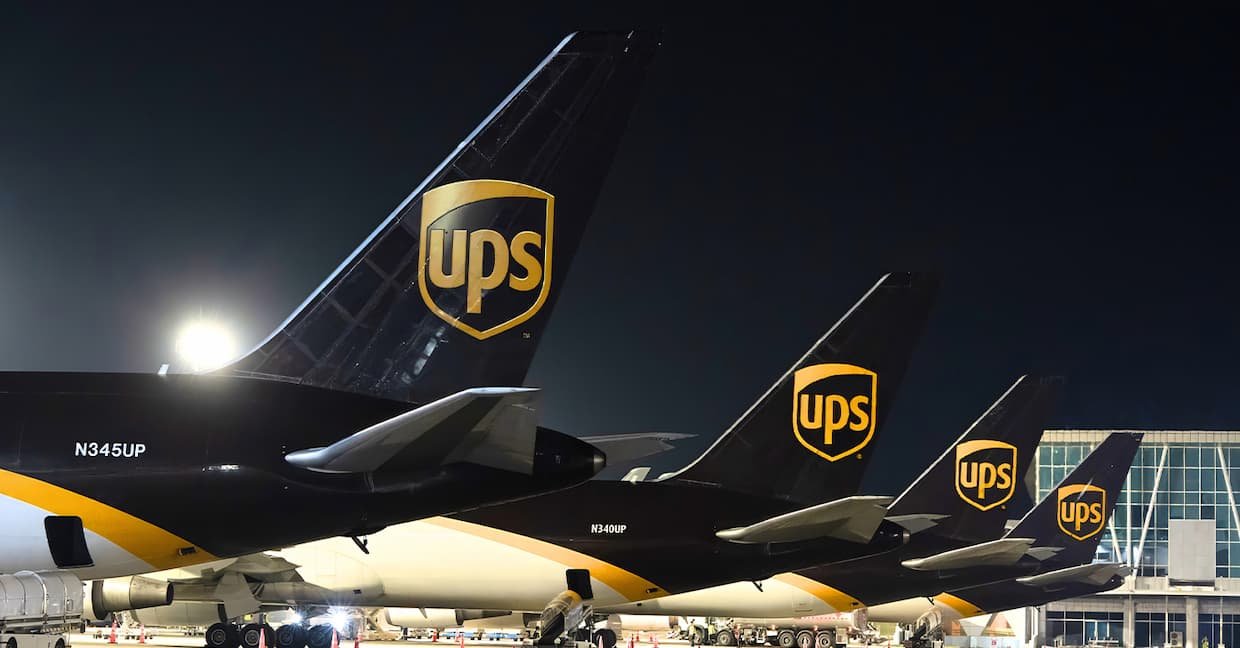
United Parcel Service (UPS) has significantly expanded its air freight capabilities in the Asia-Pacific region with the opening of a new hub at Clark International Airport in the Philippines. Backed by an $80 million investment, the facility is 15 times larger than the previous installation and is designed to improve delivery speeds, increase parcel-processing capacity and strengthen connections across the company’s international network.
The expansion covers 323,000 square feet and represents the first time UPS has publicly disclosed the capital expenditure allocated to the Clark project. According to a company announcement released Thursday, the new facility can handle an average of 46,000 parcels per day, with a maximum processing rate of 15,000 pieces per hour.
Faster deliveries and better regional connectivity
The expanded hub is expected to cut delivery times by as much as two days on some routes serving eastern China and other major Asia-Pacific markets. Similar improvements are expected in a number of South Asian markets and India. These gains will also allow UPS to provide extended shipment collection windows at customer sites and faster delivery of packages to cities across the region.
UPS now flies 170 weekly flight segments to and from Clark from around the world connecting businesses in Asia-Pacific, India, Europe and the U.S. Depending on the route, the shipments can be delivered in as little as one business day.
Additionally, the new installation has created nearly 600 jobs, furthering its economic impact in the Philippines.
“The region remains a hub for international trade and presents significant growth opportunities for businesses,” said Bernard Jiang, president of UPS Asia Pacific. The Clark development, he said, is the latest in a series of major investments to improve connectivity, enable trade opportunities, boost service reliability and enhance client supply chains.
Dedicated infrastructure for sensitive shipments
Beyond the expanded capacity, the hub in Clark is outfitted with dedicated infrastructure for customers in the healthcare, high technology and manufacturing industries, especially those shipping goods with stringent time and temperature controls.
The facility has three refrigeration and freezer units operating in the -20°C to 25°C range and dedicated re-icing capabilities. UPS has also incorporated radio-frequency identification (RFID) technology to help facilitate priority handling and improve shipment visibility for important healthcare products and other temperature-sensitive shipments.
Another important aspect of the improved operation is automation. Up to 9,000 small parcels an hour can be processed by a smart-enabled sorting system, helping to improve operational efficiency as shipment volumes rise.
On the airside, a fleet of electric ground support equipment supports ramp operations. This includes cargo tractors, belt and cargo loaders, ground processing units and forklifts, enabling cargo movements while reducing reliance on conventional ground-service equipment.
Clark takes on larger role in UPS’s Asian network
The expansion is also part of UPS’ restructuring of its regional air network to reflect changes in trade flows. The U.S. Department of Transportation in August approved the transfer to Clark Airport of six UPS flying rights previously associated with routes between Hong Kong and Warsaw, Poland, and Hanoi, Vietnam. The move aims to boost the growing trade flows between the Philippines and Hong Kong.
UPS began operating at Clark in 2002 when the airport was a former U.S. Air Force base. In March 2024 the company announced plans to build a new facility there, leading to its latest expansion.
The project is part of a wider investment program across the network of the company’s Asia Pacific operations. UPS started building a new hub at Hong Kong International Airport in March. The following month, it finished an expansion of its facility at Seoul Incheon Airport in South Korea, four times the size of the previous hub.
In parallel, the company opened its largest logistics center in the region in Taiwan, doubling capacity and productivity.
All of these developments form part of UPS’s strategy to grow infrastructure, increase automation and improve air connectivity to meet the needs of businesses operating in Asia and across international markets. The Clark hub is expected to be a key part of that strategy, providing higher throughput, specialized handling of shipments and faster transit times on major regional trade corridors.