



Boeing hasn’t built a 777 Freighter in almost two months, all because of a dispute with Vaero, a small Florida supplier that makes a critical wing component. The fallout has also hit the 767 family, freighters included, and the KC-46 aerial refuelling tanker. The two companies settled in late September, yet 777F production still hasn’t restarted, according to a Reuters investigation published on October 23, 2026, which cites Boeing employees and court documents.
The part at the heart of it is the trailing-edge rib kit, which is needed to assemble the wing. In a complaint filed in August, Boeing claimed Vaero had stopped delivering the kits, leaving its wing-production site in Everett, Washington, at a standstill. Boeing called the component indispensable and said Vaero was its only supplier. It put the cost of the disruption at up to $6.5 million a day.
Law.com first reported the lawsuit in August. As the outlet told it, Boeing argued that without the kits it could neither finish the fixed trailing edge of a 777 wing nor attach the wing to the fuselage. Boeing asked the court for an injunction forcing Vaero to resume deliveries, plus damages.
Even after the September settlement, three Boeing employees told Reuters the 777F line was still stopped. One of them said some parts had reached the 767 line since the deal, which suggests deliveries have partly restarted for that programme.
The shortage has already hit assembly. Reuters reports that Boeing pulled two partly built 777 Freighters off the final assembly line because work couldn’t go any further without the missing parts. Using data from aviation consultancy IBA, Reuters identified one of them as a FedEx aircraft.
Not every near-term delivery is necessarily lost, though. Two Boeing workers told the agency that some freighters whose wings were assembled before the dispute could still be delivered before the end of 2026.
Boeing is now looking at making the rib kits in-house so it depends less on Vaero. The part is used in wing assembly for both the 767 and the current-generation 777 Freighter. The newer 777X isn’t affected, since its wings are made of composites.
Company figures cited by Reuters show Boeing has delivered 21 777 Freighters so far in 2026, against 35 in the whole of 2025.
A production halt against a substantial order backlog
Demand for the 777F hasn’t gone away. Boeing’s latest orders and deliveries figures show the unfilled backlog still stood at 38 aircraft at the end of September.
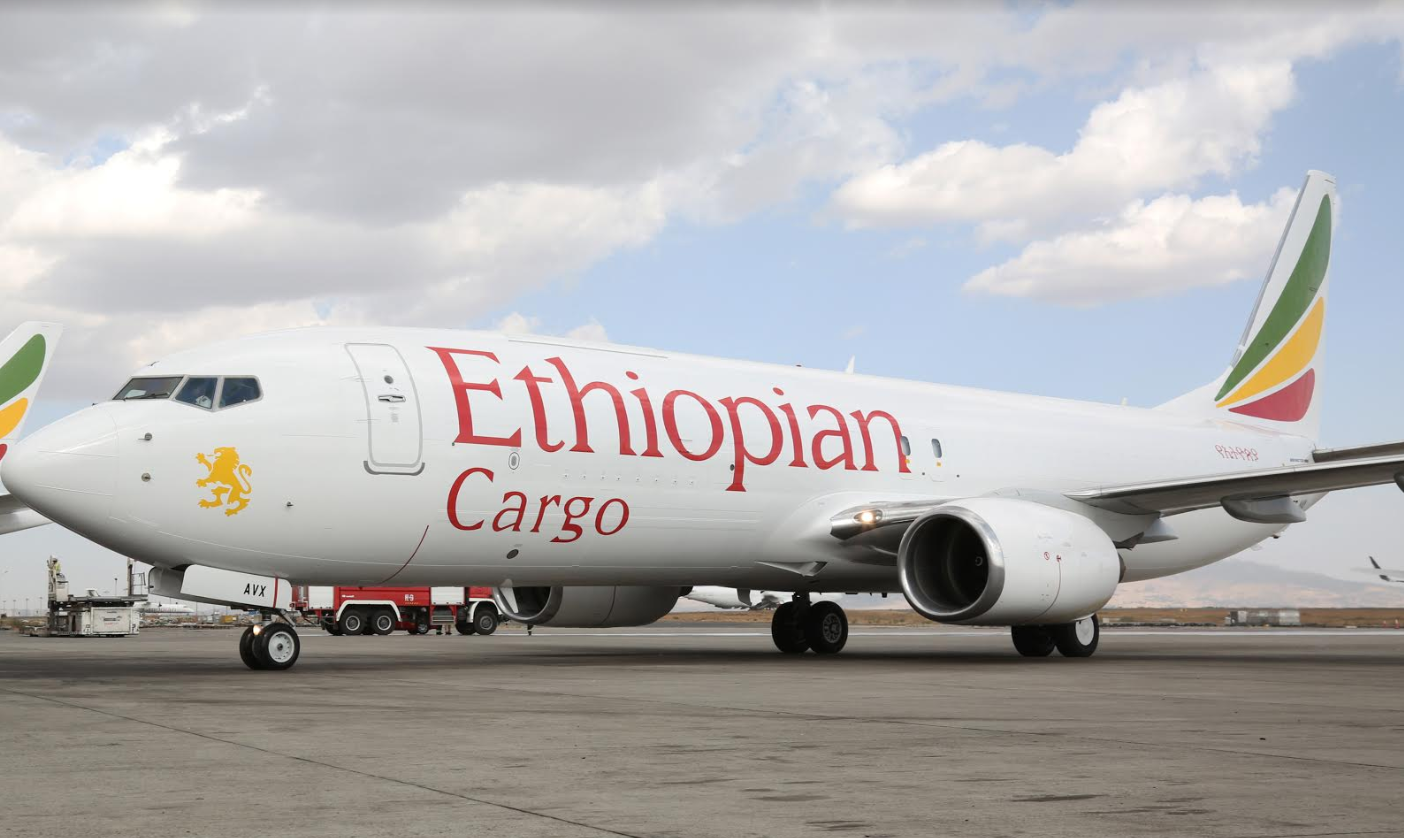
Two deliveries that month, one to Air China Cargo and one to FedEx, were offset by an order for two aircraft from Ethiopian Airlines Cargo. Boeing has booked six new 777F orders so far in 2026, from China Airlines, China Southern Cargo and Ethiopian Airlines.
FedEx has the biggest share of what’s still to come, with seven aircraft outstanding. Saudia has four on order and Emirates three. China Airlines, China Southern Cargo, Silk Way West Airlines and Ethiopian Airlines each have two left to take.
Another six aircraft are still listed under Volga-Dnepr UK, which is in administration, and 10 orders belong to customers Boeing hasn’t named.
The 777F remains a key link to the next-generation freighter
The current 777 Freighter also matters for Boeing’s switch to the 777-8F, its next-generation cargo aircraft, which isn’t certified yet.
Boeing is aiming for entry into service in 2029, though some customers think it could slip to 2030. That’s awkward, because emissions rules based on International Civil Aviation Organization (ICAO) standards would otherwise have forced the GE90-powered 777F out of production by the end of 2027.
Because of the 777-8F delays, Boeing won an exemption from the US Federal Aviation Administration. It allows up to 35 more 777 Freighters to be certified between January 1, 2028, and the end of 2030, buying Boeing time until its successor is ready.
A reminder of aerospace supply-chain vulnerabilities
The stoppage shows how risky concentrated sourcing is in aerospace. One supplier and one critical part were enough to disrupt several Boeing programmes, including an established freighter that major cargo operators are still ordering.
It also shows what sole-source dependence costs when a part can’t easily be swapped out. Bringing the rib kits in-house could cut that exposure. But the 777F line is still idle, a sign that settling a commercial dispute doesn’t bring output back overnight.