

• Latest
  • Trending
Gulf Ship-to-Ship Transfers Drive VLCC Rates to Record Levels

Gulf Ship-to-Ship Transfers Drive VLCC Rates to Record Levels

October 26, 2026
Shaw Turns Reverse Logistics into a Circular Flooring Opportunity

Shaw Turns Reverse Logistics into a Circular Flooring Opportunity

October 26, 2026
Mexican Avocado Imports Drive $641.5 Million in U.S. Trucking and Warehousing Activity

Mexican Avocado Imports Drive $641.5 Million in U.S. Trucking and Warehousing Activity

October 26, 2026
ADVERTISEMENT
The Airbus A350F Takes to the Skies and Puts an End to Boeing’s Long Reign Over Heavy Freighters

The Airbus A350F Takes to the Skies and Puts an End to Boeing’s Long Reign Over Heavy Freighters

October 26, 2026
The Boeing 777 Freighter Takes Over From the 747 as the World’s Most Flown Cargo Aircraft

The Boeing 777 Freighter Takes Over From the 747 as the World’s Most Flown Cargo Aircraft

October 26, 2026
FedEx Taps AutoZone’s Jamere Jackson as Its New Finance Chief

FedEx Taps AutoZone’s Jamere Jackson as Its New Finance Chief

October 26, 2026
Saudia Cargo Teams Up With Alfaisal University to Train Saudi Talent in AI-Driven Logistics

Saudia Cargo Teams Up With Alfaisal University to Train Saudi Talent in AI-Driven Logistics

October 26, 2026
Two Places Higher: Skyways Air Services Now Ranks 42nd in Global Air Freight

Two Places Higher: Skyways Air Services Now Ranks 42nd in Global Air Freight

October 26, 2026
Boeing 777F Production Remains Suspended Nearly Two Months After Supplier Dispute

Boeing 777F Production Remains Suspended Nearly Two Months After Supplier Dispute

October 26, 2026
Hengli Heavy Industry secures orders for 52 ultra-large container ships

Hengli Heavy Industry secures orders for 52 ultra-large container ships

October 26, 2026
ATPI and LEDGID team up to streamline digital travel management for seafarers

ATPI and LEDGID team up to streamline digital travel management for seafarers

October 26, 2026
Gulf Conflict Reshapes LNG Market Fundamentals as Buyers Rethink Supply Strategies

Gulf Conflict Reshapes LNG Market Fundamentals as Buyers Rethink Supply Strategies

October 26, 2026
US Extends Suspension of China-Related Maritime Fees Until 9 January 2027

US Extends Suspension of China-Related Maritime Fees Until 9 January 2027

October 26, 2026
  • Home
  • About Us
  • Press Room
  • Podcasts
  • Media Kit
  • Contact Us
  • Careers
Monday, October 26, 2026
  • Login
  • Register
The Logistic News
  • Logistic
  • Air
  • Maritime
  • Land
  • World
  • Business
  • Tech
  • Events
  • Advertise
No Result
View All Result
  • Logistic
  • Air
  • Maritime
  • Land
  • World
  • Business
  • Tech
  • Events
  • Advertise
No Result
View All Result
The Logistic News
No Result
View All Result
Home Logistic

Gulf Ship-to-Ship Transfers Drive VLCC Rates to Record Levels

Trouble around the Strait of Hormuz, much longer voyages and Asia's appetite for oil are sending Very Large Crude Carrier (VLCC) freight rates to levels nobody has seen before. But a fast-growing newbuilding orderbook has some people worried about a correction somewhere between 2028 and 2030.

The Logistic News by The Logistic News
October 26, 2026
in Logistic, Maritime, World
Reading Time: 4 mins read
0
Gulf Ship-to-Ship Transfers Drive VLCC Rates to Record Levels
ADVERTISEMENT

Ship-to-Ship Transfers in the Gulf of Oman Add Pressure to VLCC Capacity

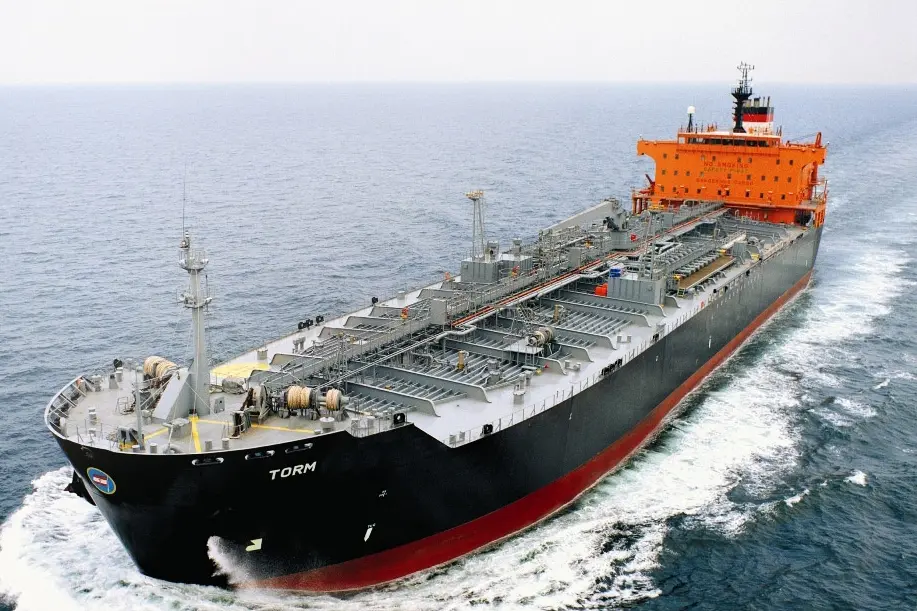
VLCC freight rates are exceptionally high right now. Operations around the Strait of Hormuz are disrupted, voyages take longer and Asian buyers keep taking oil, so fewer tankers are available. But the strength may not last. A big wave of new ships is on the way, and it could weigh heavily on rates in the coming years.

Yao (Oliver) Ge, Head of Research at McQuilling Partners, laid out the picture at a seminar in New York last week. The event, titled “Investing Through Uncertainty: How Technology, Capital and Consolidation are Reshaping Maritime Investment”, was organized with law firm Reed Smith and classification society DNV.

Ge opened by pointing out how much unexpected events now shape shipping markets. Conditions shift quickly, he said, so it pays to look past the disruption of the moment and ask what is really driving tanker demand and supply over the longer run.

ADVERTISEMENT

Extended Voyages and Strong Asian Demand Push Rates Higher

Ge called current rates for large crude tankers astronomical, and he put much of that down to Asia’s continued buying. Chinese independent “teapot” refineries have stepped up their purchases, and countries refilling their strategic petroleum reserves (SPR) are adding more support. He described the demand as “phenomenal”.

Meanwhile, lightering and ship-to-ship (STS) transfers are pushing costs up and tying down ships that are already on the water. That is especially true around the Gulf of Oman, where vessels coming through Hormuz have had to change how they operate.

Ge said transfers involving ships heading from inside the Persian Gulf toward Fujairah have stretched voyages dramatically. What used to take about four days can now take 12 to 15. Each ship does less work and stays tied up for longer.

Supply is under strain too. Ge pointed to attacks on ships, sanctions and the easing of some US restrictions linked to Russia, along with wider disruption in where tankers are and whether they are available.

Pipeline Diversions and Vessel Attacks Further Reduce Efficiency

The alternative routes are struggling as well. Oil moving through Saudi Arabia’s East-West pipeline, especially volumes that connect with the SUMED pipeline, matters more and more. Under that setup, tankers can load in the Mediterranean and then make the long trip to Asia.

But these flows haven’t escaped the disruption. According to Ge, the number of ships waiting at Sidi Kerir has jumped from two or three a day before the war to more than 20 now.

Attacks have also cut into the working fleet. A damaged ship can be out of action for two to three months while it is repaired, which takes that capacity off the market for the duration.

Put all this together and you get a lot of waste across tanker operations. That goes a long way toward explaining the exceptional rates in the large crude carrier segment.

Current Market Strength May Signal the Peak of the Cycle

Strong as the market is, Ge urged the audience not to assume it will stay this way. Shipping moves in cycles, and he cautioned against extending today’s conditions indefinitely.

He said the market was heading toward the peak of this cycle this year, with short-term disruption doing much of the work. The effect is strongest in the East, where demand and logistical bottlenecks combine to squeeze capacity.

He also noted that ships moving toward better-paying regions could help restore balance over time. As vessels reposition to chase higher returns, some of the regional imbalances propping up rates may start to ease.

The US Dollar and Emerging Markets Could Shape Future Oil Demand

Looking ahead to 2027, Ge widened the lens to take in the macro picture and the outlook for oil consumption.

He asked the room who would keep buying US government debt, suggesting the answer could show where shipping demand is headed.

The dollar has weakened in recent months against the Chinese and Japanese currencies, he noted. In his view, a softer dollar could help emerging markets and, in turn, support oil demand.

How currencies, emerging-market activity and energy use play off each other will remain an important thing to watch for anyone thinking about tanker shipping’s long-term outlook.

Growing VLCC Orderbook Raises Oversupply Concerns

The biggest long-term risk, in Ge’s view, is the number of new ships coming.

He warned that deliveries from the newbuilding orderbook could eventually undo much of the tight supply that is holding rates up today. The VLCC orders worried him most. He noted that 187 VLCCs have been ordered so far in 2026 and singled out China’s Hengli shipyard as part of the wider newbuilding boom. He called the size of the orderbook “very shocking” and “even scary”.

As these ships join the fleet, the extra capacity could push freight rates down, especially if demand growth doesn’t keep pace.

Ge did concede that some owners might cancel orders if they expect a weaker market. That would trim the number of ships eventually delivered, though how much is anyone’s guess.

Tanker Market Cooling Could Begin Between 2028 and 2030

Shipping runs in cycles, and that remains central to the outlook. Disruption, longer voyages and strong oil demand are holding VLCC earnings at exceptional levels today, but a flood of new deliveries could turn the market around.

Ge’s conclusion was that the tanker market should start to cool between 2028 and 2030 as new tonnage arrives. How soon and how sharply depends on demand, how fast the fleet grows, whether orders get cancelled and how long today’s supply disruptions last.

For owners and investors, the challenge will be telling the exceptional conditions behind today’s rates apart from the fundamentals that will decide what comes next.


Previous Post

Hengli Heavy Industry secures orders for 52 ultra-large container ships

Next Post

Boeing 777F Production Remains Suspended Nearly Two Months After Supplier Dispute

Next Post
Boeing 777F Production Remains Suspended Nearly Two Months After Supplier Dispute

Boeing 777F Production Remains Suspended Nearly Two Months After Supplier Dispute

Leave a Reply Cancel reply

Your email address will not be published. Required fields are marked *

A D V E R T I S E M E N T

Popular News

  • Drone Delivery Takes Flight: Amazon Partners with UPS for Trial Program

    Drone Delivery Takes Flight: Amazon Partners with UPS for Trial Program

    0 shares
    Share 0 Tweet 0
  • Rail Cargo Group Strengthens European Network with Captrain Netherlands Acquisition

    0 shares
    Share 0 Tweet 0
  • Automotive Inbound Logistics Market: Navigating Future Challenges

    0 shares
    Share 0 Tweet 0
  • Global Inflation Cools to Target After Three Years, Central Banks Face Policy Dilemma

    0 shares
    Share 0 Tweet 0
  • Dubai Mercantile Exchange Rebrands as Gulf Mercantile Exchange Following Saudi Tadawul Group Acquisition

    0 shares
    Share 0 Tweet 0

Recent News

Shaw Turns Reverse Logistics into a Circular Flooring Opportunity

Shaw Turns Reverse Logistics into a Circular Flooring Opportunity

October 26, 2026
Mexican Avocado Imports Drive $641.5 Million in U.S. Trucking and Warehousing Activity

Mexican Avocado Imports Drive $641.5 Million in U.S. Trucking and Warehousing Activity

October 26, 2026
The Airbus A350F Takes to the Skies and Puts an End to Boeing’s Long Reign Over Heavy Freighters

The Airbus A350F Takes to the Skies and Puts an End to Boeing’s Long Reign Over Heavy Freighters

October 26, 2026

Discover a new era of logistics reporting with The Logistic News, your go-to platform for breaking news, insightful features, and exclusive interviews shaping the global logistics and freight landscape. Trust us to deliver accurate, timely, and relevant information that empowers professionals and enthusiasts alike in navigating the intricacies of this vital sector.

Navigation

  • Home
  • About Us
  • Press Room
  • Podcasts
  • Media Kit
  • Contact Us
  • Careers
  • Privacy Policy
  • Terms of Use

© 2024 - thelogisticnews.com

Welcome Back!

Login to your account below

Forgotten Password? Sign Up

Create New Account!

Fill the forms below to register

All fields are required. Log In

Retrieve your password

Please enter your username or email address to reset your password.

Log In

SIgn Up Newsletter

This will close in 20 seconds

Manage Cookie Consent
We use technologies like cookies to store and/or access device information. We do this to improve browsing experience and to show (non-) personalized ads. Consenting to these technologies will allow us to process data such as browsing behavior or unique IDs on this site. Not consenting or withdrawing consent, may adversely affect certain features and functions.
Functional Always active
The technical storage or access is strictly necessary for the legitimate purpose of enabling the use of a specific service explicitly requested by the subscriber or user, or for the sole purpose of carrying out the transmission of a communication over an electronic communications network.
Preferences
The technical storage or access is necessary for the legitimate purpose of storing preferences that are not requested by the subscriber or user.
Statistics
The technical storage or access that is used exclusively for statistical purposes. The technical storage or access that is used exclusively for anonymous statistical purposes. Without a subpoena, voluntary compliance on the part of your Internet Service Provider, or additional records from a third party, information stored or retrieved for this purpose alone cannot usually be used to identify you.
Marketing
The technical storage or access is required to create user profiles to send advertising, or to track the user on a website or across several websites for similar marketing purposes.
Manage options Manage services Manage {vendor_count} vendors Read more about these purposes
View preferences
{title} {title} {title}
No Result
View All Result
  • Logistic
  • Air
  • Maritime
  • Land
  • World
  • Business
  • Tech
  • Events
  • Advertise

© 2024 - thelogisticnews.com