



Australia Post CEO Paul Graham will retire on June 30, at the end of the financial year, following more than five years leading the national postal operator. The company announced his departure on Thursday as it continues to face financial pressure despite sustained growth in parcel deliveries.
Graham informed the board of his decision after overseeing a period of operational reform and modernization. During his tenure, Australia Post implemented its Post26 Strategy and launched the next stage of its transformation through the Post30 plan.
Chairwoman Siobhan McKenna said Graham had helped strengthen the company’s position in Australia’s e-commerce economy, improve customer experience and transform its operations.
“Paul delivered landmark reforms under our Post26 Strategy with the support of our shareholders and launched the next phase of our modernisation through our Post30 plan,” McKenna said in a statement. She added that the initiatives had placed Australia Post on a clearer path toward long-term sustainability.
The board has now launched a recruitment process for the next Group chief executive, with both internal and external candidates to be considered.
Graham said he would remain focused on delivering the company’s priorities and supporting an orderly handover. He also emphasized Australia Post’s commitment to remaining publicly owned while operating without government funding, despite the need to continue investing in its network, services and workforce.
Financial results show mounting cost pressures
Australia Post posted an adjusted pre-tax loss of US$75.5 million for fiscal 2026 ended June 30. The result follows falling letter mail volumes, higher delivery costs and greater competition in the parcel market.
Revenue climbed 4% to $6.9 billion, with parcel delivery topping the list with 4.8% revenue growth.
The company was able to control costs and increase productivity. And the new delivery model and other reforms yielded $132 million in savings from the previous year. However, operating costs increased 3.9% as a consequence of wage increases, increased licensee commissions, increased contractor rates and incremental costs relating to the handling of higher parcel volumes.
Australia Post invested $290 million in its fleet, technology, facilities, parcel lockers and expansion of its regional network over the year. Part of that investment was funded from the sale of property.
These figures illustrate the challenge for the postal operator: growing parcel operations, modernizing its infrastructure while controlling costs in a market where competition is squeezing margins.
Increasing parcel volumes as competition intensifies
Australia Post’s parcel volumes grew 5.3% in the last financial year due to continued strong demand for e-commerce deliveries. But the company is facing growing pressure from competition from global online marketplaces, private-equity backed businesses and international delivery companies expanding into Australia.
Steady volume growth had not led to stronger margins, Australia Post said. Competitive pricing and the need to invest in network capacity, technology and customer experience have driven up operating costs.
Australia Post has expanded its parcel locker infrastructure by 64.3% to 1,510 locker banks over the year to increase convenience and enhance its delivery network, particularly in areas with high parcel demand.
The company also bought delivery technology platform Rendr to expand the delivery options available to customers.
Australia Post has partnered with Vinted as the online resale platform entered Australia, in another move targeting the growing second-hand goods market. The deal is supporting the rise of recommerce, a market driven by the sale of second-hand goods.

Paul Graham, CEO of Australia Post, who will retire at the end of the financial year on June 30.
Cost of dealing with letter mail remains a major financial burden
The delivery of parcels is on the rise, but Australia Post’s financial performance is hampered by traditional mail.
During fiscal 2026, the mail service posted a loss of $44.3 million. The result came as the number of letters volumes fell by a further 14.7 per cent, reflecting the growing shift to digital communications and online transactions. Higher postage rates partially compensated for lower volumes.
The real problem is more than just lost revenue. The story is much the same for Australia Post, which needs to maintain a nationwide delivery network but has fewer customers using traditional mail services and is facing rising infrastructure and operating expenses.
The company estimates that without the postage price increases implemented over the last four years, the mail business would have lost an additional $350.8 million.
In its financial report, Australia Post said it would have to raise prices further and improve efficiency to sustain essential services as letter volumes fall and delivery costs rise.
It is also continuing to open new post offices, to make it easier for customers to send, collect and return parcles.
A challenge for postal operators across the world
The financial difficulties of Australia Post are a symptom of a wider structural problem facing national postal services. Operators like U.S. Postal Service and Canada Post have also faced declining letter volumes, competition from private parcel carriers and recurring losses.
Government regulations can exacerbate the problems by restricting management’s ability to implement necessary changes in the workforce, operations, and finances to regain financial stability.
The challenge for Australia Post is to evolve its traditional postal network to meet changing consumer behavior in a parcel market increasingly shaped by international logistics providers and digital marketplaces.
New Victorian distribution center to boost parcel operations
Investing in infrastructure is at the heart of Australia Post’s strategy to deal with higher volumes of e-commerce.
Last week the company broke ground on a multimillion-dollar parcel facility in southeastern Victoria, Australia. The development will consolidate Australia Post and StarTrack courier operations currently spread across three sites into a modern purpose built facility.
The new site is aimed at improving operational efficiencies and service delivery to customers and other stakeholders across the region.
The 107,640-square-foot facility, expected to open in late 2027, will feature state-of-the-art automation capable of handling 5,000 parcels per hour. The technology is expected to boost processing speed, enhance tracking capabilities and cut down on manual handling to contribute to a safer working environment.
Australia Post said it was committed to ensuring rural communities had access to reliable parcel services as online shopping increased.
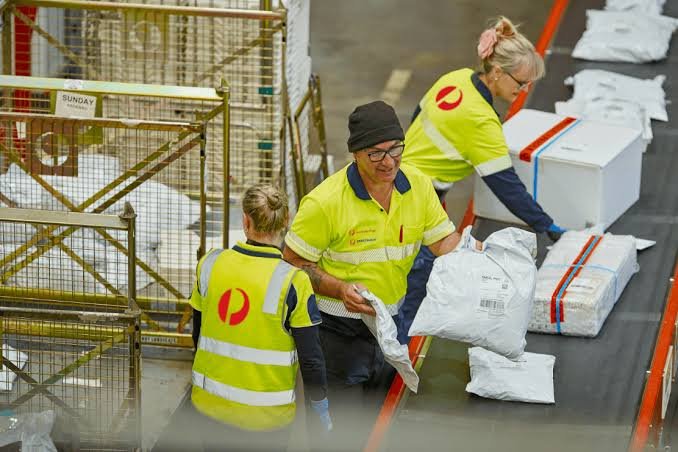
The Victorian project is part of a broader modernization program to boost capacity on the network and speed up deliveries. Australia Post said seven new facilities had opened across the country in the past year.
Qantas Freight teams up to increase air freight capacity
Meanwhile, Australia Post is teaming up with Qantas Freight to boost its air freight capacity.
The deal will add three Airbus A321 freighter aircraft to the dedicated postal fleet, boosting capacity for mail and parcels as demand for online shopping grows.
The expansion adds to the company’s investments in distribution centers, parcel lockers and delivery technology, giving Australia Post more resources to service its growing parcel business.
The company’s latest online shopping numbers show the size of the e-commerce opportunity. Australia Post’s latest e-commerce report has revealed Australians spent a record $17.6 billion online in the third quarter. Online spending was up 17% year over year.
“Parcels demand is growing and Australia Post is investing in ground infrastructure and air capacity. But the company still faces declining traditional mail volumes, rising delivery costs and stiff competition.
Graham’s departure comes as the organization struggles to balance these competing demands and to build a financially sustainable future for Australia’s national postal service.