




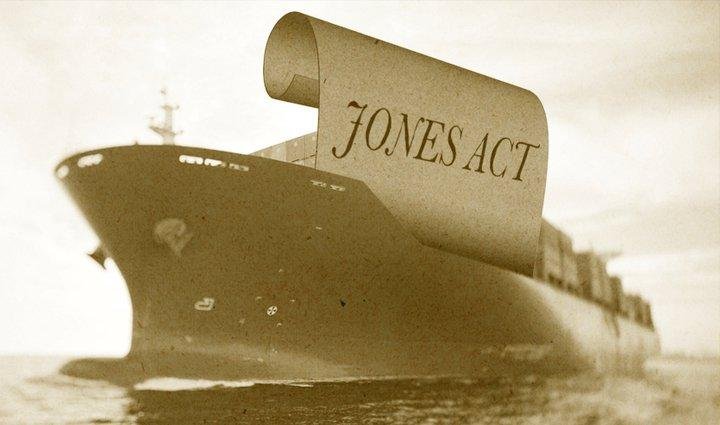
The future of temporary exemptions to the Jones Act is becoming a pressing issue for the US maritime industry as the November 15 expiration date approaches. Introduced by the Trump administration in response to rising oil prices linked to the war in Iran, the waivers have generated debate across domestic shipping markets, particularly among shipowners, tanker operators and cargo interests.
With the mid-term elections less than two weeks away, attention is increasingly focused on whether President Donald Trump will authorize another extension. The decision will have implications for energy transportation and the competitive position of the US merchant marine.
The Jones Act traditionally reserves transportation between US ports for vessels built in the United States, crewed by American mariners and owned in accordance with US citizenship requirements. The legislation is a longstanding pillar of domestic maritime policy.
Following the outbreak of the Iran war at the end of February, the administration waived certain Jones Act requirements in mid-March. Further extensions followed in May and August, with tighter conditions introduced for voyages operated by vessels that do not qualify under the law.
The current exemption covers 237 products, primarily petroleum and fertilizer-related commodities, compared with just 66 under the initial waiver. It is scheduled to remain in effect through mid-November.
Outlook influenced by competing priorities
In a symposium late last month, Alice Colarossi, a partner in Reed Smith’s Transportation Group in New York, explained the key arguments that could sway the administration.
Some market watchers expect Trump to extend waivers again, reflecting his historically mixed record on the Jones Act. But the administration has other policy priorities.
Its Maritime Action Plan, unveiled in February 2026, aims to “maintain an active and competitive US merchant marine.” An additional extension of waivers would appear to be inconsistent with that goal, by allowing vessels that do not meet the legislation’s requirements to participate in otherwise protected domestic trades.
At the same time, the exemptions were introduced in part to increase the movement of oil and petroleum products. The administration sought to ease pressure on energy prices affecting American consumers and businesses in 2026 by enabling more shipping capacity.
Most of the more than 300 voyages completed under the waivers have been tankers carrying crude oil, refined petroleum products and chemicals.
Why the exemptions may be extended
Colarossi said there are some things that could support another extension past Nov. 15.
One argument is that the waivers have become less damaging to the Jones Act industry and are being used less extensively since a voyage pre-approval requirement was introduced in mid-August, along with the second extension.
The exemptions could also be justified on the grounds of national security. “The national defense justification is so broad that it will still apply even if the war in Iran ends,” Colarossi said.
There’s also the geography of US energy transportation. The amount of voyages undertaken under the waiver between the Gulf Coast and West Coast highlights the latter’s energy deficit and lack of US intercoastal pipelines. Infrastructure constraints of this nature might strengthen the case for flexibility in domestic maritime transport.
Is Trump experimenting with a long term policy shift?
There is more to arguments than the pressing need to address energy prices. “The administration may be experimenting with a free-market approach that would entail a longer-term suspension of the Jones Act, perhaps with an eye toward throwing it out altogether,” Colarossi said.
It was proposed in Project 2025, a policy blueprint assembled by the conservative Heritage Foundation ahead of the 2024 presidential election. The document outlined a wide-ranging agenda of possible initiatives for a second Trump administration, much of it aimed at rolling back the scope of government regulation.
If the current exemptions are part of a larger policy experiment, then another extension could mean that a more fundamental rethinking of the rules governing domestic shipping in the US may be underway.
Trump has few options left with political opposition
There are reasons the waivers might persist, but plenty of hurdles could keep the administration from extending them.
Colarossi said the exemptions were difficult to square with Trump’s stated ambition to restore American maritime dominance. Keeping the waivers in place could undercut a policy goal of strengthening the U.S. merchant fleet.
Another big limitation is the backing that the Congress provides to the Jones Act. The legislation has strong bipartisan support and Congress can repeal the waiver by resolution. 2 / 5 Repealing the Jones Act itself would require a majority vote in Congress.
The election calendar may also weaken the political incentive for an extension. The mid-term elections will be over by the Nov. 15 expiration date and there will be less pressure on Trump to continue taking visible steps to lower oil prices for American consumers and businesses, Colarossi noted.
Impact on oil prices limited, more questions
Nor is there a clear case for extending the exemptions on economic grounds. “The waivers haven’t done what they were supposed to do, which was to lower oil prices,” says Colarossi.
The relatively small volumes moved under the arrangement, combined with the high freight rates charged by tankers operating outside the Jones Act framework, have had a limited impact on energy costs.
The results could undermine the case for keeping the exemptions, especially if the administration decides the benefits have not been sufficient to offset the impact on the domestic shipping industry.
Maritime industry eyes November 15
The Jones Act debate is unfolding against the backdrop of a tightly fought 2026 US mid-term election campaign. Political commentators, pollsters and forecasters predict close contests with every seat in the House of Representatives and many Senate seats at stake.
Therefore, the November 15 deadline is becoming a major uncertainty for shipowners, tanker operators and cargo interests.
Further extension would maintain additional flexibility to move energy products between U.S. ports. Expiration of the waivers would bring back the current restrictions, and provide greater protections for the American merchant marine.
As the deadline looms, the administration’s decision will be the pivot point of the US shipping industry with arguments involving energy security, political pressure, infrastructure limitations and maritime competitiveness pulling in different directions.