



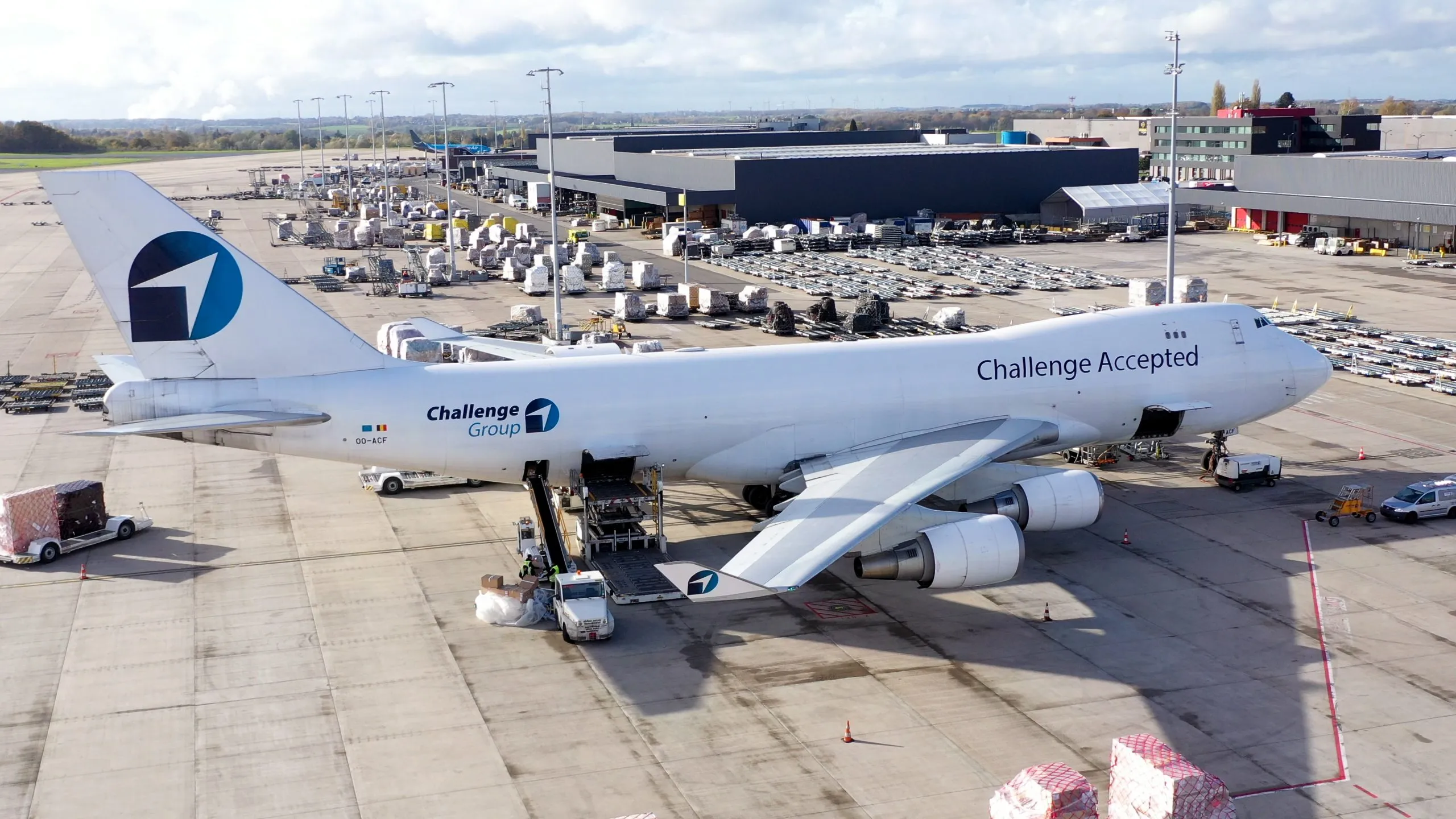
Challenge Group is to expand its international cargo operations with the launch of a new twice-weekly Boeing 777 freighter service linking India, Europe and the United States beginning 4 November 2026. The new route will connect to Chicago Rockford International Airport (RFD) in Illinois, providing another link between major industrial and logistics markets across the three regions.
Flights out of Navi Mumbai International Airport (NMI), India will stop at Liège Airport (LGG), Belgium, en route to Rockford. The service is targeted at better international freight connectivity and providing customers with more capacity for special shipments.
The route will also handle outbound shipments from Rockford to Liège and on to Europe and India. Challenge Group already operates a large road feeder network at the Belgian airport with some 1,500 truck movements a month. The infrastructure will also provide onward connectivity across Europe and allow movement of cargo between the continent and India.
New gateway for specialized cargo
The launch is expected to bolster Rockford’s position in the international air freight market and support Challenge Group’s continued growth in North America. Initially the service will concentrate on pharmaceuticals, oversized shipments and out-of-gauge cargo with the option to add air transport for live animals (AVI) at a later stage.
Or Zak, Group Chief Commercial Officer at Challenge Group, stressed the importance of the Chicago market and its diverse industrial base.
“Chicago is a strategically important market, serving a diverse array of industries that depend on reliable international cargo connectivity. “Launching this service via Rockford opens up further opportunities for customers moving specialist cargo between India, Europe and the United States,” he said.
The deal is another step in Chicago Rockford International Airport’s plan to attract international freighter operators and build its capabilities in specialized logistics. The airport has been especially aggressive in establishing itself as a key US gateway for temperature-sensitive products.
“The new link reflects the airport’s ongoing drive to grow its international freighter network, with cold chain logistics remaining a central priority,” said Zack Oakley, Executive Director of RFD.
Cold chain capabilities and expansion plans
The partnership could go beyond the initial two weekly flights. “We see opportunities to increase frequencies as demand grows and possibly introduce live animal transport, provided the necessary regulatory approvals are obtained,” said Challenge Group.
Another part of these plans is Rockford’s location. The airport is about 40 miles from animal quarantine facilities, similar to that of Chicago O’Hare International Airport (ORD). RFD now has applied to the United States Department of Agriculture (USDA) for permission to service AVI shipments.
“The airport’s infrastructure and operating model will help support the service as it grows,” said Rene Espinet, Vise President – Cargo Business Development at RFD.
“RFD, with its cargo-focused infrastructure and capability to handle specialized freight, is well placed to support this service as it grows. Challenge will benefit from the wider Chicago market as well as the efficiency, flexibility and congestion relief of a dedicated freighter airport,” he said.
RFD will also create special temperature-controlled trucking services for cargo arriving on the new route to support pharmaceutical shipments. These arrangements will support onward deliveries into the Rockford area and warehousing facilities in Chicago, helping to maintain the integrity of temperature-sensitive products throughout the transport chain.
The announcement was made at the International Air Cargo Association (TIACA) Air Cargo Forum in Miami, which took place from 26 to 29 October 2026.
The new connection will allow Challenge Group and Rockford to strengthen trade links between India, Europe and the United States, and to build a platform for further expansion in specialized air cargo, pharmaceutical logistics and temperature-controlled transport.