



Asian waters experience 43 percent drop in security incidents
The number of theft, armed robbery, drug smuggling and cyberattack incidents fell sharply in Asian waters in the third quarter of 2026. But the overall improvement in reported figures masks an evolving security landscape, with unusual narcotics concealment methods and a rare cyber incident highlighting emerging risks for shipping companies, port operators and their crews.
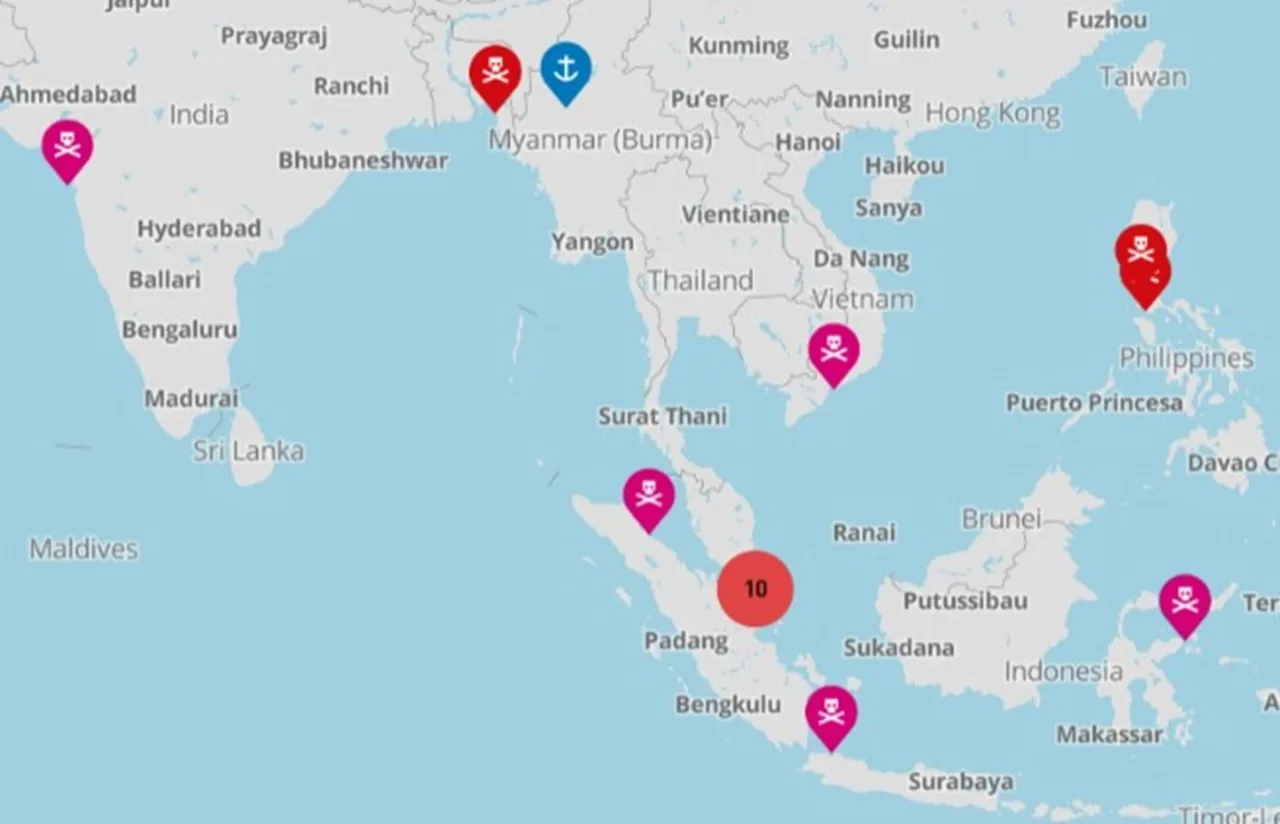
According to Risk Intelligence’s assessment on developments in maritime security during the period, the total number of incidents registered in the period decreased from 40 in the second quarter to 23 in the third, a reduction of 43%. The decline amounted to 18% compared to the same quarter in 2025 when 28 incidents were reported.
It was more dramatic still when we looked at theft and armed robbery in particular. Ship boardings linked to these crimes halved from 28 incidents in Q2 to 14 in Q3. The figure was also 44% lower than in Q3 2025.
These trends are in part indicative of the continued decline in vessel boardings in the Singapore Strait after the July 2025 arrests of gang members in Batam, Indonesia. But the wider range of incidents recorded this year shows that threats to maritime security are much wider than conventional theft and armed robbery.
Drug smugglers hide in the strangest places
The second and third quarters of 2026 highlight the rising diversity of threats faced by ships operating in Asia. While the incidents reported in Q3 2025 were mainly theft and armed robbery, this year’s reports have covered a wider range of criminal activity.
During the second quarter, US forces enforcing the American blockade of Iranian ports boarded at least seven ships, most in the Indian Ocean. No similar blockade related activity was reported in Asian waters during Q3. Regional authorities responded by stepping up counter-smuggling operations and seizing drug concealment methods not seen in the region for a long time.
More than 36 kg of cocaine hidden in the sea chest strainers of two vessels boarded while at anchor in Singapore. The officials would not give the names of the ships or their voyages but said both were under way and that the cocaine was not destined for Singapore.
The findings came after a similar seizure last November of 417kg of cocaine hidden in a sea chest on a ship arriving in Hong Kong from Brazil via Singapore, with further calls to Shanghai and Ningbo.
The concealment of illicit goods in sea chests is a known smuggling method on routes from South and Central America to North America and Europe. Such cases have been identified only rarely in Asia but the incidence may increase as South American trafficking networks seek to develop Asian markets in the wake of increased US anti-smuggling operations in the eastern Pacific and Caribbean.
Major Hauls of Methamphetamine and Ketamine in Indonesian Waters
Authorities also intercepted major drug shipments in waters west and east of Singapore as Indonesian agencies busted two separate smuggling operations.
Indonesian authorities have seized more than 2.6 tons of liquid methamphetamine from a general cargo vessel flying the flag of Tanzania off Tanjung Parit in the Malacca Strait. The operation was conducted by the Riau Islands police and Indonesia’s National Narcotics Agency.
The drugs were concealed in eight drums and in the ship’s water tanks, investigators said. The ship was then towed to Batam, Indonesia and all 10 Myanmar crew members detained.
In a separate operation, the Indonesian Navy also intercepted another vessel flying the Tanzania flag, a fishing boat, in the South China Sea, 25 nautical miles off Kota Tinggi, Malaysia.
On board the vessel officers found 65 sacks of ketamine weighing 1.3 tons, with an estimated value of $16.2 million. Eight crew members, comprising seven Myanmar nationals and a Taiwanese national, were detained. The seizure was one of the biggest drug busts in the country’s history, Indonesian officials said.
All three major smuggling cases involving cocaine, methamphetamine and ketamine in the Singapore Strait, Malacca Strait and South China Sea happened in August.
Historically, traffickers in the region have largely avoided commercial cargo ships and have used their own small vessels to ferry illicit cargo, although some shipments have been hidden in containers. The intercepted fishing vessel may be consistent with this traditional pattern, but the other cases raise questions about possible involvement of crews of commercial vessels.
Such involvement may be voluntary or compelled. The incidents therefore serve to underline the necessity of upholding vigilance among all personnel, including shipboard and shore-based staff, and making sure they remain alert to potential signs of drug-smuggling activity.
Cyberattack Strikes Malaysia’s Port of Tanjung Pelepas
In September, the maritime sector in Asia suffered a rare cyber incident when the container terminal at the Port of Tanjung Pelepas (PTP) in Malaysia was hit in its operating systems.
The terminal operator isolated the affected systems, halting container operations temporarily. During the recovery period, PTP continued essential activities by using manual gate-in processing for export containers and transfers between terminals within the free zone.
The disruption was largely on the landside processing.” There were some reports of minor delays to vessels, but generally the arrival and departure of ships was on schedule.
Operations were back under control within 24 hours. Systems were gradually restored, stabilizing landside activities and vessel-related workflows, and reaching normal operational levels after five days.
Global active ransomware group Direwolf has reportedly claimed the attack and threatened to publish data it allegedly obtained from the company, unless ransom negotiations are initiated. However, PTP said it had seen no evidence of any unauthorized access to customer data.
Previous attacks have shown port systems are vulnerable.
Cyberattacks on port infrastructure are still relatively infrequent in Asia, but there have been such incidents in the region in the past.
In June 2017, the NotPetya ransomware attack brought APM Terminals’ global operations to a halt, including key Asian ports in Mumbai and Yokohama. Major delays occurred when loading of cargo was halted.
By June 2023, several regional ports experienced distributed denial-of-service (DDoS) attacks that temporarily affected information technology systems with little operational impact.
The experience of cyber incidents in ports and container terminals has shown that they may disrupt logistics processes even if they do not interfere with the direct control of ships.
To date, no one has claimed to take control of a cargo ship or to shut down its on-board operating systems and request ransom from the operator.
But the dangers can be grave, as in an incident last August involving a crude oil tanker flying the Liberian flag in the Mediterranean. Attackers hacked into the ship’s systems, changed engine performance and disabled key monitoring and warning systems. Significantly there was no ransom asked for.
The incident offered a rare glimpse into the capability of malicious actors and the potential for cyber-enabled vessel hijacking, and highlighted the need for ship operators to consider digital threats in conjunction with more traditional maritime security risks.
A Greater Security Challenge for Shipping Operators
There is a clear decline in reported theft and armed robbery in Asian waters in the third quarter figures. But the emergence of new methods to smuggle drugs and the turmoil at PTP shows that fewer incidents do not necessarily mean a less complicated security situation.
Shipping companies, port operators and their crews increasingly have to take into account a wider range of risks, from traditional criminal activity and hidden shipments of narcotics to cyberattacks that may disrupt terminal operations or affect a vessel’s critical systems.
Physical and digital vulnerabilities in maritime operations as criminal networks change tactics will mean that it will remain essential to keep abreast of developments and to enhance security procedures and to monitor emerging threat patterns.
Related articles about Robbery

Wotton Kearney expands its Asian maritime practice with new arbitration teamSeptember 16, 2026

Houthi Maritime Embargo Raises New Threat to Saudi Arabia’s Red Sea Oil ExportsJuly 29, 2026

War Disruption, Tanker Tightness and Hormuz Traffic Dominate Maritime WeekApril 6, 2026

Truck Driver Accused of Trading $110,000 Chicken Load to Settle Drug DebtSeptember 21, 2026

Cargo Theft Ring Member Sentenced to More Than 10 Years Over $1.5 Million HeistSeptember 14, 2026