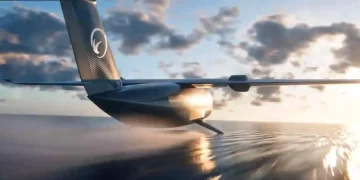




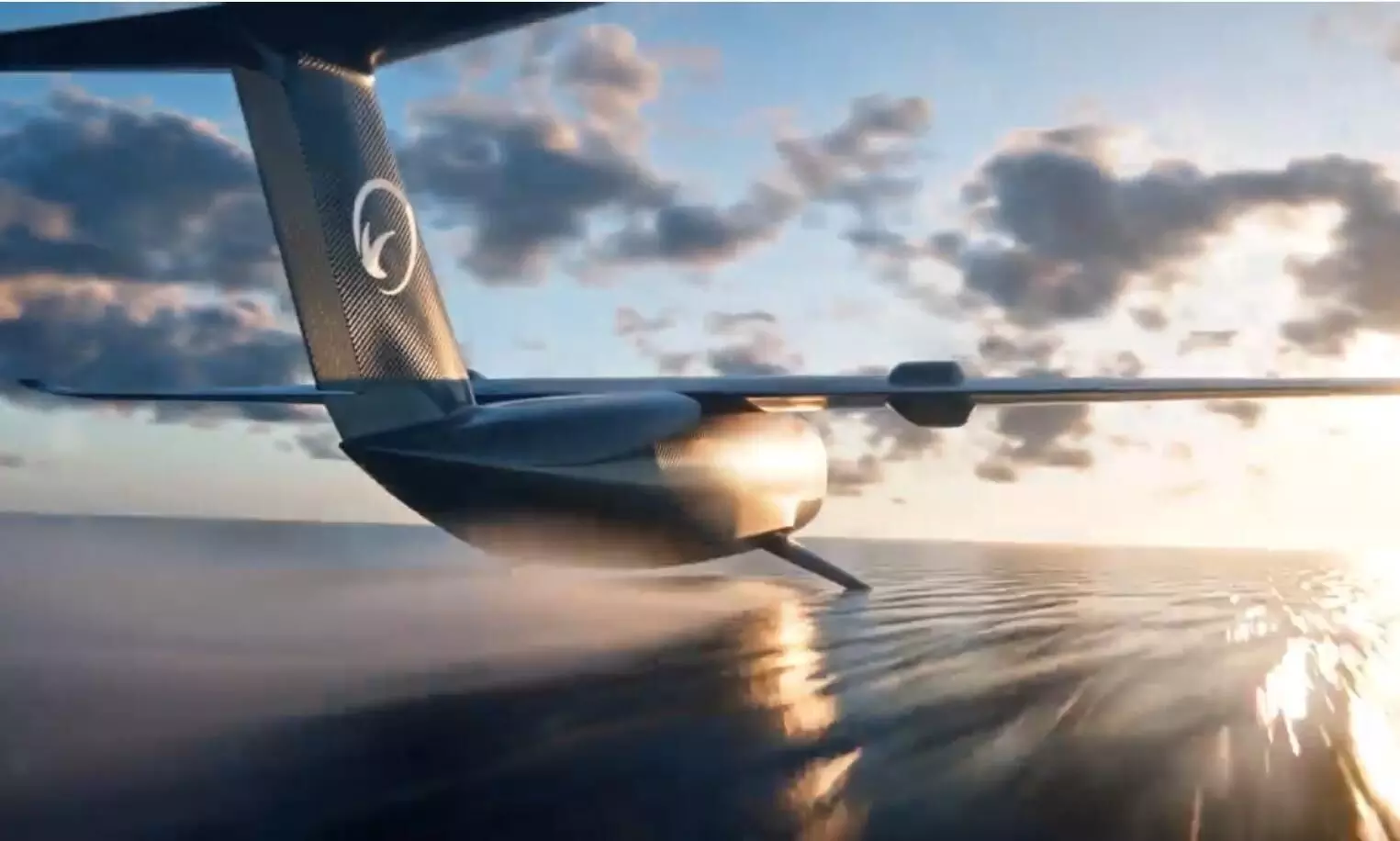
Aspera Industries, a Bengaluru-based deep-tech aerospace startup, has unveiled its first aircraft, Eureka, an autonomous amphibious cargo plane capable of taking off and landing directly on water.
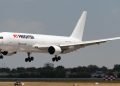
The company is aiming for one of the biggest cost gaps in logistics. The vast majority of the world’s cargo still moves by ship, but air freight costs about twenty times as much. For Aspera, this difference is not an inevitable economic fact of life but an engineering challenge that aircraft design and autonomy can help address.
Eureka is a fixed-wing, pilotless aircraft designed specifically for cargo operations. Unlike conventional seaplanes it does not depend on a stepped hull to work on water. Instead, the aircraft uses retractable hydrofoils, a method aimed at overcoming one of the traditional drawbacks of conventional seaplanes.
The stepped hull design worked well on the water but created a good deal of drag while the aircraft was in flight. This trade-off led to the demise of seaplanes after the 1950s. Aspera’s hydrofoil-based solution aims to mitigate that tradeoff between flight efficiency and water operations.
According to the company, Eureka is being developed to autonomously transport payloads of up to 1,000 kilograms, cruise at approximately 6,500 feet, and achieve a range of 2,000 kilometres.
For Aspera founder Khushi Mittal, the challenge can largely be reduced to two fundamental engineering questions: how much of an aircraft’s total weight can be dedicated to actual cargo, and how much drag is generated for every kilogramme of lift.
Aspera says Eureka has been engineered to optimise both factors. The company is targeting freight costs of less than $1 per tonne-kilometre at launch, with costs potentially falling below 50 cents per tonne-kilometre once the aircraft reaches fleet scale.
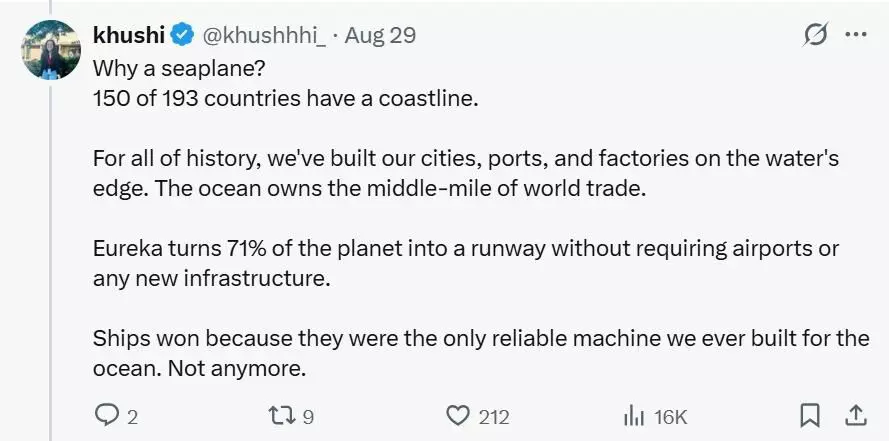
The company’s vision is closely tied to geography. Around 150 of the world’s 193 countries have coastlines, while many of the world’s largest cities, ports and industrial facilities were historically developed along waterways. With water covering approximately 71% of the planet’s surface, Aspera sees oceans, lakes and coastal areas as potential operational infrastructure that could effectively provide aircraft access without the need to build new airports.
Although India remains part of Aspera’s long-term roadmap, the company plans to initially focus its commercial efforts on New Zealand, Australia and Southeast Asia.
Its first target customers are expected to include logistics providers, freight forwarders and defence organisations.
Aspera also intends to build and operate its aircraft internally, not just be an aircraft manufacturer. The strategy would allow the company to have more control over the customer experience while designing the aircraft around the needs of cargo operations.
The startup was founded in June 2025 by Khushi Mittal, who dropped out of a physics and computer science degree at the University of Alberta to launch the company.
So far, Aspera has raised $750,000 in seed funding from Inuka Capital. The company remains in the prototyping phase but says it has progressed from the initial design stage through simulation and into the development of a working-scale prototype. Water testing has reportedly validated the core aerodynamic and hydrodynamic assumptions behind the aircraft’s design.
Aspera is also being advised by Madhavan Nambiar, the former Secretary of India’s Ministry of Civil Aviation. His involvement gives the startup access to expertise in the regulatory and policy environment it will need to navigate as Eureka moves from prototype development towards commercial certification.
The unveiling of Eureka places Aspera among a growing group of young Indian aerospace startups betting that autonomous systems and new aircraft designs could eventually make aerial transport more competitive with conventional land and maritime logistics.
One of those companies is Airbound, which recently raised $37 million to advance its own autonomous cargo aircraft programme.
Whether Eureka will ultimately achieve its ambitious cost targets remains to be demonstrated. The aircraft is still at the prototyping stage, and reaching fleet-scale economics will require the company to overcome technical, regulatory and commercial challenges.
Nevertheless, Aspera’s ambition is clear: to build a future in which the cost of not flying cargo becomes higher than the cost of flying it.