



Australia has officially launched the first vessel in its long-awaited national strategic fleet programme, marking a major step in the country’s effort to strengthen maritime resilience and secure critical supply chains during emergencies.
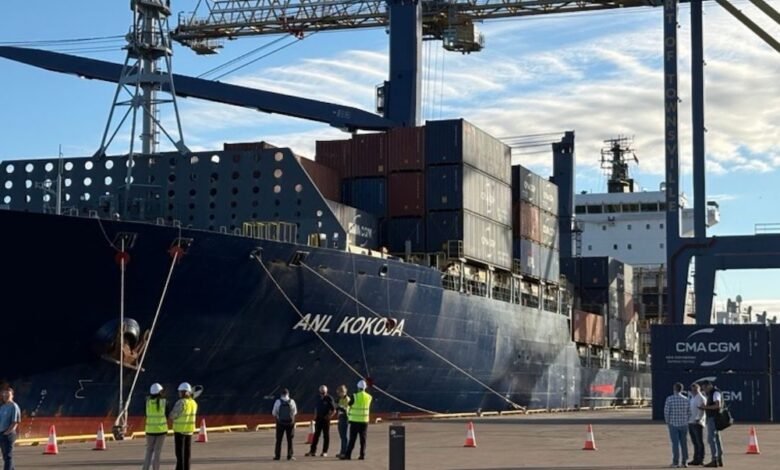
The 1,740 teu containership ANL Kokoda, built in 2011 and operated by ANL Container Line, will become the first ship in the government-supported fleet. The vessel has been chartered by the federal government to support Australia during national crises, natural disasters and major supply chain disruptions.
Designed to transport cargo, fertiliser and emergency supplies along the Australian coastline, the vessel forms part of Canberra’s broader strategy to reduce dependence on foreign-controlled shipping capacity following vulnerabilities exposed during the covid pandemic.
Australian authorities also indicated that future additions to the strategic fleet could include tanker capabilities as the programme expands.
Speaking during the vessel’s launch in Townsville, Transport Minister Catherine King said the initiative was essential to improving national resilience in an increasingly uncertain geopolitical environment.
According to King, the availability of a dedicated government-supported vessel could become critical during floods, emergencies or situations where domestic cargo movement is disrupted along the coast.
The Australian Labor government first announced plans for a national strategic fleet in 2022 after the pandemic highlighted the country’s heavy reliance on international shipping for essential imports and domestic supply chains.
The long-term objective is to establish a fleet of 12 vessels. The first stage of the programme will involve a five-year trial using three ships before broader expansion takes place.
However, the rollout has experienced delays. The government had hoped to announce the first fleet operators in 2025 but talks took longer than expected.
King explained that the worsening security situation in the Middle East complicated discussions with shipping companies, particularly around insurance arrangements and operational risk assessments.
She said the regional conflict significantly affected shipping insurance conditions and became one of the key reasons behind the delays.
Australian officials confirmed that negotiations for the remaining two trial vessels are already at an advanced stage, with further announcements expected soon.
Esra Bora, Managing Director of ANL Container Line, described the programme as an important investment in Australia’s long-term maritime capability and supply chain security.
She noted that maintaining a strong maritime network is essential for supporting economic activity, trade flows and merchant shipping operations across the country.
Angela Gillham, Chief Executive of Maritime Industry Australia, also welcomed the initiative, saying the strategic fleet would provide an important safeguard during future emergencies and supply chain disruptions.
- Latest
- Trending
ADVERTISEMENT







