



For a stadium concert, the countdown does not begin when the first lights come on. It starts months earlier, when thousands of pieces of equipment have to be planned, moved, cleared and delivered in precisely the right order.
Tickets are sold long before the show. Fans travel across borders. Production teams work to fixed construction schedules. And once the tour reaches a stadium, there is virtually no room for a logistics delay.
That was the challenge facing a major global recording artist ahead of a scheduled performance in São Paulo, Brazil. Behind the stage lights, sound systems, video screens and production infrastructure was an enormous air cargo operation: 700 tonnes of high-value equipment had to travel from Europe to South America within just three days.
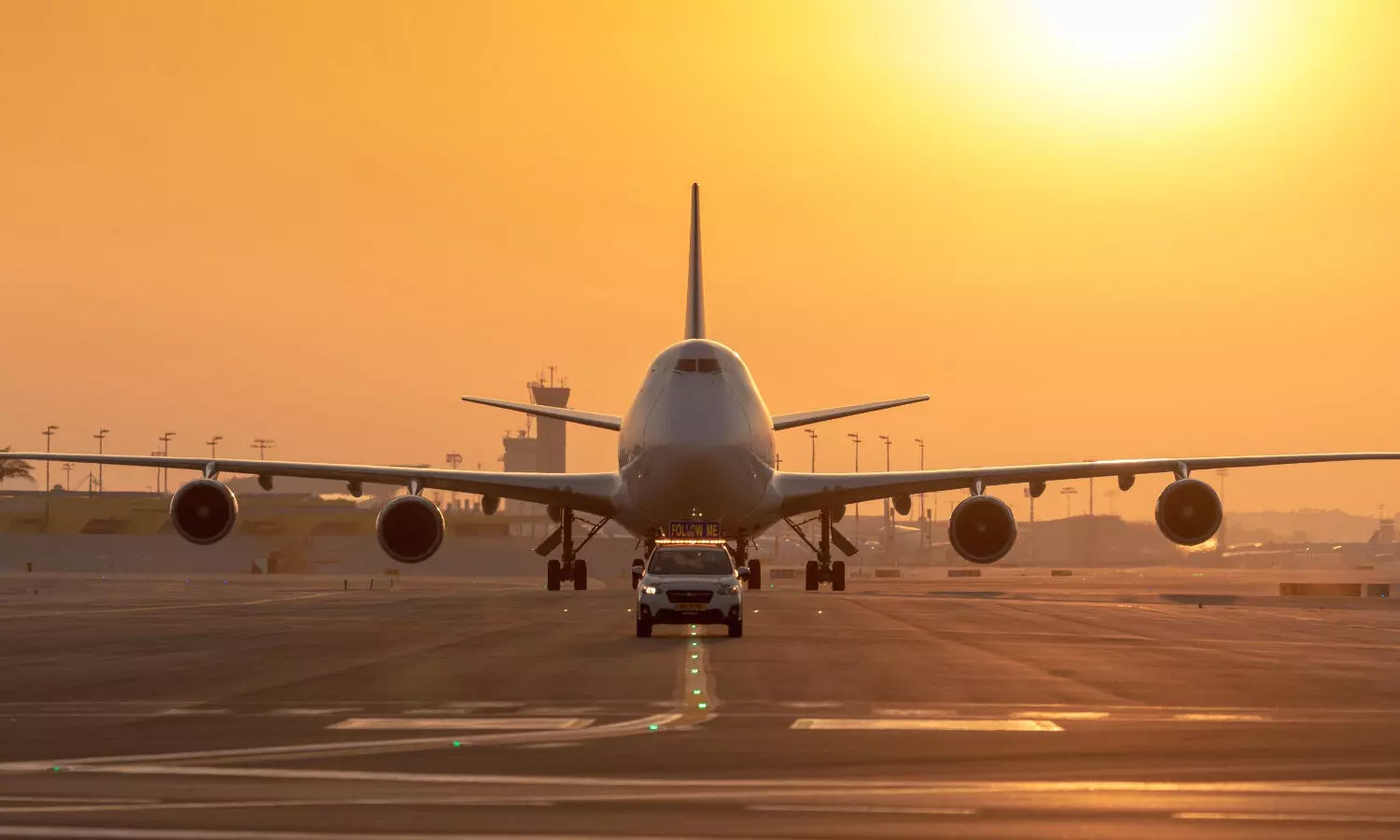
The operation involved seven Boeing 747 freighter flights, departing from Liège Airport (LGG) in Belgium and arriving at Viracopos International Airport (VCP) in São Paulo.
The scale of the airlift was significant, but the aircraft were only one part of the equation. The real complexity lay on the ground, where hundreds of tonnes of specialised equipment had to be received, screened, organised, built onto aircraft pallets and loaded according to the precise sequence in which the equipment would later be needed at the concert site.
This was not simply a question of filling aircraft holds. It required chronological staging, accurate weight distribution, regulatory coordination and close cooperation between multiple organisations.
Every pallet position mattered. If even one critical component was placed on the wrong flight or delivered out of sequence, the consequences could quickly reach the stage construction site thousands of miles away.
A four-airline operation
It took several airlines working together to move this amount of freight in a 72 hour operational window. Challenge Group was the main conductor, with Challenge Handling responsible for the demanding warehouse and ground-handling operation in Liège. Four carriers were actually involved in the air transportation: Challenge Airlines, Atlas Air, Cargolux and Network Aviation. “The responsibilities are spread across the operation,” said Chief Executive Officer of Challenge Group, Yossi Shoukroun. “Challenge Group was the engine behind this project, but the air-transportation itself was done by four airlines: Challenge Airlines, Atlas Air, Cargolux and Network Aviation. “This was a team effort and all carriers were involved in the successful execution of the project.” Shoukroun said the toughest part of the operation was not the flight itself but what happened prior to departure. But the real operational intricacies were at the ground level. Challenge Handling, an integral part of Challenge Group, was responsible for running the demanding warehouse and ground handling operation. “The real logistical challenge was not only receiving hundreds of tons of production equipment in a very short timeframe, but also planning the build-up and precise loading of each aircraft according to the sequence required for assembly at destination. The flight allocation was typical of the flexibility needed for a large scale touring operation. Challenge Airlines, which specializes in oversized project cargo and specialized technical equipment that is vital to main stage infrastructure, was one of the seven Boeing 747 freighter services. The other six departures were spread between Atlas Air, Cargolux and Network Aviation. The work was spread among the four carriers, which helped to spread the touring freight wave without over-taxing an airline’s fleet or schedule in a region. Cargo acceptance also had to be handled according to the individual operating standards of each carrier. The shipment contained a variety of equipment including dangerous goods such as lithium batteries used to power touring electronics. They required very specific documentation and sign-offs by the loadmaster before being accepted for carriage. Ramp handling was divided similarly at Liège. Challenge Handling took care of the ramp operation for the Challenge Airlines flight and one partner-carrier departure, with the other flights handled by two other major ground-handling providers.
The ground operation began months before departure
The operation at Liège was the result of months of preparation.
Detailed planning between Challenge Handling, the client and other operational stakeholders began at the end of May, with the objective of creating a complete operational blueprint covering every stage of the cargo journey.
Once the operation went live, the physical scale of the freight became immediately apparent.
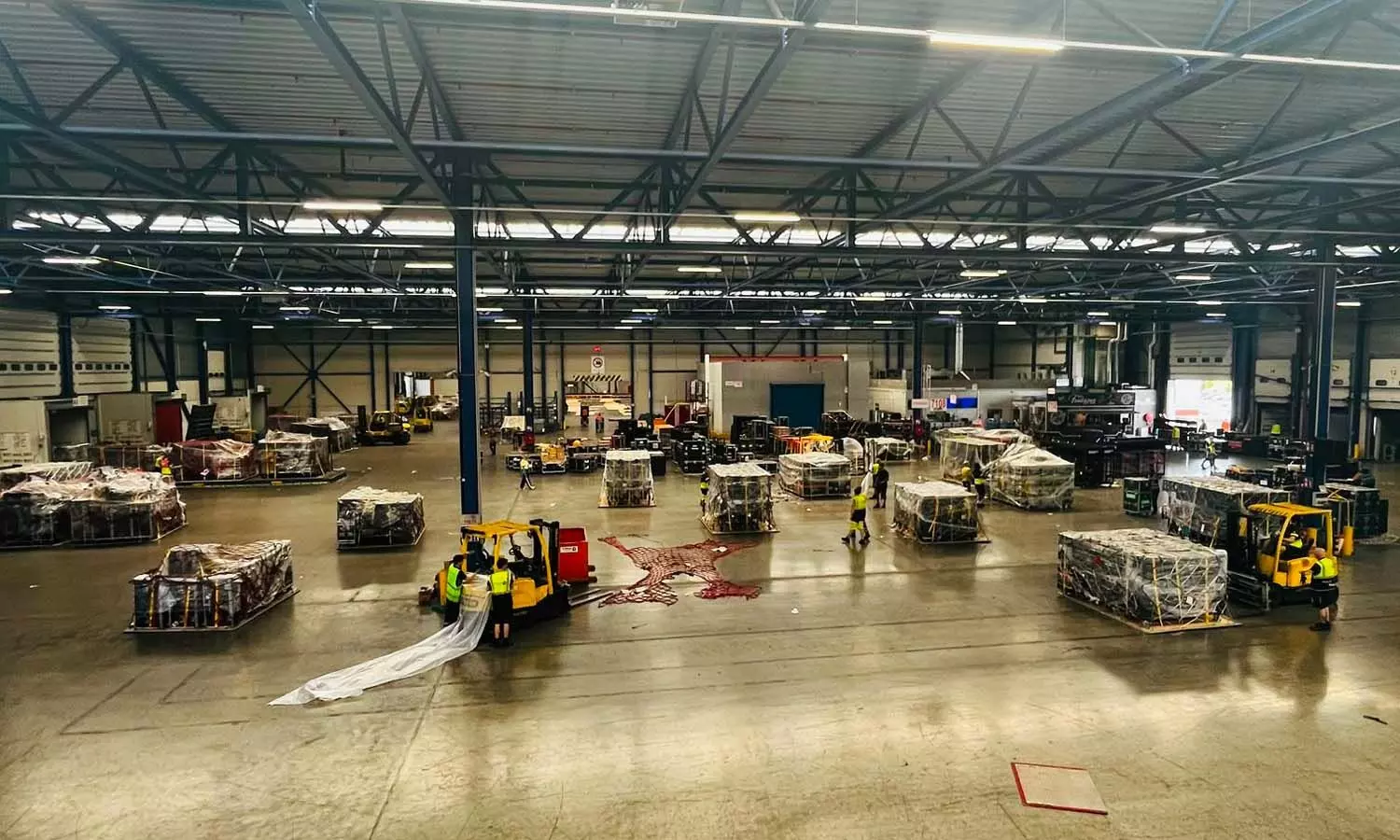
Across the two busiest operational days, approximately 80 heavy trucks arrived at the Challenge Handling facility in Liège. Together, they delivered 700 tonnes of specialised production equipment.
Handling that volume while keeping the warehouse moving continuously required careful control of space, people and equipment.
The first day was therefore dedicated entirely to infrastructure preparation. Before the main cargo flow began, Challenge Handling positioned and prepared 156 Unit Load Devices (ULDs) across the facility floor.
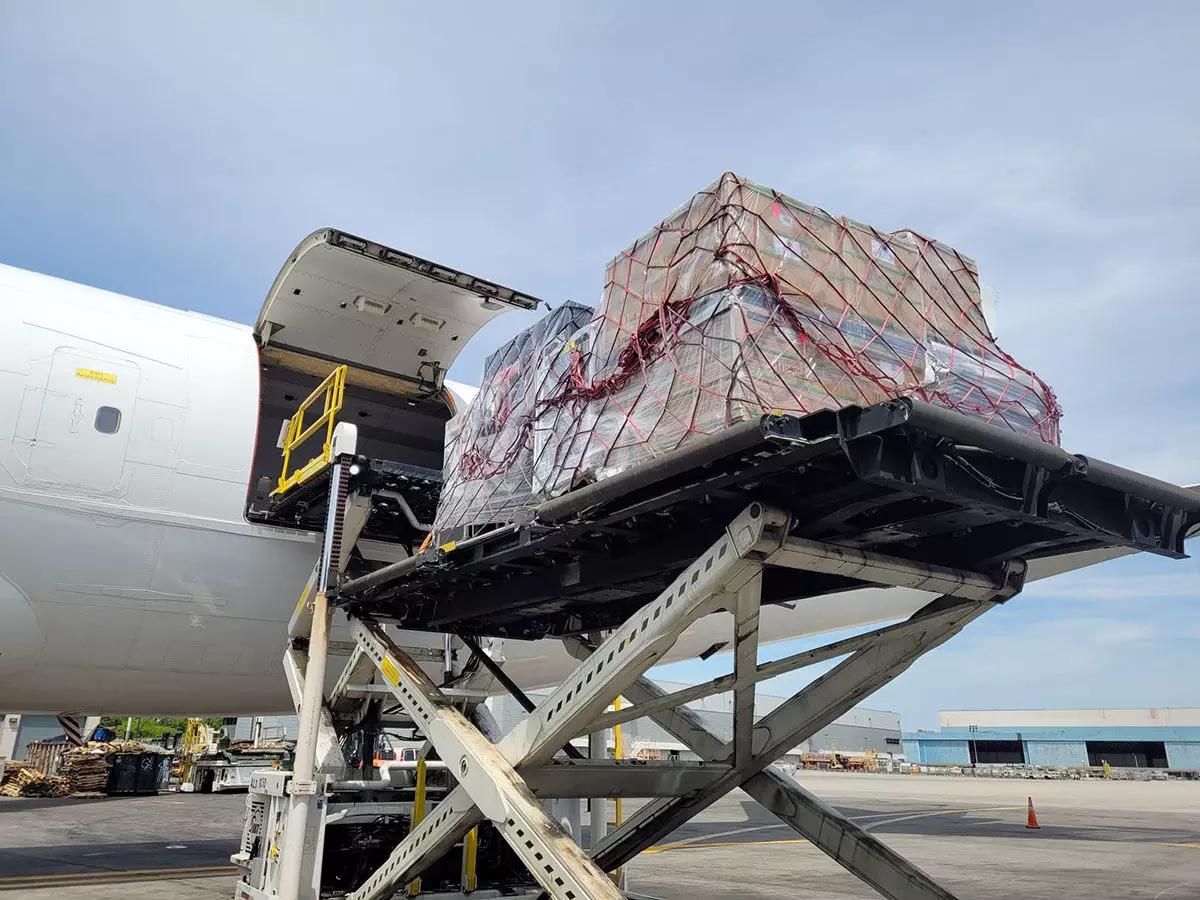
These specialised pallets and containers are used to transport cargo aboard widebody freighters. Having them ready in advance created immediate build-up positions as the trucks began arriving and helped prevent congestion inside the facility.
Three specialised operational teams worked simultaneously to maintain the required throughput.
The entire process was governed by backward-engineered schedules incorporating truck arrival times, warehouse capacity, security-screening throughput, ULD availability, cargo build-up, airline acceptance procedures and ramp readiness.
The objective was straightforward but demanding: prevent one aircraft movement from creating a bottleneck for everything that followed.
Building the cargo backwards from the concert
Touring equipment behaves very differently from conventional commercial freight.
Manufactured products, agricultural goods or other standard cargo can generally be handled as interchangeable units of volume. Concert production equipment cannot.
A stadium stage is built progressively. Structural elements, base scaffolding and primary rigging have to be installed before lighting systems, audio arrays, video walls and musical instruments can be put into position.
That means the way cargo is built onto ULDs at the departure airport can directly influence the construction schedule thousands of kilometres away.
A foundation component accidentally placed on a later flight can become a major problem for a construction team waiting at the destination. The same applies if an essential item is positioned deep inside a lower-deck container and cannot be accessed when required.
For the São Paulo operation, every pallet position across all seven Boeing 747 freighters was mapped against the stage construction sequence in Brazil.
Cargo was therefore sorted, built and secured onto the 156 ULDs at Liège in the precise order required by the teams waiting for it in São Paulo.
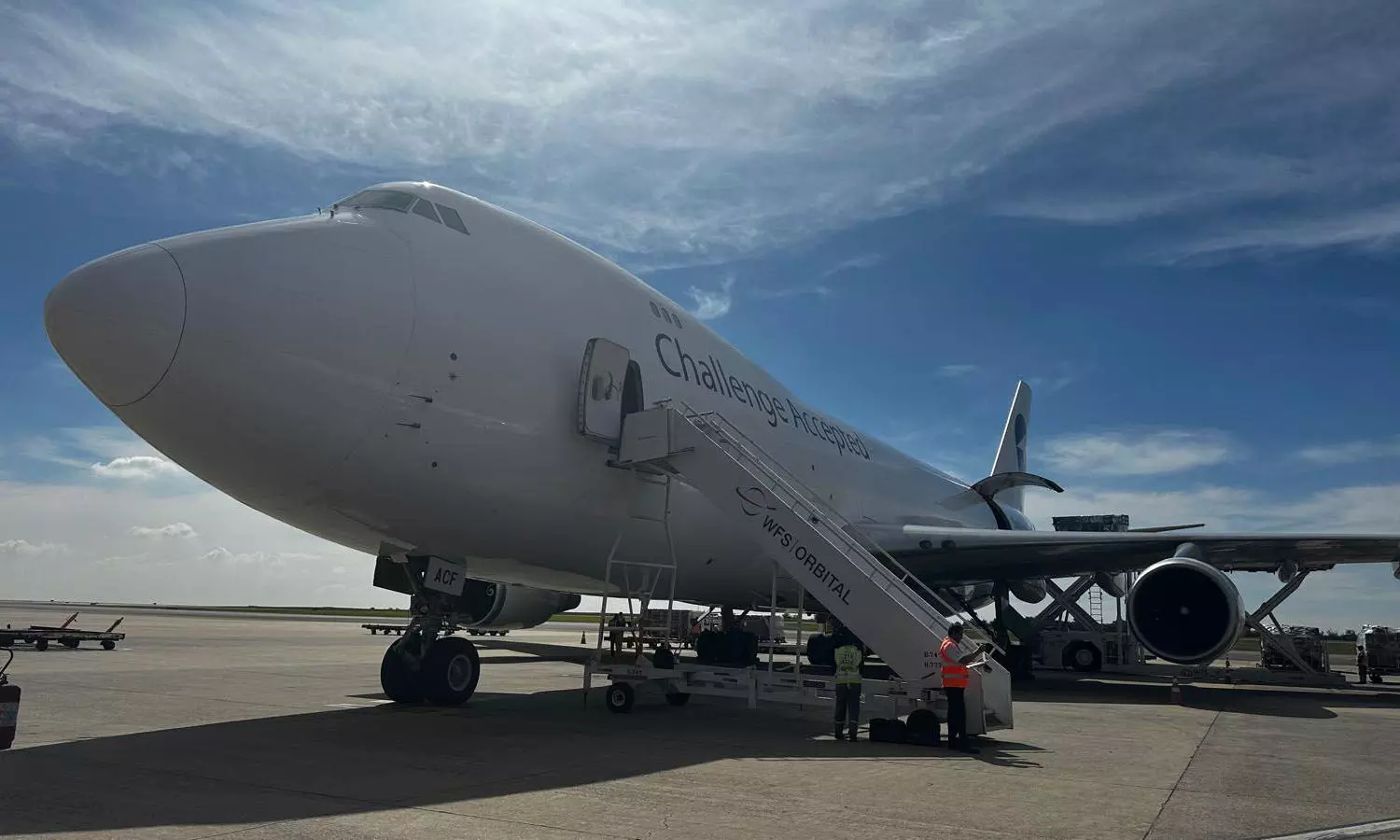
The approach paid off after arrival. On the Challenge Airlines flight, which landed at Viracopos International Airport, the ground team completed the aircraft offload in approximately one hour and 30 minutes.
Priority equipment could then move directly into road convoys heading towards the concert venue, without waiting for the rest of the aircraft’s cargo to be processed.
Security, customs and 700 tonnes of high-value freight
Moving such a large quantity of high-value international cargo in a 72-hour window also required regulatory processes to move at the same pace as the physical freight.
A delay in customs clearance or security screening could potentially stop an aircraft from departing and create a chain reaction affecting the wider tour schedule.
Security screening at Liège was conducted on a significant scale.
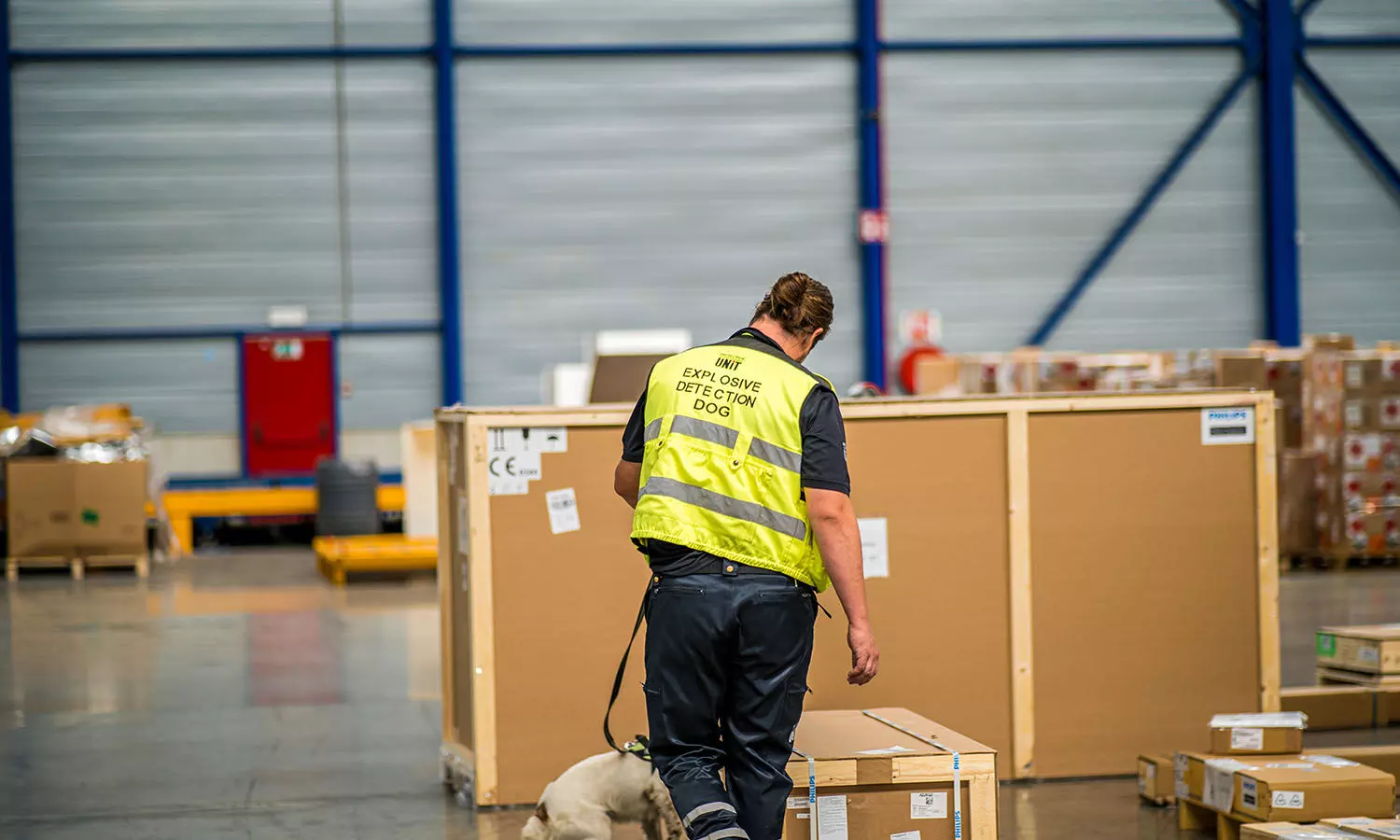
Challenge Handling deployed two dedicated Explosive Detection Dog (EDD) teams, working across eight continuous shifts. The K9 teams screened incoming cargo as it was unloaded from the 80 trucks, allowing security checks to take place alongside the physical cargo build-up rather than becoming a separate bottleneck.
Administrative procedures were managed simultaneously through the airport’s cargo office.
International concert tours can involve millions of pounds worth of specialised equipment moving temporarily between countries. Customs compliance is therefore a critical part of the operation, with ATA Carnets playing an important role.
For this shipment, 28 ATA Carnets had to be checked, processed and stamped during the export operation.
Challenge Handling coordinated the physical cargo operation with documentation validation so that customs clearance, security screening and airline loadmaster approvals could progress in parallel.
The people behind the numbers
The figures tell only part of the story.
Behind the 700 tonnes, 156 ULDs, 80 trucks and seven Boeing 747 flights was a workforce operating under considerable pressure and with little tolerance for error.
During the two principal operational days at Liège, Challenge Handling deployed 55 employees specifically for the project.
They worked alongside stagehands from Rock-it Cargo and representatives from the artist’s production team.
The three groups brought different areas of expertise to the same operation.
Ground-handling specialists focused on aviation safety, warehouse staging, ULD construction and apron operations. Stagehands contributed their knowledge of the touring equipment, including fragile electronics and components that were essential to the sequence of stage assembly.
Loadmasters from the participating airlines then provided the final technical validation, confirming that each ULD met the required standards for weight distribution and structural integrity before approving it for flight.
The human factor was also treated as an operational consideration in its own right.
Because the teams were working extended shifts through both day and night, Challenge Group provided continuous catering and structured rest areas on site. Maintaining workforce stamina was considered essential to preserving the precision and safety required throughout the heavy-lift operation.
Planning for problems before they happen
Concert logistics has little room for the typical buffers of other supply chains. The show date can’t be moved just because a truck is late or weather conditions get worse. Therefore contingency planning must be built into the flight and ground operation from the start. The maximum-payload calculations for the flights themselves had been completed long before. The calculations demonstrated where more fuel reserves could be carried to enhance operational flexibility. Flight paths were also designed to avoid areas with higher weather risks. The choice of the destination and en-route alternate airports was based on the real-time weather data and the facilities capabilities in Brazil. At Liège contingency management depended on constant communication and the ability to change schedules in real time. Operations were planned by the hour and, in the most critical times of flight preparation, by the minute. Teams were prepared for situations such as delayed trucks, changing weather conditions on the apron, sudden increases in security-screening demand and minor maintenance holds on incoming aircraft. Instead of fixed time blocks, Challenge Handling kept constant communication between operational leaders. This allowed the warehouse, apron, customs and airline teams to adjust manpower and equipment immediately when conditions were different than initially planned.
More than an airlift
The successful movement of 700 tonnes of concert equipment to São Paulo demonstrates how much modern event logistics has evolved.
Having access to freighter capacity is only one part of the solution. For high-value, time-critical cargo, the ability to coordinate the entire chain—from truck arrival and warehouse handling to security, customs, aircraft loading and destination sequencing—is increasingly decisive.
Shoukroun emphasised the level of precision required for an operation of this scale:
“In projects like these, it is not simply about filling an aircraft with cargo. Every pallet position matters. Every piece of equipment must arrive in the exact order required by the stage construction teams, because there is virtually no room for delay. Concert schedules are fixed months in advance, tickets have already been sold, and thousands of fans expect the show to begin on time. Any deviation in planning or execution can have a significant impact on the entire production.”
He also described the operation as a reflection of the wider capabilities Challenge Group seeks to bring to complex logistics projects:
“This project perfectly illustrates what Challenge Group stands for. Our strength lies not only in providing airlift capacity but in understanding the operational complexity behind every critical shipment and orchestrating all elements of the logistics chain with precision, speed, and reliability. This operational excellence, combined with the expertise of our airline, handling, logistics, and support teams, is what allows us to deliver on some of the industry’s most demanding missions.”
For Shoukroun, that approach is also reflected in the group’s motto:
“It is also what gives real meaning to our motto: ‘Challenge Accepted.’ It is not simply a slogan, it reflects our mindset and our commitment to finding solutions where complexity is the norm.”
As stadium tours become larger, more technically demanding and increasingly international, the need for specialised air-freight coordination is likely to grow with them.
The São Paulo operation offers a clear example of what that coordination looks like in practice: multi-carrier aircraft capacity, specialised ground handling, cargo sequencing, regulatory control and proactive contingency planning working together around one immovable deadline—the moment the show must begin.