



BNSF has criticized Union Pacific’s newly announced agreement with Canadian National (CN), arguing that the deal weakens rather than strengthens the justification for Union Pacific’s proposed acquisition of Norfolk Southern.
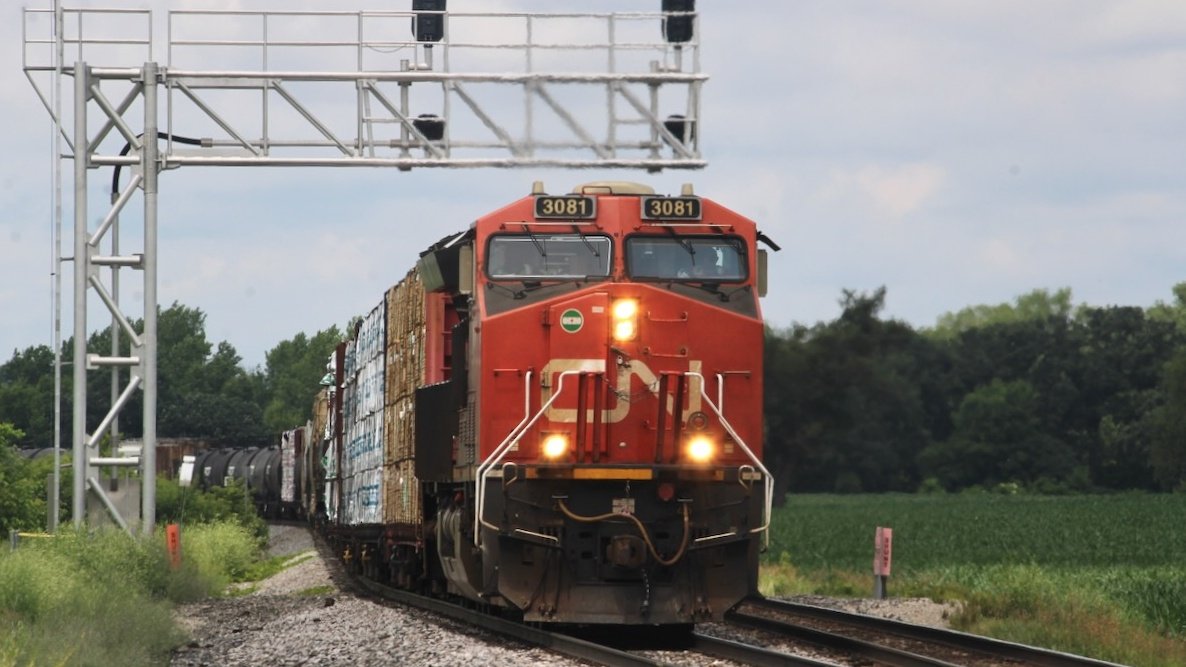
The agreement, announced earlier this week, provides Canadian National with expanded access to the U.S. Midwest and Mexico in exchange for the railroad withdrawing its opposition to Union Pacific’s planned merger with Norfolk Southern. As part of the arrangement, Union Pacific will also receive operating rights on CN’s route around Chicago, creating a more direct connection to the U.S. East Coast.
According to BNSF, however, the agreement does not address the competitive concerns surrounding the proposed transcontinental merger.
Zak Andersen, BNSF’s Chief of Staff and Vice President of Communications, said the arrangement does nothing to change the fact that the merger would reduce competition by leaving thousands of rail customers with fewer transportation options while creating a single railroad controlling roughly 50% of the market.
BNSF also argued that the agreement contradicts one of Union Pacific’s central arguments in support of the merger.
For more than a year, Union Pacific has maintained that the operational and service benefits it expects from acquiring Norfolk Southern could not be achieved through commercial partnerships alone. Andersen said the new agreement with Canadian National closely resembles the types of cooperative operating agreements that BNSF and other Class I railroads have used successfully for decades.
He added that the agreement demonstrates many of the claimed benefits can already be achieved without combining the two railroads, undermining the argument that a merger is necessary.
Opponents of the transaction have consistently argued that the proposal does not satisfy the requirements established by the U.S. Surface Transportation Board (STB), which requires major rail mergers to enhance—not reduce—competition within the industry.
According to BNSF, Union Pacific must demonstrate that the efficiencies and customer benefits it highlights are only achievable through the merger. Andersen argued that the new agreement with Canadian National proves otherwise, noting that significant portions of the arrangement are not even dependent on the merger receiving regulatory approval.
Industry observers have also suggested that the agreement with CN could be the first of several concessions Union Pacific may negotiate with major railroads, shippers and other stakeholders in an effort to build broader support for the proposed acquisition.
The Surface Transportation Board has not yet begun its formal evaluation of the merger. The review process will start only after Union Pacific and Norfolk Southern submit the additional information requested by the regulator, which is due by July 27.