



The Formula 1 calendar demands precision on the track, but delivering a Grand Prix on time also requires an exceptionally coordinated logistics operation. For DHL, the announcement of a replacement venue for the Bahrain Grand Prix created an unprecedented challenge: transport the necessary equipment to Malaysia with only 68 days to organise a solution that would normally be planned a year in advance.
Originally scheduled for 12 April, the Bahrain Grand Prix was postponed because of the conflict in the Middle East. An alternative arrangement was subsequently reached under which Bahrain would use the former Formula 1 circuit at Sepang, Malaysia, to stage the event from 2 to 4 October.
Formula 1 officially announced the decision on 24 July, leaving DHL with just over two months to organise the move. The replacement race also created a demanding triple-header, with three Grands Prix taking place over three consecutive weeks. Malaysia was scheduled between the Azerbaijan Grand Prix, held from 24 to 26 September, and the Singapore Grand Prix, scheduled for 9 to 11 October.
Speaking to the media on the Friday of the Singapore Grand Prix, Paul Fowler, Vice President of Global Motorsports at DHL Global Forwarding, recalled the initial reaction to the proposal. The idea of staging the Bahrain race in Malaysia seemed so improbable that the team initially assumed it was a joke. It soon became clear, however, that the plan was serious and that a major logistical operation would be required.
Recovering equipment from a race that never happened
The immediate challenge was that one of the seven sets of freight used by Formula 1 teams remained in Bahrain. The equipment had been prepared for the original race but was left behind when the event was postponed.
Fowler described the situation as a ghost town of Formula 1, with everything already in place for a Grand Prix that never took place.
Before the freight could be moved, DHL had to address a critical operational and personnel issue: finding the right people to dismantle the technical equipment and ensuring that travelling to Bahrain was safe for them. Working with Formula 1 and the teams, the logistics provider arranged for personnel to return to the circuit, break down the equipment and prepare it for transport.
The scale of the task reflects the complexity of Formula 1’s international freight network. For each race, approximately 120 containers of equipment are transported by sea or overland, depending on the locations involved.
Special permits and a different maritime route
Bahrain’s location within the Arabian Gulf added another layer of difficulty. Security threats to shipping in the Strait of Hormuz effectively knocked out the normal maritime options, leaving DHL with no choice but to find another way to move the freight out of the region.
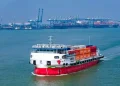
The solution was to get special trucking permits to move the containers across Saudi Arabia to Khor Fakkan, in the United Arab Emirates. From there the freight could be loaded straight onto a ship bound for Malaysia.
The whole journey from door to door was 25 days with 10 days at sea. The alternate route enabled DHL to move the stranded equipment despite restrictions on shipping through the Strait of Hormuz.
A complicated exchange of equipment between Singapore, Malaysia and the UK
The rerouting operation was only half the battle. Some of the equipment required for the replacement event was in the United Kingdom and could not be delivered to Malaysia in time.
This meant that DHL had to re-organise the distribution of equipment already located elsewhere in the region. Equipment in Singapore was transferred to neighboring Malaysia to enable the substitute race to proceed. The adjustment also gave enough time for the freight traveling from the UK to arrive in Singapore for the following Grand Prix in the city-state, one week later.
The operation demanded that DHL co-ordinate a number of sets of equipment, destinations and transport schedules simultaneously, making sure that each race had the resources it needed while not disturbing the wider calendar.
“It’s like a giant jigsaw puzzle, we’re moving equipment around all the time and reassigning it to meet the deadlines,” Fowler said.
Normally a year in advance, but eight weeks to put a race together
“The Bahrain International Circuit, the Sepang International Circuit and everyone has had an enormous amount of work,” said Christian Pollhammer, Operations Manager for Formula 1.
The teams had just eight weeks to get ready for an event that normally takes 12 months to plan. The tight schedule covered the entire preparation of the event including the sea and air freight required for the equipment.
Pollhammer said it had been a worthwhile effort despite the difficulties and described the week in Sepang as very good.
The successful staging of the event highlighted the value of close collaboration between Formula 1, the circuits, the teams and logistics partners in navigating unforeseen disruptions, even when geopolitical tensions impact traditional transport routes.
The logistics operation behind every Grand Prix
Fowler also stressed that the scale of Formula 1’s behind-the-scenes logistics deserves greater recognition from viewers who watch the championship from home.
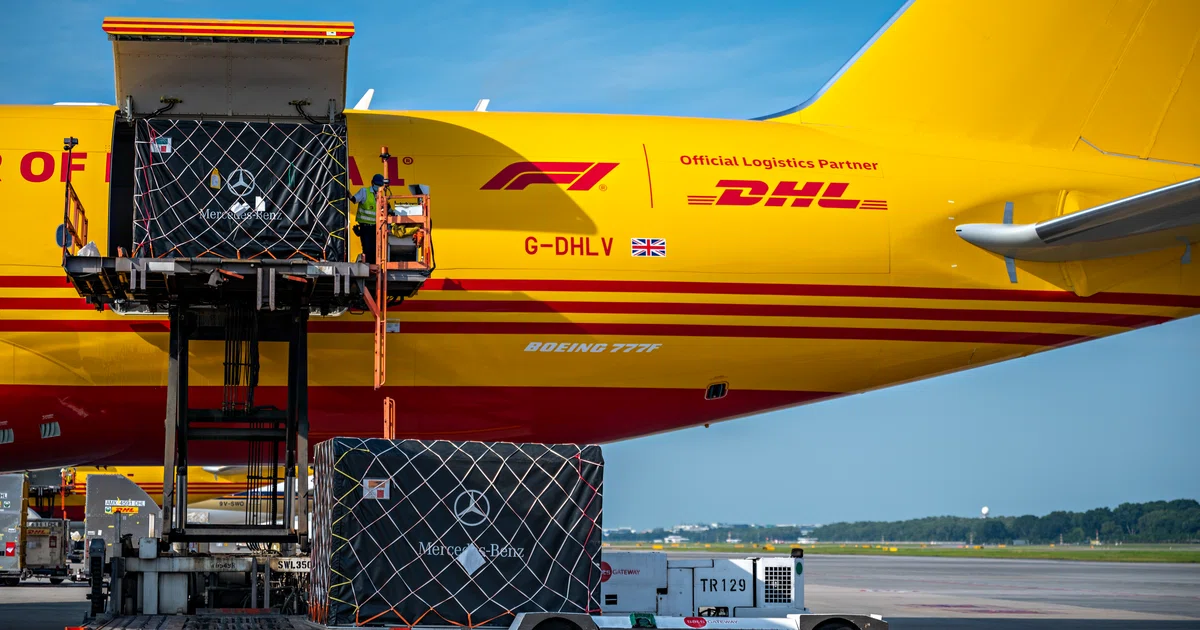
The rapid movement of the series from one continent to another depends on a carefully synchronised network of aircraft, containers, transport personnel and technical teams. According to Fowler, the operation involves nine Boeing 747 aircraft, 120 containers of sea freight and thousands of people working in an almost military fashion to ensure that each event is ready on time.
The Bahrain-to-Malaysia operation illustrated how this global system can be forced to adapt at short notice. With the usual shipping route constrained by security risks, DHL had to combine overland transport, maritime freight and equipment transfers to keep the Formula 1 calendar moving.
For the logistics teams involved, the challenge was not simply to move cargo between two countries. It was to rebuild an international transport plan around a postponed race, a restricted maritime corridor and a deadline measured in weeks rather than months.