



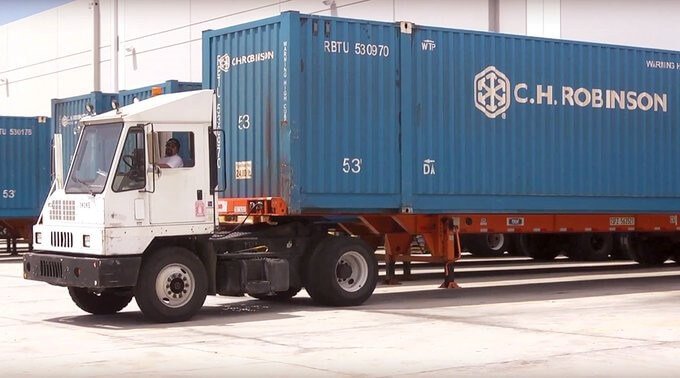
C.H. Robinson devoted much of its second-quarter earnings call to addressing the recent more than $600 million nuclear verdict issued against the company in a Texas court, despite reporting a strong financial performance for the quarter.
Although investors expected management to focus primarily on financial results, discussion quickly shifted to the lawsuit Lipe v. Lupus Superior, in which a jury found both Lupus Superior and C.H. Robinson found liable in fatal 2021 trucking accident.
President and CEO Dave Bozeman opened his remarks directly addressing the case and insisting the company did the right thing and expressing confidence the verdict will be overturned in the appeals process.
Bozeman conceded that the crash resulted in a tragic loss of life, but he argued that tragedy alone should not create legal liability.
The jury found C.H. Robinson negligent in its selection of Lupus Superior as a carrier following a crash involving one of its trucks that killed three people. The truck driver was also killed in the crash, leaving investigators without a definitive explanation for what caused the incident.
The jury’s verdict was significant because it found that, even if C.H. Robinson’s role as a freight broker, the driver should be deemed an employee of C.H. Robinson.
Bozeman strongly rejected that conclusion, stating that C.H. Robinson does not employ truck drivers.
The case has also intensified industry concerns surrounding what many now describe as the post-Montgomery legal environment, referring to the impact of the Supreme Court of the United States decision in Montgomery v. Caribe Transport II. That ruling significantly narrowed liability protections brokers had previously relied upon under the Federal Aviation Administration Authorization Act (FAAAA).
During the earnings call, company executives emphasized that Lupus Superior had successfully transported approximately 270 loads for C.H. Robinson before the accident and held a Satisfactory safety rating from the Federal Motor Carrier Safety Administration (FMCSA), both before and after the crash.
Executives repeatedly noted that the verdict has not yet been formally entered by Dianne Jones, and Bozeman said the appeals process could take several years.
Following the verdict, C.H. Robinson publicly called for federal guidance establishing clear standards on the level of carrier vetting required to protect freight brokers from liability in similar cases.
Bozeman argued that the company already exceeds existing federal safety requirements by applying multiple layers of carrier screening and risk assessment before assigning freight. He said the unprecedented size of the verdict highlights the need for Congress and federal regulators to establish consistent national standards governing broker responsibilities.
During the question-and-answer session, Bozeman reiterated that the company believes the verdict was driven more by emotion than by legal principles. If the judgment becomes final, he confirmed that C.H. Robinson intends to file an immediate appeal.
The CEO also said the case went to trial because the company’s insurance carriers refused to accept the demands of the plaintiffs for a settlement. He declined to discuss further details because the litigation remains ongoing.
Beyond the outcome of this individual case, financial analysts expressed concern about the broader implications for the brokerage industry.
In a research note issued after the earnings call, analysts at TD Cowen warned that the verdict could encourage additional lawsuits against freight brokers while increasing insurance premiums and legal costs across the industry due to continuing uncertainty surrounding negligence standards.
The firm also suggested that C.H. Robinson may eventually need to recognize a financial charge related to the verdict even before the appeals process concludes.
Chief Financial Officer Damon Lee acknowledged that insurance costs are expected to increase over time but noted that the company’s current coverage remains in place through the end of 2026. The other operational challenge the company expects to manage is the increase in insurance costs, he said, adding that preliminary talks with insurance providers are already underway.
But TD Cowen said management commentary is unlikely to assuage investor fears over future insurance costs and ongoing legal exposure, and the issue is among the most significant risks facing the company going forward.