



DNV has confirmed the performance of a new onboard carbon capture solution developed by Carbon Ridge, validating CO₂ capture rates of up to 98% in what is being described as the first maritime deployment of a centrifugal onboard carbon capture and storage (OCCS) system.
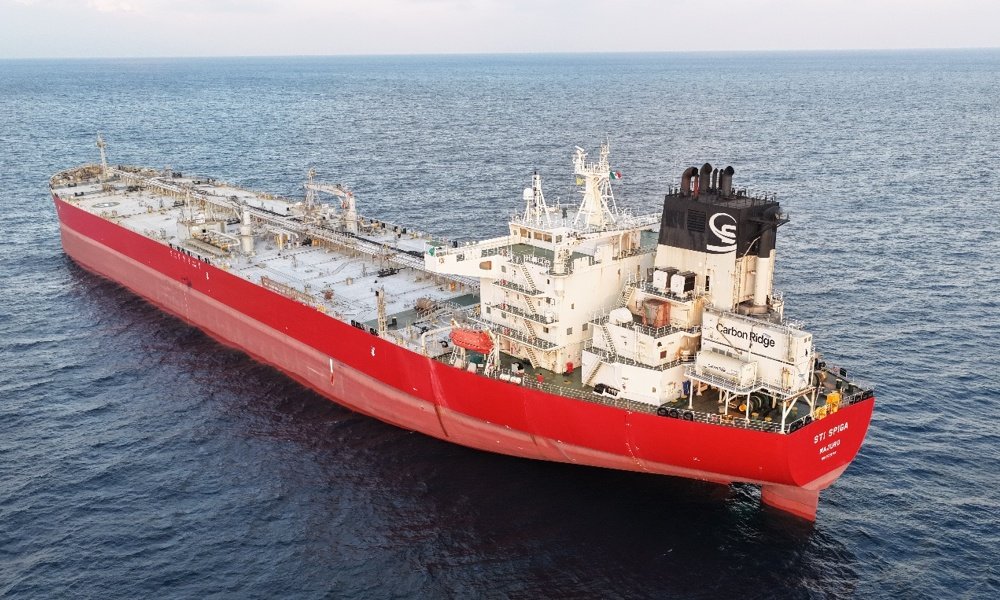
The testing was carried out over a five-month pilot period starting in July 2025 at Besiktas Shipyard in Turkey, onboard the 109,999 dwt LR2 product tanker STI Spiga, built in 2015 and owned by Scorpio Tankers. The vessel remained in regular commercial service during the trial, allowing the system to be evaluated under real operating conditions.
DNV reviewed and validated the methodology, calculations and performance data, confirming peak CO₂ capture levels above 98%, with 55% of recorded observations ranging between 86% and 98%. The classification society carried out its assessment under its Recommended Practice framework.
“This evaluation under DNV’s Recommended Practice validates the capability of Carbon Ridge’s modular centrifugal OCCS technology to significantly reduce the emissions of existing and newbuild vessels,” said Chase Dwyer, CEO and founder of Carbon Ridge. He added that early trial data supports plans to scale the technology across the global fleet, highlighting the importance of industry collaboration in enabling deployment.
From an operational perspective, Scorpio Tankers COO Cameron Mackey noted that the system offers a practical route for shipowners preparing for tighter environmental regulations and rising carbon pricing. He also emphasised its simplicity of installation and low impact on crew workload.
The technology itself is designed to reduce onboard space requirements by up to 75% compared with conventional carbon capture systems, thanks to its compact centrifugal configuration. It also offers flexible installation options across different vessel types.
The onboard storage of compressed and liquefied CO2 for the duration of the voyage provides a potentially scalable pathway to emission reductions for existing fleets and future fleets.
- Latest
- Trending
ADVERTISEMENT