



For the global shipping industry, the most dangerous situations are not always defined by a single crisis. Sometimes the real threat emerges when two separate conflicts begin to converge.
That is increasingly what is happening in the Middle East.
For much of this year, the maritime industry has watched the Strait of Hormuz with the kind of concern normally associated with a slow-motion collision. Now, barely a thousand nautical miles to the south-west, a second crisis is developing around the Bab al-Mandeb Strait as the Houthi-Saudi conflict has returned to open warfare.
Individually, both conflicts represent serious regional security challenges. Together, however, they create a far more consequential problem for shipping: the near-simultaneous deterioration of the two maritime chokepoints connecting Gulf energy exports with global markets.
Hormuz: The conflict has moved decisively onto the water
The Strait of Hormuz has been at the centre of open hostilities for more than six months, following the beginning of the US-Israeli campaign against Iran in late February.
What initially unfolded primarily as an air conflict has increasingly become a maritime confrontation.
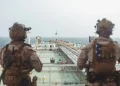
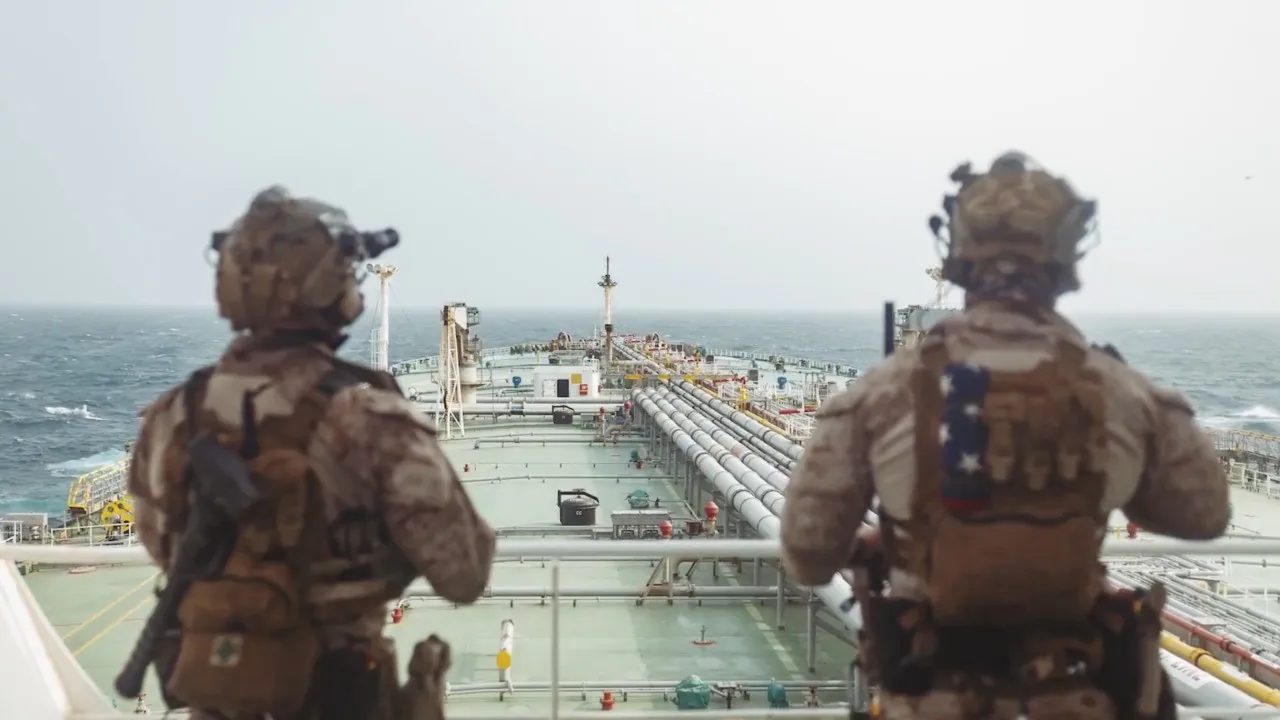
Over the past ten days alone, Washington and Tehran have exchanged direct strikes involving tankers. American forces have targeted Iranian government-linked crude carriers, while Iran’s Islamic Revolutionary Guard Corps (IRGC) has retaliated against tankers and other vessels it considers linked to the United States.
There has also been a reported ballistic missile launch directed toward US carrier groups operating in and around the strait.
Iran has now taken another significant step by using anti-ship ballistic missiles launched from its territory against naval targets in the waterway. That represents a major technical escalation compared with the drone and mine warfare that characterised earlier stages of the conflict.
The consequences for commercial shipping are no longer theoretical.
Merchant vessels have been mined, struck by missiles and abandoned during transit. Seafarers have been killed and injured simply because they were operating in the wrong shipping lane at the wrong moment.
These crews have no role in the underlying conflict. They are operating commercial ships, carrying no weapons, and unlike naval vessels, they have almost no ability to manoeuvre away from an incoming threat.
That vulnerability lies at the heart of the problem.
A 300,000-tonne very large crude carrier (VLCC) carrying crude oil is, in practical terms, defenceless against a missile attack. It cannot outrun a missile, cannot respond with weapons and has no meaningful protection other than the commercial decision made thousands of miles away by its owner: whether the vessel should enter the strait in the first place.
That calculation has changed dramatically.
Hormuz transits have fallen sharply compared with pre-war levels. The vessels that continue to pass through the strait are increasingly operating under improvised protective arrangements, including naval escorts, mine-clearance corridors and temporary diplomatic frameworks involving Iran and Oman.
Some of those arrangements have opened and closed within only a few weeks.
The financial consequences have been equally dramatic.
Before February, war-risk insurance represented only a fraction of one percent of a vessel’s hull value. At various points this year, however, quotations have reached as high as 10%.
For a single VLCC, that transforms what was previously a relatively minor voyage expense into a potential insurance bill running into millions of dollars.
The economics of moving energy through Hormuz have therefore been fundamentally altered.
Bab al-Mandeb: A second front emerges
Until recently, the Red Sea and Bab al-Mandeb Strait were considered the quieter of the region’s two major maritime flashpoints.
Houthi attacks on commercial shipping had largely been suspended following the Gaza ceasefire in late 2025.
That period of relative calm has now ended.
Fighting between the Saudi-backed Yemeni government and the Houthis, which broke down a years-long informal truce in July, intensified sharply this week.
The Houthis launched attacks against energy and civilian infrastructure deep inside southern Saudi Arabia, including facilities near a major refinery in Jazan. More than 70 people were reportedly wounded.
The Houthis have also announced what they describe as a maritime blockade of Saudi Arabia and have explicitly warned shipping companies against calling at Saudi ports.
The strategic implications are particularly important.
With Hormuz severely constrained, Saudi Arabia has been forced to move significantly more crude exports through its Red Sea terminals and the Bab al-Mandeb Strait.
Volumes during the same period have reportedly reached several multiples of last year’s levels.
That has made the southern Red Sea route both more commercially important and more strategically exposed.
The timing could hardly be more problematic.
The Houthis now have a direct incentive to disrupt this growing flow, while their alignment with Iran creates the possibility of coordination within a much broader regional confrontation.
The maritime campaign that previously focused on Israeli-affiliated shipping in connection with the Gaza conflict is therefore showing signs of evolving into a wider strategic instrument.
Two chokepoints, and almost no room for manoeuvre
The shipping industry has historically relied on a basic safety valve when a chokepoint becomes dangerous: find another route.
When the Red Sea became unsafe during 2023-24, container lines responded by diverting vessels around the Cape of Good Hope.
The alternative was expensive and considerably slower, but it remained operationally possible.
Similarly, when tensions around Hormuz intensified this year, some energy cargoes moved through pipeline alternatives, ship-to-ship transfers outside the strait or were simply delayed until conditions improved.
But the industry’s traditional safety valves become far less effective when both routes are constrained simultaneously.
A tanker that cannot safely load or transit at the top of the Gulf and cannot safely discharge through the Red Sea corridor faces very few attractive alternatives.
The principal option may be the much longer route around Africa, precisely when war-risk premiums, insurance exclusions and crew hazard pay are already elevated across the wider region.
The threat is no longer confined to the entrances of the two straits.
The Joint War Committee and the International Bargaining Forum have both repeatedly revised their designated high-risk areas this year as the threat environment has continued to expand rather than contract.
That development matters far beyond companies directly exposed to Gulf trade.
The additional cost of navigating these chokepoints or avoiding them does not remain solely with shipowners.
It moves through the supply chain.
Higher vessel costs feed into freight rates paid by charterers. Those costs then affect crude and refined-product prices, refiners and ultimately the price of goods and industrial activity dependent on refined fuels and petrochemical feedstocks.
In other words, the consequences reach almost everything that moves.
At certain points this year, war-risk insurance for a VLCC voyage has approached the value of a mid-sized cargo itself.
That is not simply a temporary increase in operating expenses. It represents a structural repricing of the voyage economics underpinning global energy trade.
What the crisis means for global trade
Several consequences are already becoming increasingly clear.
Freight and insurance are establishing a new baseline
Freight and insurance markets are no longer dealing with what can easily be dismissed as a short-lived spike.
Even if a ceasefire were reached tomorrow, the caution now embedded in underwriting models, crew agreements and charterer risk assessments would not immediately disappear.
The shipping industry has been hit by major maritime disruptions twice in a relatively short period: first the Red Sea crisis and now the combined deterioration of Hormuz and Bab al-Mandeb.
Markets that have experienced these shocks are likely to maintain a regional risk premium for years.
Seafarer welfare has become a commercial issue
The human cost is becoming inseparable from the commercial calculation.
Thousands of seafarers have been caught in these waterways at different points this year.
Crew agreements, hazard-pay structures and, increasingly, the willingness of seafarers to operate these routes will influence which owners are actually capable of moving cargo through the region.
A charter party may require a voyage on paper, but the practical ability to crew and safely operate the vessel can determine whether that voyage happens at all.
Rerouting capacity has limits
The industry managed to absorb the Red Sea diversion of 2024 partly because Hormuz remained open and operated normally.
That assumption no longer holds.
A simultaneous deterioration of both chokepoints creates genuine consequences for global vessel availability, congestion at alternative ports and delivery schedules.
The effects could reach cargoes ranging from crude oil to containerised consumer goods.
Geopolitical risk is now a core commercial calculation
For shipping executives, geopolitical risk can no longer be treated as a specialist concern delegated to security departments.
The companies best positioned to navigate the current environment are those treating the Gulf and Red Sea as one interconnected risk system.
A development in one strait can immediately change the economics of the other.
Why “Back to Normal” is becoming an outdated assumption
There remains an assumption in parts of the industry that once a ceasefire is reached and a political agreement is signed, the maritime map will simply reset.
Under that scenario, insurance premiums would fall, transit volumes would recover and the Gulf would return to its traditional role as a dependable, although occasionally tense, artery for global energy trade.
The events of this year make that assumption increasingly difficult to defend.
The issue is not sentiment. It is risk-pricing discipline.
Underwriters, charterers and corporate boards do not price the next voyage based on the assumption that the previous 18 months were merely an anomaly.
They price against what has now been demonstrated.
Hormuz and Bab al-Mandeb can both become severely restricted. Ships can be mined, attacked with missiles and subjected to blockades.
And this time, those risks have emerged simultaneously.
Once a chokepoint has demonstrated that it can close, it cannot realistically be underwritten as though closure were impossible.
That represents a permanent change in the industry’s risk model rather than a temporary premium that will automatically disappear when the fighting stops.
Shipowners, charterers and cargo insurers have already spent months developing operational responses, including rerouting procedures, renegotiating war-risk clauses and bargaining over hazard pay.
That institutional knowledge does not simply disappear when a ceasefire is signed in a conference room.
Energy sourcing is also beginning to change
The consequences extend beyond shipping.
Energy buyers, refiners and industrial consumers that have spent this year searching for alternative sources of crude and LNG are unlikely to abandon that diversification immediately once the immediate threat recedes.
Diversification, once achieved at significant cost, tends to remain in place because it becomes a form of insurance against the next crisis.
That could produce a genuine medium- and long-term restructuring of global supply sourcing.
Potential developments include greater reliance on crude from West Africa, the US Gulf Coast, Guyana and Brazil.
On the LNG side, buyers could place greater emphasis on Qatar’s capacity that is not exposed to Hormuz where feasible, as well as Australia and the United States.
Pipeline alternatives capable of bypassing the strait could also regain strategic importance, including Saudi Arabia’s East-West pipeline and any expansion of UAE capacity at Fujairah.
New sourcing patterns could reshape shipping routes
For the shipping industry, these sourcing changes could ultimately change trade routes rather than simply raise insurance costs on existing routes.
Larger flows from the Atlantic Basin to Asia could occur.
The Cape of Good Hope may be a permanent strategic path, not just an emergency diversion
Other corridors and chokepoints could also see increased attention as buyers reconsider the origins of their cargoes.
That transition is risky enough in itself.
Longer voyages mean higher tonne-miles for the same underlying demand, which can tighten vessel supply and support freight rates but also increase costs and carbon emissions.
Alternative routes breed alternative vulnerabilities too.
There are also weather and piracy risks for the Cape route itself , and increased dependence on Atlantic Basin sources of supply means other geopolitical dependencies .
But the transformation also opens up possibilities.
Owners of modern long-haul ships with fuel-efficient engines may find that longer voyages are structurally advantageous.
New preferred routes may lead to ports and bunkering hubs becoming strategically important.
Shipbrokers and analysts who can help charterers to navigate a genuinely reconfigured trading map may also become increasingly valuable.
The important thing is that the industry can’t simply wait for the old map to come back.
Maritime leaders must plan for a structural recalibration
The strategic lesson for maritime leadership is becoming increasingly clear.
Companies should prepare for a world in which the Gulf’s central role in global energy shipping is structurally — rather than temporarily — reduced.
The winners will not necessarily be those waiting for the crisis to end.
They will be the companies treating the current environment as a permanent recalibration of sourcing, routing and risk management.
That means preparing to capture emerging trade patterns rather than being caught unprepared when those patterns become established.
A maritime crisis that demands a different kind of leadership
The modern maritime leader cannot operate solely as a risk manager focused on an individual fleet.
The role increasingly requires something closer to that of a geostrategic interpreter — someone capable of reading political and diplomatic currents with the same attention given to the currents of the sea.
The events of the past week offer a particularly stark demonstration of why that matters.
Two chokepoints, separated by only a few hundred nautical miles, are being placed under simultaneous pressure by conflicts that are becoming increasingly interconnected.
The vessels caught between them are not warships.
They carry no guns and have almost no ability to defend themselves.
For shipping companies, the most effective defence will therefore have to come from preparation: better foresight, adaptive routing, disciplined risk management and, ultimately, diplomacy.
Because diplomacy remains the only force capable of reopening these waterways and restoring the free movement of trade they were built to carry.