




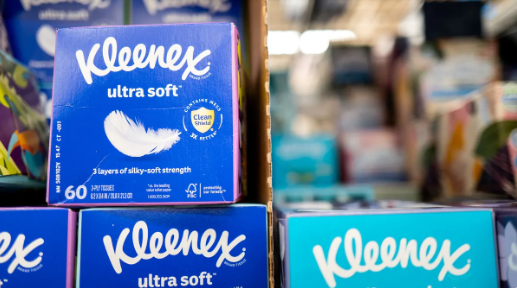
Kimberly-Clark says its ongoing productivity gains are being strongly driven by supply chain transformation as the company moves deeper into a five-year, $3 billion efficiency program launched in 2024.
Executives said at the 2026 dbAccess Global Consumer Conference the company is more than halfway through its initiative, with improvements coming from three strategic pillars: simplification of its value stream, optimization of its global network and scaling automation across operations.
According to Nelson Urdaneta, CFO and interim principal accounting officer, these supply chain-focused initiatives have been central to the company’s performance over the past two years. He added that Kimberly-Clark intends to further accelerate efforts, particularly in network optimization, supported by increased capital investments over the coming years.
As part of this broader strategy, the company announced last year a $2 billion investment into its US operations. A significant portion of this funding is directed toward a new automated distribution center in Beech Island, South Carolina, alongside an advanced manufacturing facility in Warren, Ohio.
The South Carolina site represents a key pillar of the company’s future supply chain model. Designed as Kimberly-Clark’s largest facility globally, it integrates robotics, AI-powered logistics systems and optimized storage architecture to improve operational efficiency and throughput.
Company CEO Michael Hsu noted that the facility plays a central role in the company’s production footprint, manufacturing nearly the full range of Kimberly-Clark products.
“That’s one of the places where we’re making a very big investment in distribution on top of our greenfield facility,” Urdaneta said, adding that productivity gains from the site are expected to begin materializing from 2027 onwards, reinforcing the company’s confidence in long-term operational improvements.
Beyond organic transformation, Kimberly-Clark is also anticipating additional supply chain efficiencies through its planned merger with personal care manufacturer Kenvue, expected to close in the second half of 2026.
The company sees significant logistics and procurement synergies emerging from the combination. Differences in transport efficiency between the two businesses, alongside overlapping delivery routes and shared supplier bases, are expected to create opportunities for optimization.
“We tend to cube out a truck at about 50%. Kenvue tends to weigh out at about 50%. And we tend to deliver at almost the same drop-off points. So that’s a key source of productivity,” Urdaneta explained. He also highlighted the potential for broader procurement advantages, driven by increased scale and greater standardization across a unified supply chain.
However, despite these structural gains, Kimberly-Clark is still managing operational challenges. The company continues to face disruption following an April fire that damaged a distribution center near Los Angeles, which is expected to create a 70 to 80 basis-point headwind on shipments. Demolition work at the affected third-party facility has already begun.
Overall, the group’s strategy reflects a broader industry trend in which supply chains are no longer seen solely as cost centers, but as core drivers of productivity, resilience and long-term competitive advantage.
- Latest
- Trending
ADVERTISEMENT