



Kuehne+Nagel says it is well positioned to manage potential jet fuel shortages linked to the closure of the Strait of Hormuz.
Speaking after the release of the company’s first-quarter results, Chief Executive Stefan Paul said the forwarder was already in contact with major customers to prepare scenario planning in case fuel shortages emerge.
Paul noted that Southeast Asia currently appears most exposed, with some countries potentially having fuel supplies lasting only until the end of May. Indonesia, Vietnam and Thailand were highlighted as markets with tighter capacity, while China was described as having significantly stronger reserves.
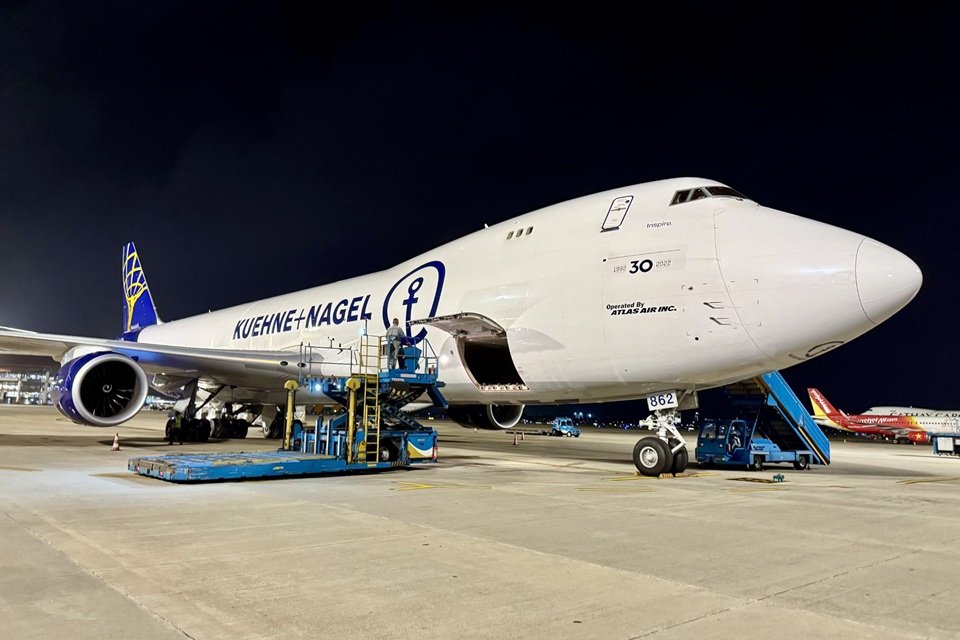
Kuehne+Nagel believes its airfreight portfolio gives it flexibility. The company combines its own charter operations, block space agreements and capacity operated through Apex, allowing it to manage disruptions more effectively.
Paul explained that the company’s own air operations stock up on fuel in China when flying to and from Southeast Asia, reducing exposure to possible shortages in that region.
He stressed that a major shortage is not certain, and that much depends on how quickly the Strait of Hormuz reopens and normal operations resume.
At the same time, Kuehne+Nagel has increased charter activity through Apex in recent weeks to meet rising demand out of Southeast Asia, particularly linked to technology products from hyperscaler and semiconductor industries in Taiwan, Thailand and Vietnam.
In the first quarter, Kuehne+Nagel reported a 9% year-on-year decline in net airfreight revenue to Sfr1.6 billion. Airfreight EBIT fell 4.3% to Sfr111 million, while volumes increased slightly by 0.4% to 516,000 tonnes.
The company said the revenue decline was partly due to currency effects from a weaker US dollar. On a like-for-like basis, revenues would have been flat, while operating profit would have improved by 7%.
Kuehne+Nagel also pointed to weaker growth in lower-yielding volumes, especially e-commerce and perishables. Asia-Europe remained the strongest trade lane, followed by North American exports, while North American imports from Europe were relatively weak.