



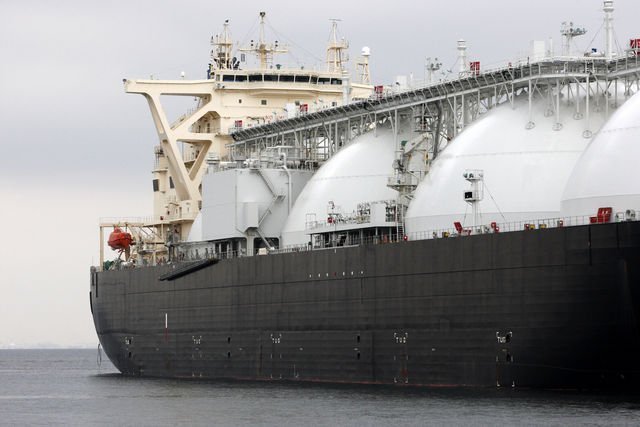
LNG vessels that many in the market once viewed as ageing assets are suddenly becoming highly sought-after again.
Since tensions around the Strait of Hormuz intensified and global LNG availability tightened, at least seven large LNG carriers built between 2005 and 2006 have reportedly changed ownership. The renewed activity reflects how quickly energy market disruptions can reshape shipping demand, especially as Asian buyers search for alternative LNG supply options amid rising prices and geopolitical uncertainty.
One of the latest transactions has now come into focus.
Chinese-linked Rising Universe Shipping, managed by Dongtinghu Shipping, has acquired the 145,000 cu m LNG carrier Methane Rita Andrea, a vessel built in 2006 and previously owned by GasLog. The deal is believed to have been completed for around $30 million.
Following the sale, the vessel was renamed Grand Reach and transferred under the Hong Kong flag. The ship is currently operating in the South China Sea.
The transaction also highlights a broader pattern now emerging across this segment of the LNG fleet.
According to VesselsValue fleet records, several of the buyers involved in recent deals are being identified only as “unknown Chinese” entities. At the same time, a number of older LNG carriers have recently shifted to Russian flags, drawing increased attention from market observers.
Earlier this year, four LNG carriers of similar size that were previously managed by Oman Ship Management were transferred and reflagged to Russia. The vessels now operating under the names Orion, Kosmos, Merkuriy and Luch — have since reappeared under new and relatively opaque ownership structures.
Industry reports indicate that Luch is linked to Russian company Abakan, while Kosmos is now listed under Chinese ownership.
One of the vessels was also recently spotted near the sanctioned floating storage unit Saam off the Kola Peninsula, further fuelling speculation about the growing role these older LNG carriers may be playing in sanctioned or politically sensitive trades.
Several characteristics surrounding the ships are increasingly being associated with so-called shadow fleet activity. These include the advanced age of the vessels, transfers to little-known ownership structures, and flag changes linked to jurisdictions under heightened scrutiny.
At the same time, Russia continues actively marketing sanctioned LNG cargoes at discounted prices in an effort to attract buyers willing to navigate the geopolitical and compliance risks tied to the trade.
The recent surge in demand for older LNG tonnage underlines how quickly global energy disruptions can revive assets once considered commercially less attractive. In today’s market, availability and flexibility are once again becoming just as important as vessel age.