



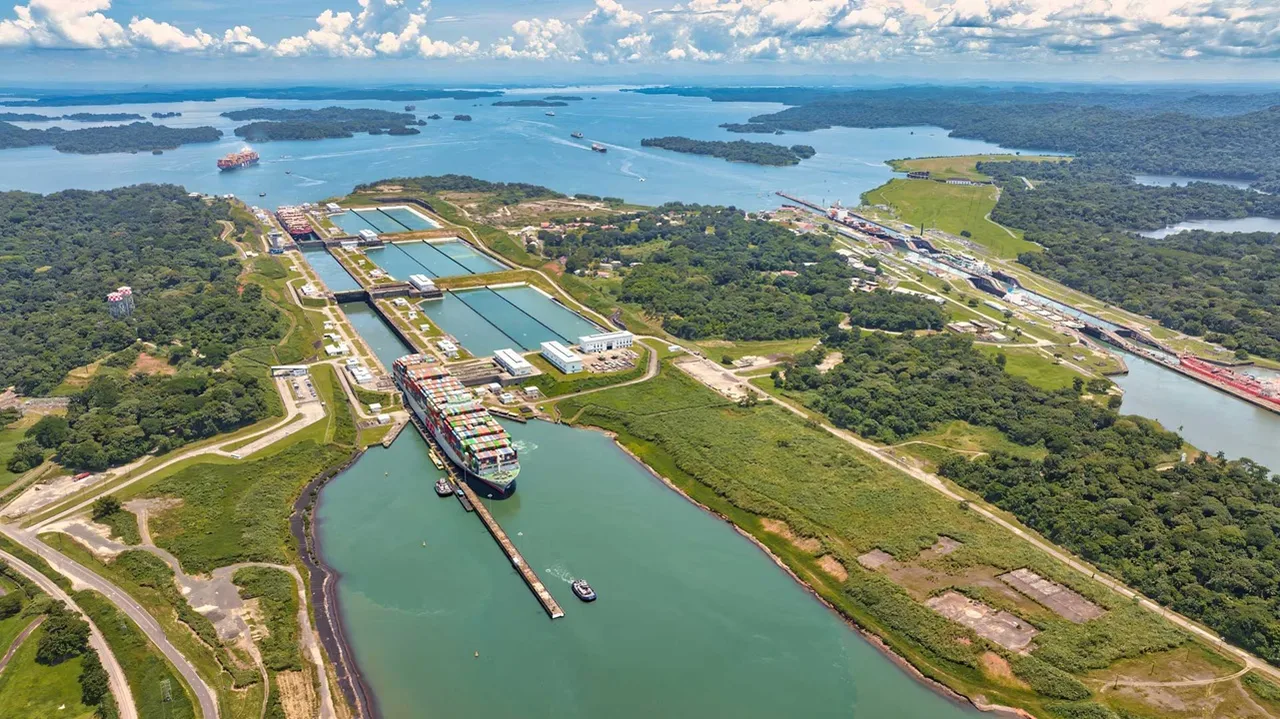
The Panama Canal Authority reported higher cargo volumes and vessel transits for the first half of its financial year, covering October 2025 to March 2026.
The canal recorded 6,288 transits during the period, an increase of 224 compared with the previous year. Cargo volumes rose around 5% to 254 million Panama Canal Universal Measurement System tons.
The authority said recent months have been especially strong, with daily averages of 34 vessels in January and 37 in March. Peak days recently exceeded 40 transits.
Panama Canal administrator Dr. Ricaurte Vásquez Morales said container traffic and liquefied petroleum gas have been major contributors to the canal’s performance, with energy products playing an increasingly important role.
Auction prices for transit slots have also risen sharply. Some vessels have paid more than $1 million for auction slots.
Before the Middle East conflict, average auction prices were between $135,000 and $140,000. Since the conflict began, the average climbed to around $385,000 between March and April.
The authority said only three to five slots are made available through auctions each day, while most transits are pre-booked through advance reservation systems. Auction prices do not affect pre-booked transit costs or transit order.
With water levels now back at optimal levels, the canal is fully operational after the drought-related restrictions of 2023 and 2024.
The canal has introduced preventive water conservation measures ahead of a possible El Niño year, while rainfall during the dry season helped maintain maximum water levels in Gatún and Alhajuela Lakes.