





Interstate 35 has long served as the backbone of the Texas Triangle, carrying freight from the Mexican border through San Antonio and Austin before continuing toward Dallas-Fort Worth, the Midwest and destinations farther north. But as freight volumes continue to rise and population growth puts more vehicles on an already heavily traveled route, fleets are increasingly looking for another option.
That alternative is SH 130.
The 91-mile toll corridor has become one of Texas’ busiest bypass routes. The SH 130 Concession Company operates the southern 41-mile section between Austin and San Antonio, where heavy truck traffic has increased by nearly 130% since 2019, according to Ryan Sethness, the company’s Head of Freight Business Development.
Despite that growth, Sethness said the corridor still has significant capacity available.
“Even with recent growth, the road remains reliably congestion-free with plenty of capacity to accommodate additional traffic,” he said.
That available capacity is becoming increasingly important as major construction projects continue along I-35 between Austin and San Antonio. According to Sethness, the work is expected to disrupt traffic flow along the corridor for the next decade, making route reliability an increasingly important consideration for fleets managing delivery schedules across Central Texas.
For Sethness, however, the decision to use SH 130 starts with safety rather than time or cost.
“First and foremost, fleets pick SH 130 for safer routing through Central Texas,” he said. “SH 130 is one of the safest major highways in Texas.”
Drivers using SH 130 are 80% less likely to experience a crash than those traveling on I-35 and five times less likely to have an accident than drivers on other Texas highways, according to Sethness.
For carriers, that safety advantage has direct operational implications. Fewer crashes can mean fewer liability claims, fewer disruptions and greater consistency in getting freight to its destination on schedule.
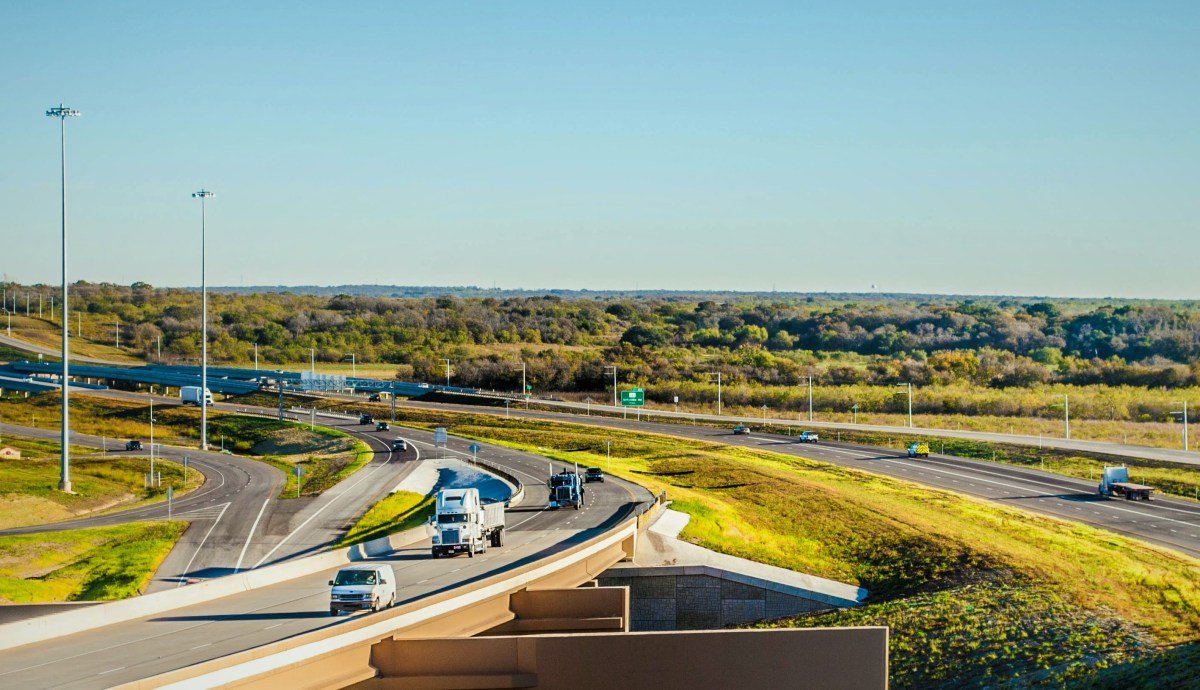
Safety and reliability, Sethness said, are closely linked.
“Time is money for commercial drivers, and companies want to know that they can reliably get their materials and goods delivered on schedule,” he said.
That predictability is particularly important for cross-border freight, which faces additional variables that can make on-time delivery more difficult.
The difference between the two routes is significant. According to Sethness, drivers using the southern section of SH 130 arrive within 15 minutes of their expected drive time 99% of the time. On I-35, that happens less than 20% of the time.
When fleets compare that reliability with the cost of the toll, the additional expense can be offset by the costs of remaining in congestion on I-35.
“The cost of time spent sitting in I-35 congestion including increased fuel consumption, lost revenue and late fees for freight carriers — can be two to three times the cost of the SH 130 toll,” Sethness said.
But reducing travel uncertainty is only one part of the challenge facing truck drivers. Finding safe places to park and rest remains one of the industry’s most persistent problems nationwide, and SH 130 Concession Company is now making corridor-wide parking expansion a priority.
“Truck drivers have a real challenge finding safe places to park and rest, and that’s true across the country,” Sethness said. “We are working hard to increase parking and other amenities all along the SH 130 corridor through partnerships with local municipalities and private travel center operators.”
The expansion is already taking shape.
A new truck parking area under construction near the intersection of SH 21 and SH 130 in Mustang Ridge will add 30 spaces when it opens later this year.
Further ahead, the company is developing a state-of-the-art travel plaza at SH 80 and SH 130 in southern Caldwell County, between San Antonio and Austin. Sethness said the facility will provide more than 150 truck parking spaces and include a convenience store, dog parks, restaurants and other amenities for drivers.
The company’s focus on parking is intended to address a practical issue for drivers rather than simply add infrastructure.
“Truck drivers have a hard job,” Sethness said. “We want to do what we can to improve their quality of life on the road and address one of their biggest pain points while also helping to keep freight safely moving through Central Texas.”
SH 130 is also using financial incentives to encourage more carriers to shift from I-35.
The company operates a freight rebate program that gives carriers money back when they increase their use of the corridor.
“Over the past few years, SH 130 has implemented freight rebate programs designed to give fleets cash back on tolls by choosing SH 130 more often over I-35,” Sethness said.
The program is tied to growth in usage. Fleets can receive a cash rebate on toll spending above their existing baseline on the San Antonio-to-Austin section.
For carriers already working with PrePass and BestPass, the program is administered through those companies’ account management teams. Fleets outside those aggregators can enroll directly with SH 130.
The company said the program has already generated significant returns for participating trucking operations.
“Over the past 12 months, we have distributed over $700,000 in rebates to trucking companies,” Sethness said. “It’s been a successful program that is appreciated by fleets and drivers, and helps get more trucks off of I-35 through San Antonio and Austin.”
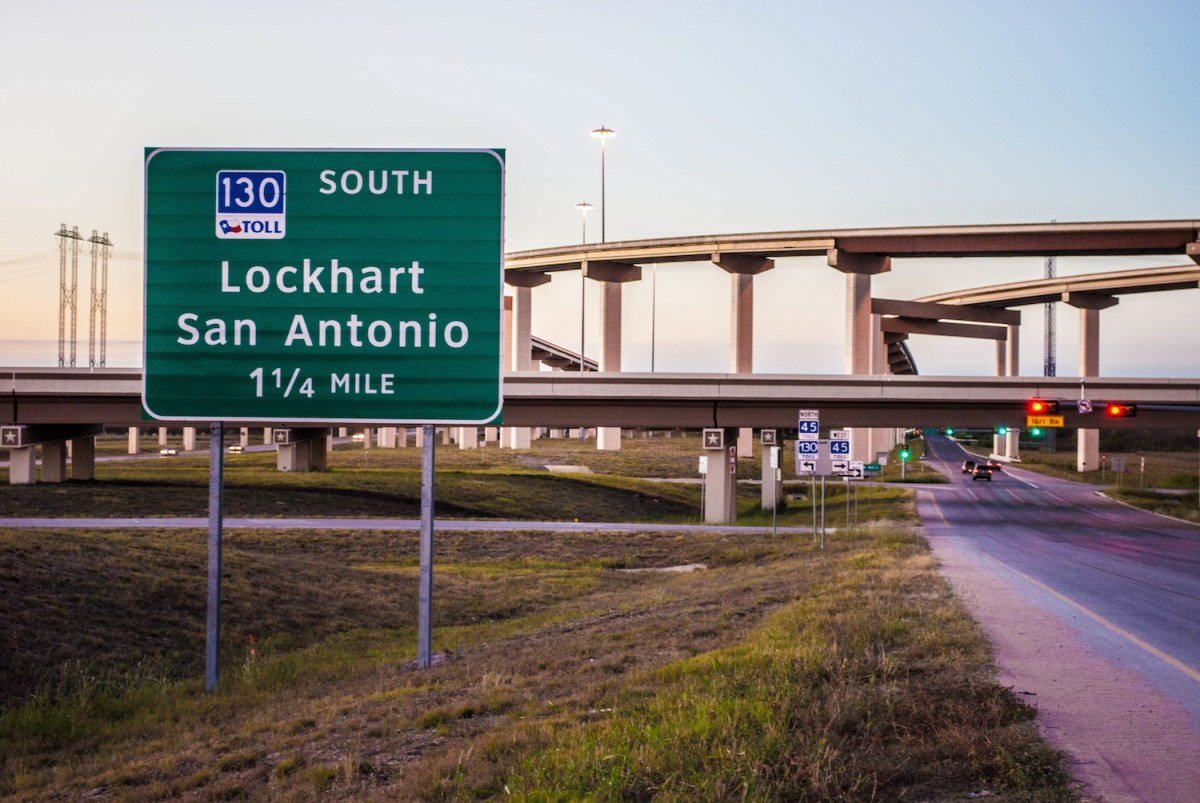
While safety, reliability, parking and rebates are designed to solve immediate freight challenges, SH 130 is also investing in technologies aimed at the future of transportation.
The corridor is incorporating artificial intelligence and data-driven tools into its operations, including systems that monitor pavement conditions and an upgraded traffic management center intended to improve debris removal and accelerate incident response.
Earlier this year, SH 130 Concession Company also entered into a partnership with Swedish autonomous trucking company Einride to explore the development of an infrastructure-ready testbed for autonomous freight vehicles.
The company has additionally signed a memorandum of understanding with SmarTrack of UT Austin and the Texas Department of Transportation to participate in a Level 3 test corridor.
The initiative will evaluate emerging pavement technologies, intelligent transportation systems and autonomous technologies under real-world conditions once those technologies have moved beyond controlled and semi-controlled testing environments.
“These collaborations allow SH 130 to accelerate and advance emerging transportation technologies that make the system safer, reliable and future-ready,” Sethness said.
The corridor has sufficient capacity to accommodate the testing without materially interfering with normal traffic flows.
According to Sethness, the southern section of SH 130 currently operates at roughly one-third of its capacity during peak daytime hours. Autonomous testing will be scheduled during off-peak periods and on less-traveled portions of the corridor, reducing interaction with routine freight traffic.
Looking toward the next decade, Sethness sees two major forces shaping Central Texas freight: increasing congestion and construction on I-35, and a growing wave of industrial investment throughout the region.
I-35 remains the primary freight artery connecting Mexico with the United States and Canada. But as population and freight volumes continue to expand, Sethness said the route is becoming increasingly congested.
At the same time, major industrial projects are transforming the economic landscape.
Among the developments he highlighted is Toyota’s $3.6 billion investment to double the size of its San Antonio plant by 2030. KTH Texas is planning a $100 million automotive components plant in Seguin, which is expected to open in 2028.
Amazon, meanwhile, has announced a multibillion-dollar advanced robotics manufacturing facility in Austin.
“As these facilities come online, the movement of people and goods through Central Texas and the SH 130 corridor will increase,” Sethness said.

SH 130’s location gives it an important strategic position within that broader freight network.
Laredo remains the busiest cross-border transportation hub to the south, while the Dallas-Fort Worth market anchors one of the largest freight centers in the country to the north. SH 130 sits between those two major logistics markets.
As freight volumes increase, the company is investing in real-time alert systems covering congestion, closures and roadwork. The goal is to give drivers actionable information at critical decision points along the route and help carriers adjust their movements as conditions change.
For Sethness, the concept of a “highway of the future” is ultimately about bringing together infrastructure, technology and the people who operate within the freight system.
“To us, ‘the highway of the future’ means a smarter, safer and more connected freight corridor one that uses technology and innovative infrastructure to move goods and people more efficiently while supporting the people who keep our supply chains moving,” Sethness said.
The ambition extends beyond any single project.
“Our company is advancing a variety of innovative initiatives to make SH 130 the premier smart freight corridor in the state, while exploring opportunities to expand amenities available to commercial drivers,” Sethness said. “We’re actively working with freight customers, industry partners, and TxDOT to implement new technology solutions and infrastructure with an eye toward the future of freight logistics.”
For fleets navigating an increasingly congested I-35, SH 130 is building its case around a combination of safety, reliability, driver amenities, financial incentives and future-oriented technology.
As Central Texas continues to grow, the corridor’s 91 miles of pavement are being positioned to handle a larger share of the region’s freight movement while supporting the people and businesses that depend on it.