



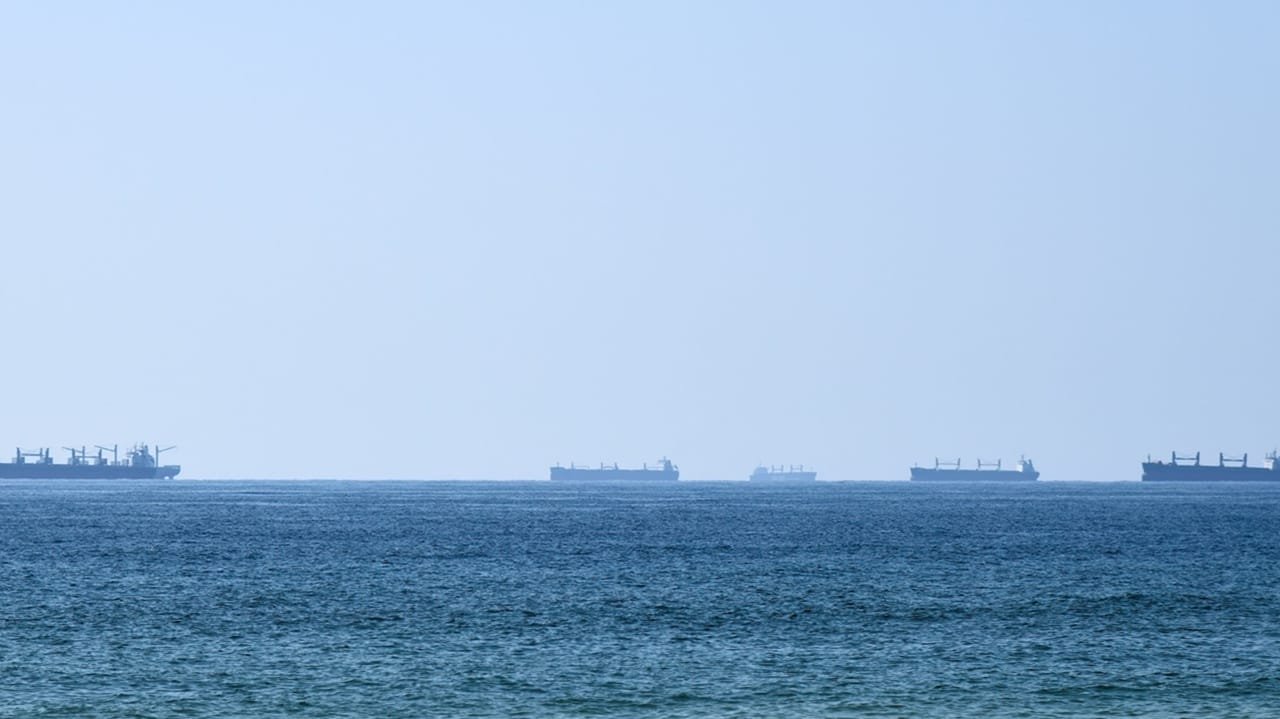
Commercial shipping in the Strait of Hormuz is facing another reported attack at the start of October, with a Kuwaiti very large crude carrier (VLCC) reported to have caught fire after being struck by an unknown projectile.
The UK Maritime Trade Operations (UKMTO) said it received a third-party report of a tanker being hit while transiting the Strait of Hormuz. The incident, which resulted in a fire, was reported at 17:50 UTC on 1 October. All crew members were reported safe, while the potential environmental impact remains unknown.
Security firm Vanguard Tech identified the vessel as the Kuwait-flagged VLCC Kazimah III, owned by Kuwait Oil Tanker Co (KOTC), according to data from Pole Star Global’s PurpleTrac database.
The incident marks the latest in a series of attacks targeting commercial vessels in one of the world’s most strategically important shipping corridors.
Attacks continue despite US claims over the waterway
The latest incident comes as the US maintains that it has made progress in reopening the Strait of Hormuz. US Central Command has said that thousands of vessels and around 1 billion barrels of oil have passed through the waterway in recent months.
Despite that claim, attacks on commercial shipping attributed to Iran continue.
At least 16 attacks on vessels were reported in the Strait during September, with tankers making up the majority of the vessels targeted. Four separate incidents occurred within a 24-hour period on 28 and 29 September.
Those attacks involved the Kuwait Oil Tanker Co VLCC Al Funtas, the Sinokor VLCC Mersin Prosperity, the Anglo-Eastern-managed VLCC Sinbad, and the ADNOC L&S-owned LR2 product tanker Al Ruwais.
The latest update from the Joint Maritime Information Center (JMIC), which incorporated the four attacks of 28–29 September, highlighted the continued security pressure facing vessels in the waterway.
According to the JMIC, activities attributed to Iran’s Islamic Revolutionary Guard Corps (IRGC) have included attacks and attempted attacks, as well as harassment involving UAV overflights, targeted surveillance of merchant vessels and occasional VHF radio hailing.
The organization said these activities indicate an ongoing Iranian effort to maintain a presence along key transit routes and pressure vessels navigating the Strait.
Vessel traffic remains difficult to assess
The actual number of ships continuing to transit the Strait of Hormuz remains disputed.
A large proportion of vessels are reportedly switching off their AIS transponders in an attempt to avoid detection and reduce the risk of being targeted by Iran. This makes it difficult to establish an accurate picture of traffic through the waterway.
The JMIC said independent tracking data showed single-digit numbers of vessels transiting in each direction. By contrast, US NCAGS data indicated average traffic of approximately 30 vessel transits per day over the preceding 96 hours.
The difference between the two datasets underlines the uncertainty surrounding current shipping activity in the Strait.
Owners remain reluctant to risk Hormuz transits
Despite the presence and support of US forces in the region, repeated attacks attributed to the IRGC have limited the number of shipowners willing to send vessels through the waterway.
Many of the vessels involved in reported incidents have connections to national oil companies operating in the Gulf region, while others include vessels belonging to the relatively new VLCC market entrant Sinokor and a small number of Greek shipowners.
These vessels are largely engaged in shuttle trades through the Strait, including ship-to-ship transfer operations in the Gulf of Oman.
The combination of heightened security risks and limited available tonnage has had a major impact on tanker markets.
Hormuz VLCC rates surge beyond $1 million a day
VLCC rates for voyages through the Strait of Hormuz have surged to more than $1 million per day as owners factor in the risks associated with operating in the area.
The resulting shortage of available tonnage has also pushed the wider VLCC market to unprecedented levels.
At the same time, pressure is mounting from major seafarer-supplying countries, particularly the Philippines and India, over the safety of their nationals working aboard vessels operating in the region.
Growing numbers of seafarers have reportedly been injured or killed in attacks, adding a human dimension to the increasingly costly and complex security situation surrounding commercial shipping through the Strait of Hormuz.