



Civilian shipping in the Middle East faced another night of heightened danger as reports emerged of new attacks on tankers and possible vessel strikes across the Arabian Gulf, further highlighting the growing risks created by the escalating confrontation between the United States and Iran.
Among the latest incidents, the master of a tanker reported that the vessel had been struck approximately 28 nautical miles southeast of Al-Faw, Iraq. All crew members were reported safe, and no environmental impact was recorded.
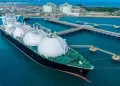
It remains unclear whether the reports refer to the same incident, but security firm Vanguard Tech said that the Panama-flagged VLCC New Andros had been struck by a drone while at anchorage in a nearby area. According to the company, the vessel was carrying around two million barrels of fuel oil when the attack occurred.
The strike sparked a fire onboard the tanker, although Iraqi response vessels later succeeded in extinguishing the blaze.
Elsewhere in the region, the UK Maritime Trade Operations (UKMTO) reported the sighting of a vessel listing while at anchor off the UAE. According to the report, the situation was “possibly indicating water ingress following an attack from an unknown projectile.”
Bunkering company Peninsula also confirmed that its tanker Hercules Star had been involved in an incident off Dubai while at anchorage. One person was killed in the incident, Peninsula said, while another crew member remains missing. A specialist team is continuing efforts to locate the missing seafarer.
Meanwhile, Qatar’s Ministry of Interior said on Twitter that a fire involving a marine vessel at Al Wakra Port had been brought under control. No injuries were reported, although authorities did not disclose the identity of the vessel or the cause of the fire.
The incidents reported across the Gulf come after claims by the Islamic Revolutionary Guard Corps (IRGC) Navy that it had struck two US Navy vessels and eight tankers in the Arabian Gulf. Iran said the attacks were carried out in retaliation for US strikes on five Iranian tankers on 8 September.
Iran also claimed to have targeted 10 vessels attempting to transit the Strait of Hormuz outside a corridor approved by Iranian authorities.
However, throughout the conflict, which has continued since 28 February, Iran has frequently overstated the number of attacks it claims to have carried out against ships, the number of successful strikes, and the extent of the damage caused.
The latest reports nevertheless reinforce concerns that shipping is becoming trapped in an increasingly dangerous cycle of retaliation between Tehran and Washington.
Following attacks on US Navy vessels on 5 September, US Central Command delivered a direct warning to Iran: “If you shoot at two of our ships, we will impose an even higher economic cost taking out three of yours.”
The Iranian vessels targeted during the subsequent US retaliatory strikes were civilian tankers.
Iran, for its part, has warned that what it describes as US harassment of Iranian shipping would trigger more severe strikes against American vessels operating in the region.
On 8 September, the chief of the General Staff of the Iranian Armed Forces further escalated the rhetoric, stating that attacks on Iranian tankers would be answered with attacks against US military bases in the Middle East.
The increasingly uncompromising language adopted by both sides points to a growing willingness to place merchant vessels and civilian seafarers at the centre of their respective military and political strategies.
A significant development over the past week has been the US Navy’s specific focus on disabling or destroying Iranian oil tankers, including vessels that were not attempting to breach the US blockade of Iranian ports.
The United States continues to maintain its blockade of Iran’s ports, while Iran insists that the Strait of Hormuz is being monitored and managed by its own forces.
As retaliatory measures continue to expand, commercial shipping and civilian crews operating across the Gulf face an increasingly volatile environment, caught between two military powers whose escalating responses are placing merchant vessels at ever greater risk.