



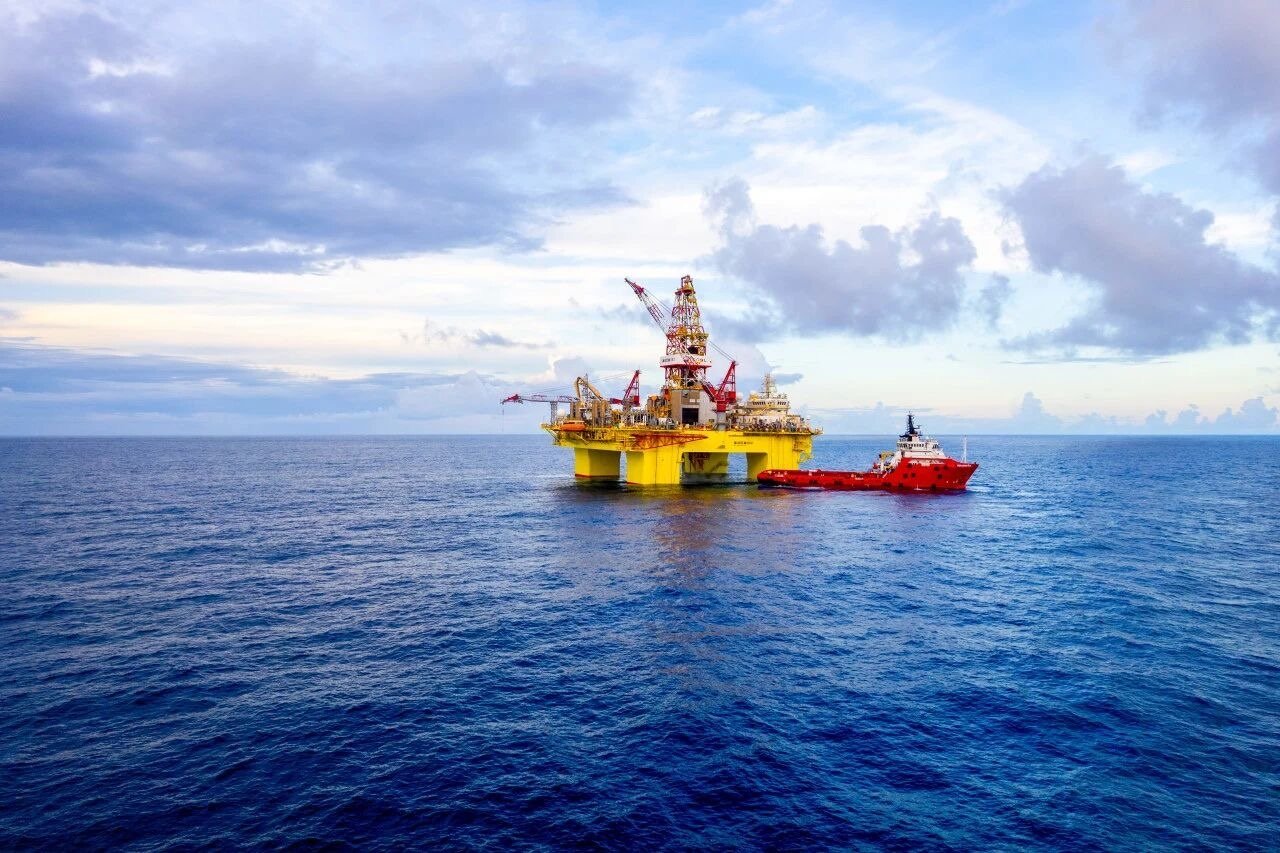
Tidewater is set to reinforce its position as the world’s largest owner and operator of offshore support vessels with the completion of its $500 million acquisition of Wilson Sons Ultratug Offshore. But for the US-based offshore services group, the transaction is not necessarily the end of its expansion strategy.
Speaking on the Seatrade Maritime News Podcast, Quintin V. Kneen, President, CEO and Director of Tidewater, detailed what the acquisition will bring to the company and outlined the group’s ambitions as it celebrates its 70th anniversary.
Tidewater has expanded rapidly in recent years through mergers and acquisitions. Its latest transaction, announced earlier this year, is progressing towards completion and will add 22 vessels to the company’s fleet, bringing the total to 225 vessels. Of those 22 vessels, 19 were built in Brazil, a factor Kneen considers particularly important for Tidewater’s development in the country.
“Brazil is going to be a very strong market over the next several years and this gives us a strong entry point with a great fleet, great people, well trained mariners,” he said during the podcast.
A stronger foothold in Brazil
The acquisition significantly changes Tidewater’s position in the Brazilian market. Until now, the company has operated in Brazil as an international player, leaving its vessels exposed to the possibility of being off-hired in favour of locally built tonnage under the country’s cabotage regulations.
The addition of 19 Brazilian-built vessels provides a much more established local presence.
“Now with this base of 19 vessels, we’re a permanent fixture in Brazil and it allows us to bring in extra vessels. When you have a Brazilian built vessel, you can bring in other vessels that are international-flagged and get that same protection. So, it’s great from that perspective,” Kneen explained.
The Brazilian vessels also offer operational advantages beyond their local status. All 19 were built to the same design and at the same shipyard. This commonality means Tidewater will be able to standardise equipment, making both crew training and maintenance more straightforward.
Completion expected in the third quarter
The transaction is expected to close during the third quarter. Tidewater has already secured antitrust approval, while work is currently underway on the transfer of bank debt, according to Kneen.
Once the transaction is completed, Wilson Sons Ultratug Offshore is expected to be fully integrated into Tidewater by early 2027.
The acquisition will mark another significant milestone for Tidewater. With the Brazilian fleet added to its operations, the company will become the world’s largest owner and operator of offshore support vessels. It will also be the oldest company in the sector, coinciding with its 70th anniversary this year.
Room for further consolidation
Despite reaching the top of the global OSV market, Tidewater’s scale remains relatively modest when measured against the overall industry. The company would hold only around 6% to 7% of the market following the Brazilian acquisition.
That leaves significant room for further expansion, and Kneen made clear that Tidewater is not closing the door on additional acquisitions.
“There’s a lot more consolidation that could occur in the industry. I don’t know that it will, but there’s definitely some fleets out there that I would enjoy bringing into the Tidewater family.”
The Wilson Sons Ultratug Offshore transaction therefore strengthens Tidewater on two fronts: it expands the fleet to 225 vessels while establishing a deeper and more permanent presence in one of the offshore sector’s key markets. At the same time, the company continues to see opportunities to participate in the wider consolidation of the OSV industry.