



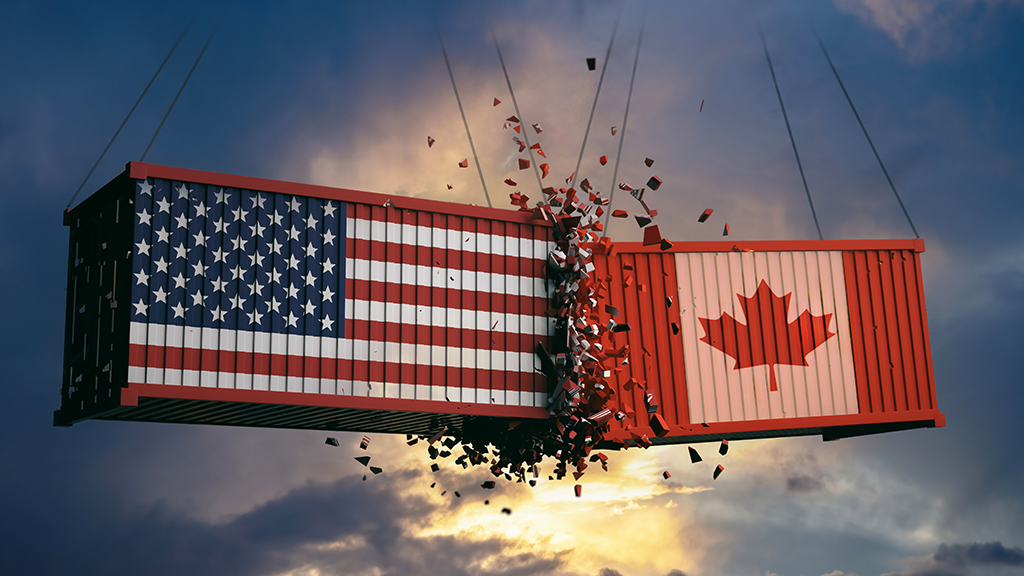
Canada has received a three-day reprieve from a new round of 50% U.S. tariffs after President Donald Trump announced Tuesday that the measures would be temporarily delayed while negotiations with Ottawa continue.
The tariffs, which were scheduled to take effect shortly after midnight Wednesday, would have affected approximately $28 billion worth of Canadian goods, ranging from hockey sticks and honey to wine and cement.
Trump said on social media that he was pausing the tariffs because Canada and the United States had reached a preliminary deal, subject to finalizing the necessary documents.
The White House proclamation said Canada had committed to addressing several measures that Washington considers discriminatory against American products. These include provincial restrictions on U.S. alcohol, Canada’s quota system for tariff-free American vehicle imports and the country’s dairy supply-management system.
The U.S. Trade Representative said the proposed agreement would include broader market access for American goods, economic-security commitments and alignment on digital trade.
Prime Minister Mark Carney confirmed that the two countries had made “substantial progress” but stressed that negotiations were not yet complete.
While Ottawa continues discussions with Washington, Carney said Canada remains focused on strengthening its domestic economy and reducing its vulnerability to external trade pressures.
The temporary pause has been welcomed by Canadian business groups, although they warned that it does not provide the certainty that would come with a finalized agreement.
Candace Laing, president and CEO of the Canadian Chamber of Commerce, said the extension provides short-term relief but emphasized that businesses remain in a state of uncertainty.
Dan Kelly, president and CEO of the Canadian Federation of Independent Business, also described the potential removal of the 50% tariff threat as a positive development. However, he said businesses still need clarity on existing U.S. tariffs affecting sectors such as steel, aluminum, lumber and automobiles.
Alcohol and supply management remain key issues
The dispute over American alcohol products is among the issues highlighted by Washington. Several Canadian provinces removed U.S. spirits from government-controlled liquor stores after earlier rounds of tariffs were introduced.
According to the Distilled Spirits Council of the United States, exports of American spirits to Canada have fallen by more than 70% since the provincial restrictions were introduced.
Ontario Premier Doug Ford has previously indicated that the province could consider restoring American alcohol products to store shelves if a broader agreement protects key Canadian industries, including steel and automotive manufacturing.
Canada’s supply-management system also remains a sensitive issue. Carney has reiterated the federal government’s support for the system, which protects domestic dairy and other agricultural sectors through production controls and import restrictions.
Keystone XL adds another layer to negotiations
Trump also raised the Keystone XL pipeline in his comments, suggesting the energy project could form part of the broader agreement. However, Carney’s statement did not mention the pipeline, leaving uncertainty over how prominently the project features in the current negotiations.
The pipeline was originally intended to transport oil from Alberta to Nebraska. Former U.S. president Joe Biden revoked its permit after taking office, citing long-standing environmental concerns. Trump has since sought to revive parts of the project and signed an executive order earlier this year concerning permits.
The Canadian and U.S. negotiating teams now have three additional days to finalize an agreement before the proposed 50% tariffs could take effect.
For businesses on both sides of the border, the immediate priority remains the same: securing greater certainty for cross-border trade and avoiding another escalation in North America’s increasingly complicated tariff environment.