




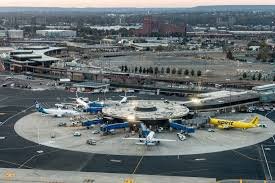
US air freight forwarders, airlines and wider supply chain organisations are raising concerns over potential plans to scale back Customs and Border Protection (CBP) operations at key US ports of entry, warning that such measures could trigger widespread disruption across time-critical logistics networks.
According to reports, the US Department of Homeland Security (DHS) is considering reducing or suspending CBP processing of international flights at so-called sanctuary cities, where local authorities have limited or restricted cooperation with federal immigration enforcement.
The proposal has prompted a strong reaction from the US Airforwarders Association (AfA), which is calling on DHS and CBP to maintain current staffing levels at ports of entry and to consult industry stakeholders before any operational changes are introduced.
The association warned that any reduction in processing capacity could force airlines to divert flights to alternative gateways, placing additional pressure on already busy airports and creating ripple effects across supply chains.
“Any significant reduction in cargo processing capacity at major gateway airports would create immediate disruption throughout time-sensitive supply chains,” said Brandon Fried, executive director of the AfA.
“CBP cargo operations are not merely an administrative processing function; they are a critical part of our national security and economic resilience.”
AfA stressed that CBP clearance plays a vital role in the movement of essential goods including pharmaceuticals, medical devices, manufacturing components, e-commerce shipments, perishables, and other time-sensitive cargo that depends on the speed and reliability of air freight.
The organisation also highlighted the structural rigidity of air cargo networks, noting that routing decisions cannot be changed overnight due to tightly integrated airline schedules, warehouse capacity constraints, trucking connections, bonded facility agreements and established customs processes built around major gateways.
“Airports serve businesses, consumers, and communities far beyond the cities where they are located,” Fried added. “A disruption at just one major gateway would have national consequences for supply chains that depend on secure and timely clearance.”
Concerns have also been echoed by a wider coalition of industry bodies, including airlines represented by IATA and Airlines for America, as well as supply chain group TIACA, which jointly signed a letter alongside 19 organisations warning of broader systemic impacts.
“Any reduction in Customs and Border Protection operations at major US gateway airports threatens to cause unnecessary chaos throughout the nation’s air transportation system,” the groups stated.
“Aviation networks are highly interconnected, and operational changes at a small number of gateway airports will quickly ripple across the country, negatively impacting travellers, cargo shipments, supply chains, and the communities that depend on those connections.
“Airports and airlines rely on stable, predictable federal inspection services to keep people and commerce moving safely and efficiently. We urge DHS to avoid actions that would create unnecessary operational and economic consequences for communities nationwide.”
The discussions come as the Trump administration considers possible adjustments to CBP operations following protests at Immigration and Customs Enforcement (ICE) detention centres, particularly in Newark, New Jersey.
If implemented, the proposed changes could impact major US entry gateways including New York, Newark, Los Angeles, Chicago and San Francisco—some of the country’s most critical hubs for international air cargo flows.







