



The primary reason for choosing air cargo is the speed in the movement of goods. But speed alone, whether of the aircraft or the carrier, is not a guaranty that a shipment will arrive at its final destination on time. Much of the journey is determined by what happens beyond the airport, particularly across the middle and last mile, where high delivery costs, traffic congestion, limited capacity, failed deliveries and inefficient connectivity can all lead to costly delays.
The drive to automate the transportation of cargo is on the rise, with the aim of making these stages more seamless and efficient. But the last mile segment of air cargo shipments does not come without a number of persistent challenges. Total Cargo Expertise (TCE) said traffic congestion, limited delivery capacity, customs procedures and poor coordination between different service providers are still among the main causes of delays.
“The solution begins with a wider view of the journey of the cargo,” says Sarah Scheibe, Managing Director of TCE.
“The key is to look at the entire cargo journey, not just the airport-to-airport or RFS operation. This is where the Total Cargo Management (TCM) approach comes into play, viewing the different stages of the cargo operation as a single integrated process. “If we can improve the handover between the airline, handler, forwarder and final-mile or trucking provider, we can take out a lot of unnecessary waiting time,” said Scheibe.
TCE is composed of a team of fully certified professionals with extensive experience in all areas of cargo operations and airline safety management.
But are these the only obstacles between the cargo and its final destination?
The journey can get more and more complex as shipments go through several handovers between different logistics stakeholders. Cathay Cargo said such transitions could add further delays and complexity, especially if information is stored in different systems or needs to be transferred between different parties.
“For instance, there have been talks in Hong Kong on platforms like a Trade Single Window (TSW) and Port Community Systems (PCS) that can help enhance coordination, transparency and information sharing in the logistics ecosystem.
Aircraft on Ground (AOG) situations are another major last-mile challenge for airlines, besides the need for consistency of handling, for Magma Aviation.
“If an aircraft has a technical problem, there could be hundreds of thousands of dollars of time-sensitive cargo on board that needs to get to its destination rapidly. “Air freight is very expensive so it is essential that we fix the disruption as soon as possible,” said Magma Aviation CEO, Peter Kerins.
When an aircraft is stranded in a remote location such as central Africa, it becomes even more complex with the difficulty of sourcing and transporting spare parts.
Technology is increasingly stepping in to solve these issues, with automation promising faster, more efficient and better connected cargo operations.
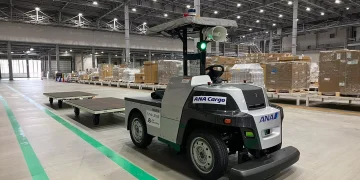
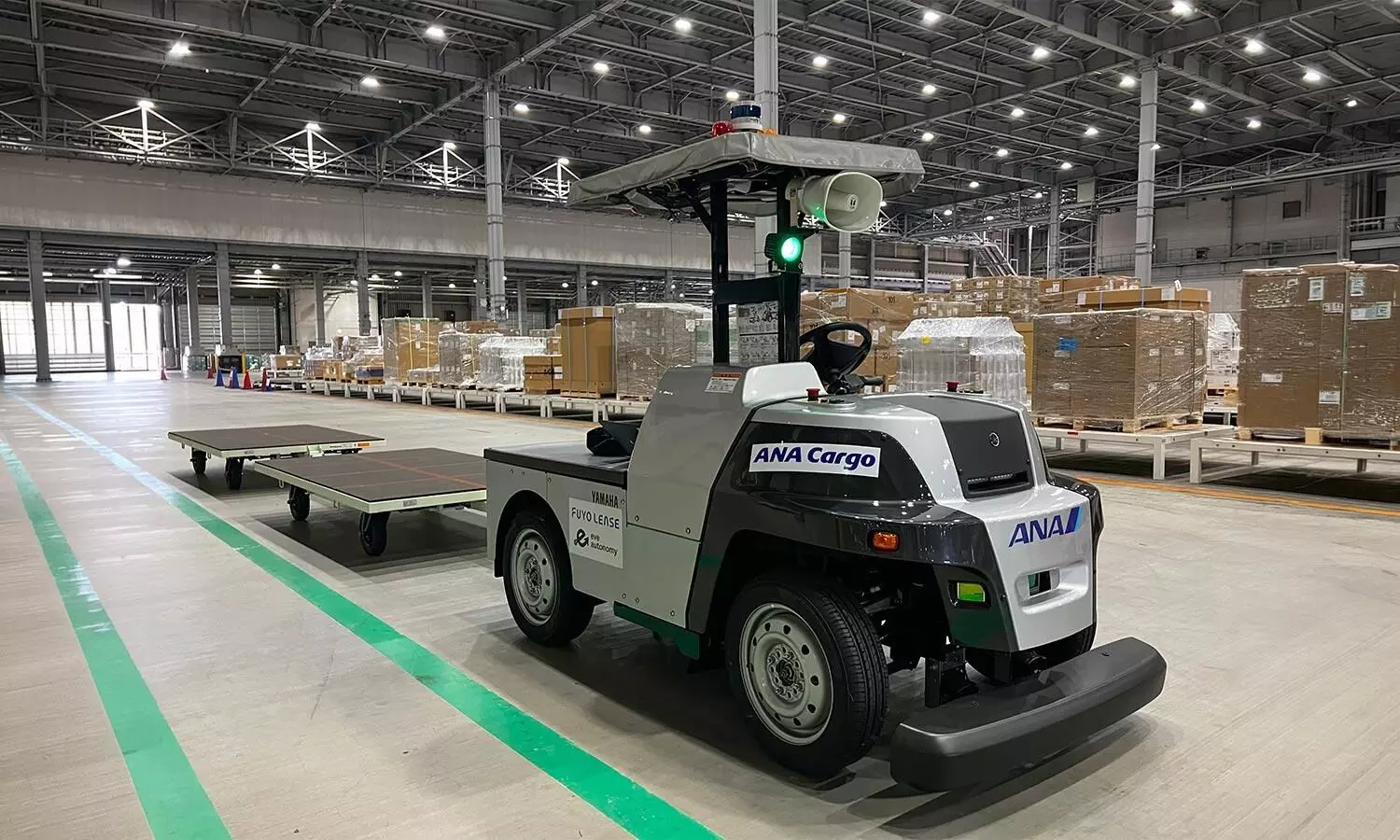
Earlier this year, ANA Cargo began Level 4 autonomous cargo transport at Narita Airport. The initiative is intended to address labor shortages and move toward what the company calls “smart operations”, said Jumpei Kikushima from Global Service Planning at ANA Cargo.
“Essentially, the main goal is to overcome the shortage of workers and realize ‘smart operations’. ANA is aiming to create a ‘Smart Cargo Model’ to drastically simplify operations. “The additional capacity created by automation will allow us to focus human resources on specialized cargo that requires very delicate handling such as pharmaceuticals and semiconductor manufacturing equipment,” Kikushima said.
Meanwhile, DoorDash, a door-to-door delivery technology and logistics company, launched its own drone platform, DoorDash Air, in July 2026.
The program is based on the company’s Autonomous Delivery Platform, a software layer that routes each order to the most efficient delivery mode, whether that is a Dasher, Dot, drone, AV or sidewalk robot across its third-party partners.
As our multimodal network grows, more high-value, complex deliveries for all delivery types are required and more order types require more order solutions. Dashers can handle deliveries like complicated apartment buildings and alcohol deliveries late at nite that require ID checks, while Dot might be better for a small order on a quiet residential street. Drones help fill those gaps further with smaller orders, mid-range in distance, and time-sensitive, like a coffee order or a missing grocery ingredient for a recipe,” DoorDash said.
But Kerins believes drones and autonomous delivery options do have a positive role in the air cargo industry.
Cathay Cargo also sees automation playing a bigger role in reducing transit times, especially in physical cargo handling.
“Automation will be the key to reducing transit times, especially in physical cargo handling. “Ground handlers will need to keep investing in technologies that could accelerate processes. We are already seeing trials of automated solutions for cargo dimension-capture to speed up cargo acceptance as well as robotic build-up systems. Cathay Cargo said, “These innovations have the potential to significantly cut handling times in the future.”
One of the most immediate opportunities, Scheibe says, is to ensure the right information is there before the cargo arrives. This would enable teams to plan ahead and operate more efficiently.
Drones and human-like robots are very important for the future, especially drones, but they are not a big part of TCE’s current operations or most of its suppliers’ operations. “The more immediate opportunities for now are geared toward better data integration, automation of existing processes and more robust real-time visibility across the supply chain.”
But automation is only as good as the data behind it.
Therefore correct shipment data and reliable identification are crucial for the successful operation of automated cargo handling. It is an important duty of freight forwarders to ensure that shipment records and labels are complete and accurate, as automated systems depend heavily on reliable underlying data.
The carrier says customs authorities will also be central to this transformation. For example, in a future ONE Record environment, customs agencies could retrieve the required shipment information directly from a shared data ecosystem, potentially streamlining and accelerating clearance processes.
More generally, wider use of industry standard messaging and data exchange protocols across the supply chain will be critical to establishing seamless connectivity between airlines, ground handlers, freight forwarders, customs authorities and last mile providers.
“To truly make first-mile and last-mile automation effective, it is crucial to automate and accelerate connections at intermediate hubs such as airports. “We will do our part as we advance in this changing ecosystem, combining automated cargo acceptance and transport technologies with the specialized human handling needed for special cargo,” Kikushima said.
“The most important thing is to integrate the individual operators through automation technologies and a shared data platform, not one company trying to cover the entire supply chain,” she added.
It is this connectivity that she said will complete a truly end-to-end autonomous logistics ecosystem.
But as the logistics sector increasingly recognizes the advantages of advanced technologies, their fast adoption also sparks questions about the future of human labor.
On August 21, South Korea’s Hyundai Motor labor union began its first full-scale strike in 10 years after wage negotiations broke down. The union is demanding higher wages, a higher retirement age and stronger job protections amid concerns about the impact of artificial intelligence and automation on jobs.
Hyundai’s plans to deploy Atlas humanoid robots, created by its subsidiary Boston Dynamics, at its U.S. plants add another wrinkle to the discussion about how automation might alter the future of work.
But for Kerins technological change is inevitable.
“It’s going to happen, whether it’s AI, advanced technology, robotics or whatever comes next. We should not resist it but rather embrace the change and figure out our place in the new world. “It’s about getting on with technology and learning to adapt as it continues to change the way we work,” he said.
“The world is getting more efficient all the time and progress is hard to stop,” he said. AI is already transforming the way we see things, and robotics will probably go the same way.
Automation can help to minimize the risk of human error and increase efficiency. Robots and AI don’t have limitations such as illness, lateness or the need for breaks.
DoorDash, by contrast, continues to move into new categories to meet changing delivery demands, suggesting the growing need for a more flexible, multimodal approach to fulfillment.
“Dashers remain a core part of the network, and they perform the majority of our millions of deliveries each day, including orders that autonomy can’t handle, like navigating up apartment buildings and fulfilling large orders.” DoorDash’s core business is growing 20%+ year-over-year from 10 billion+ total deliveries. We are adding brand new categories to the platform – electronics, groceries, cosmetics etc. Deliveries are demanding more capacity than any single modality can provide.
As automation, artificial intelligence and drones continue to reshape the movement of cargo, the future of autonomous logistics won’t just be about faster machines or more advanced robots.
“Seamless data sharing, stronger connectivity and closer collaboration between every stakeholder will continue to be critical to reducing delays and creating a truly end-to-end cargo experience.” As technology advances along the path to autonomy, the ultimate success of that journey will come down to how well every piece of the logistics ecosystem is connected.