



EcoCeres has taken a significant step in accelerating aviation decarbonisation in China with the launch of a sustainable aviation fuel (SAF) pilot program known as “Project Spark”, developed in collaboration with key industry stakeholders.
The initiative brings together a powerful consortium including the Second Research Institute of the Civil Aviation Administration of China (CASRI), China National Aviation Fuel Group (CNAF), China Southern Airlines, Air China Cargo, Sichuan Airlines and Huarong Chemical. Together, they have successfully built a fully integrated, closed-loop SAF green value chain — a first of its kind in the Chinese market.
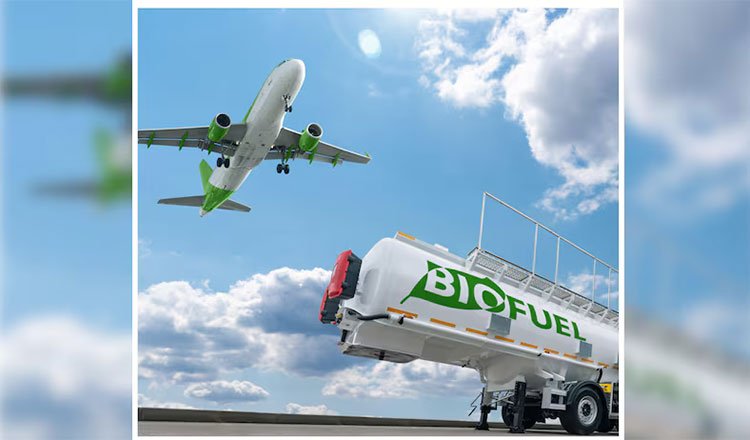
On 16 March, SAF produced at EcoCeres’ Zhangjiagang facility and blended by CNAF was used to refuel multiple commercial flights at Chengdu Shuangliu International Airport. Beyond fuel deployment, the project also enabled the compliant transfer of environmental credits via AnchorTrace, a Scope 3 SAF environmental credit registration and retirement platform jointly developed by CNAF and CASRI.
For EcoCeres, the project represents more than a technical achievement. It is a strategic milestone in shaping China’s emerging SAF ecosystem.
Matti Lievonen, CEO of EcoCeres, described the launch as a defining moment for sustainable aviation in the region. He emphasised that combining waste-to-fuel technology with the scale and operational expertise of major aviation players allows climate ambitions to be translated into real, operational solutions.
The initiative also sets several important benchmarks for China’s SAF market. It includes the pilot implementation of an independent SAF sustainability certification system, the first application of AnchorTrace to allocate Scope 1 emissions to airlines and Scope 3 emissions to corporate customers, and the conversion of SAF-related green premiums into low-carbon investments shared across stakeholders. This last element is particularly critical in addressing one of the industry’s biggest barriers: the cost of scaling SAF.
EcoCeres produces its SAF from waste and residue feedstocks using proprietary technology, delivering lifecycle greenhouse gas emission reductions of up to 90% compared with conventional jet fuel. By integrating SAF into existing fuel infrastructure, the project demonstrates that decarbonisation can be achieved without compromising operational reliability, safety or efficiency.
As one of the driving forces behind Project Spark, EcoCeres is reinforcing its position as a key renewable fuels platform in Asia, linking production capabilities with major aviation partners across China. The company has also confirmed its intention to continue working closely with airlines, fuel suppliers, regulators and research institutions to support long-term net-zero ambitions across the region.
Beyond China, EcoCeres is already supplying SAF to leading international carriers including Air New Zealand, British Airways, Cathay Pacific and Qantas, underlining its growing role as a global partner in aviation decarbonisation.