



The United States is stepping up its efforts to rebuild its domestic shipbuilding industry, and it is now turning to one of its key industrial allies for support.
This week, the U.S. Department of Commerce and South Korea’s Ministry of Trade, Industry and Resources signed a Memorandum of Understanding to launch the Korea-U.S. Shipbuilding Partnership Initiative (KUSPI). The agreement is designed to deepen cooperation between the two countries in commercial shipbuilding, workforce training, industrial modernization, and maritime manufacturing investment, according to the International Trade Administration.
At the centre of the initiative will be a new Korea-U.S. Shipbuilding Partnership Center, which will be funded and staffed by Seoul and is expected to open later this year in Washington. The centre will act as a coordination hub between government bodies, industry players, and research institutions from both countries.
Its scope will include facilitating foreign direct investment into the U.S. maritime industrial base, supporting workforce development programmes, improving shipyard productivity, and enabling technical exchanges between American and Korean stakeholders.
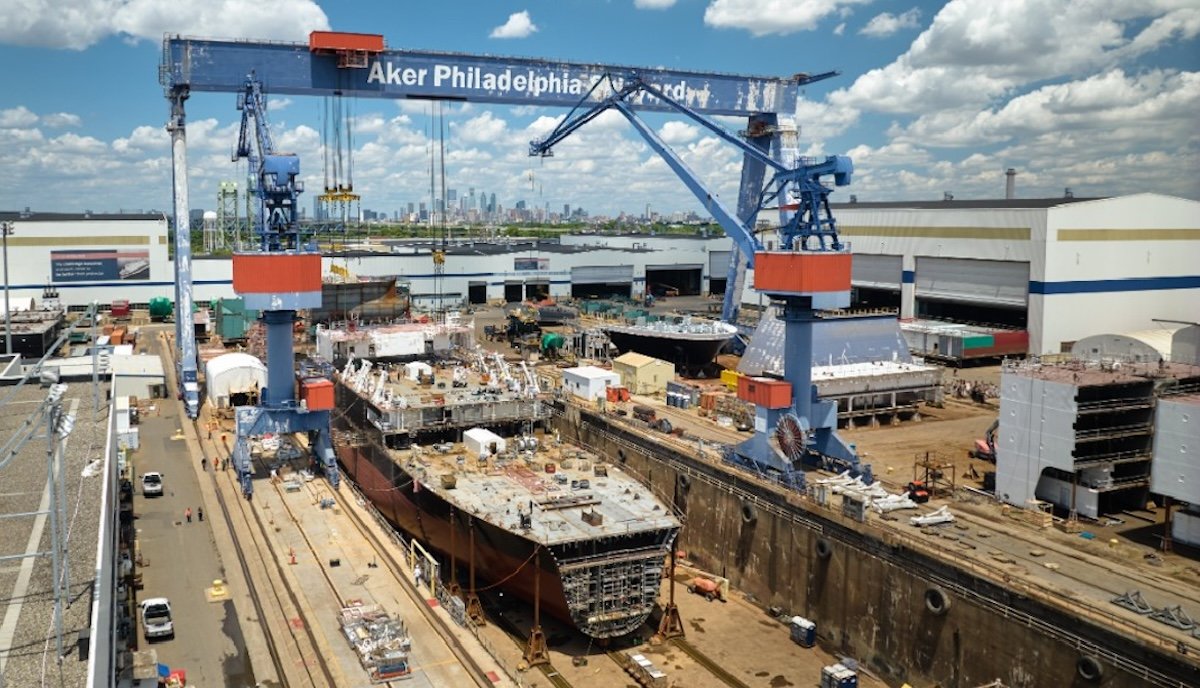
The move comes as Washington continues to push forward its broader Maritime Action Plan aimed at revitalising U.S. shipbuilding capacity. South Korea, currently the world’s second-largest commercial shipbuilder after China, is expected to play a central role in that strategy. One example of existing cooperation is Hanwha, a major Seoul-based industrial group, which already operates a shipyard in Philadelphia.
Under the new agreement, the U.S. Department of Commerce will help connect the partnership centre with American shipbuilders, suppliers, universities, and research institutes, while also acting as the federal government’s main point of contact. South Korea, meanwhile, will coordinate engagement across its own government and industrial ecosystem.
According to the International Trade Administration, the initiative builds on ongoing cooperation between the two countries in strategic industries and reflects a broader push to strengthen allied industrial capacity, attract investment, and expand collaboration in advanced manufacturing sectors.