



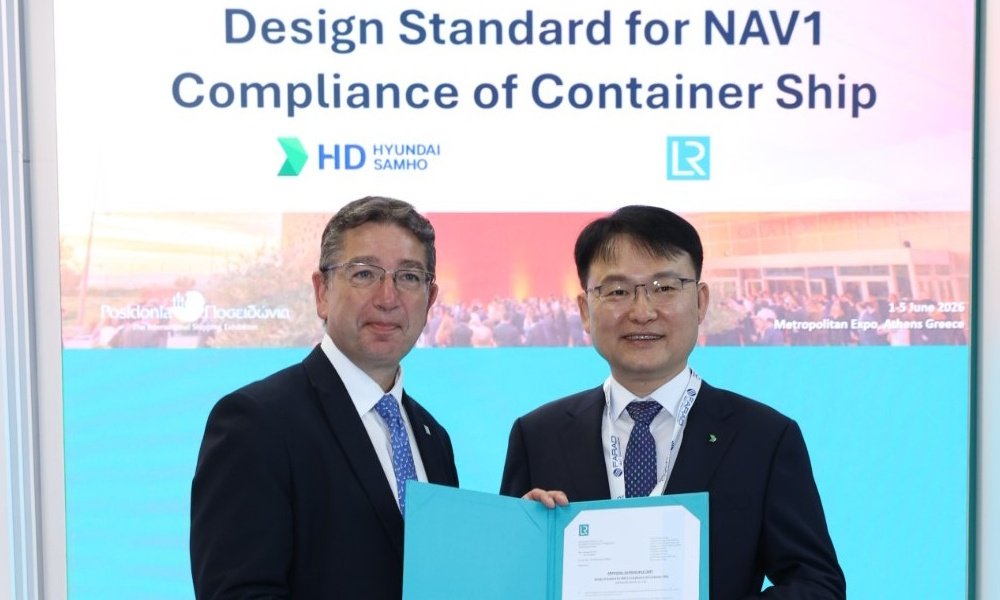
Lloyd’s Register has granted Approval in Principle (AiP) to HD Hyundai Samho for a new container ship design standard aimed at improving cargo capacity while maintaining compliance with NAV1 bridge visibility requirements.
The concept is based on a remote camera system providing a continuous 360-degree field of view around the vessel, addressing a long-standing operational constraint in container shipping: as stack heights increase to maximise cargo efficiency, visibility from the wheelhouse is often reduced, creating blind spots that can limit safe navigation.
Under NAV1 notation requirements—which mandate an unobstructed 360-degree field of view from the bridge—this limitation can directly restrict how many containers a vessel is allowed to carry. The new approach seeks to overcome that constraint by extending situational awareness beyond traditional bridge visibility limits.
The system combines digital design integration, structured risk assessment and configuration validation to demonstrate how camera-based navigation support can satisfy regulatory expectations while enabling higher container intake. The goal is to enhance operational safety and cargo optimisation in growingly congested and complex shipping environments.
For shipyards, the Approval in Principle offers a more structured, and clearer pathway to certification. For operators, it suggests a potential change in the way digital bridge systems can be deployed without compromising compliance or regulatory confidence. By embedding classification requirements early in the design process, the framework also reduces the risk of costly redesigns later in development.
“The maritime industry is moving quickly towards more digital and connected operations. What owners and builders need now is clarity on how these systems will be assessed and approved. This work helps bridge that gap, turning new technology into something that can be applied with confidence,” said Sung-Gu Park, president for northeast Asia at Lloyd’s Register.
“This collaboration strengthens our capability to integrate digital navigation technologies into future newbuilds,” added Hakmu Shim, EVP at HD Hyundai Samho. “Developing the concept alongside classification requirements from the outset reduces technical risk and supports more efficient delivery of advanced vessel designs. Most importantly, it enables us to offer clients unparalleled container loading efficiency and stronger economic value.”
- Latest
- Trending
ADVERTISEMENT