



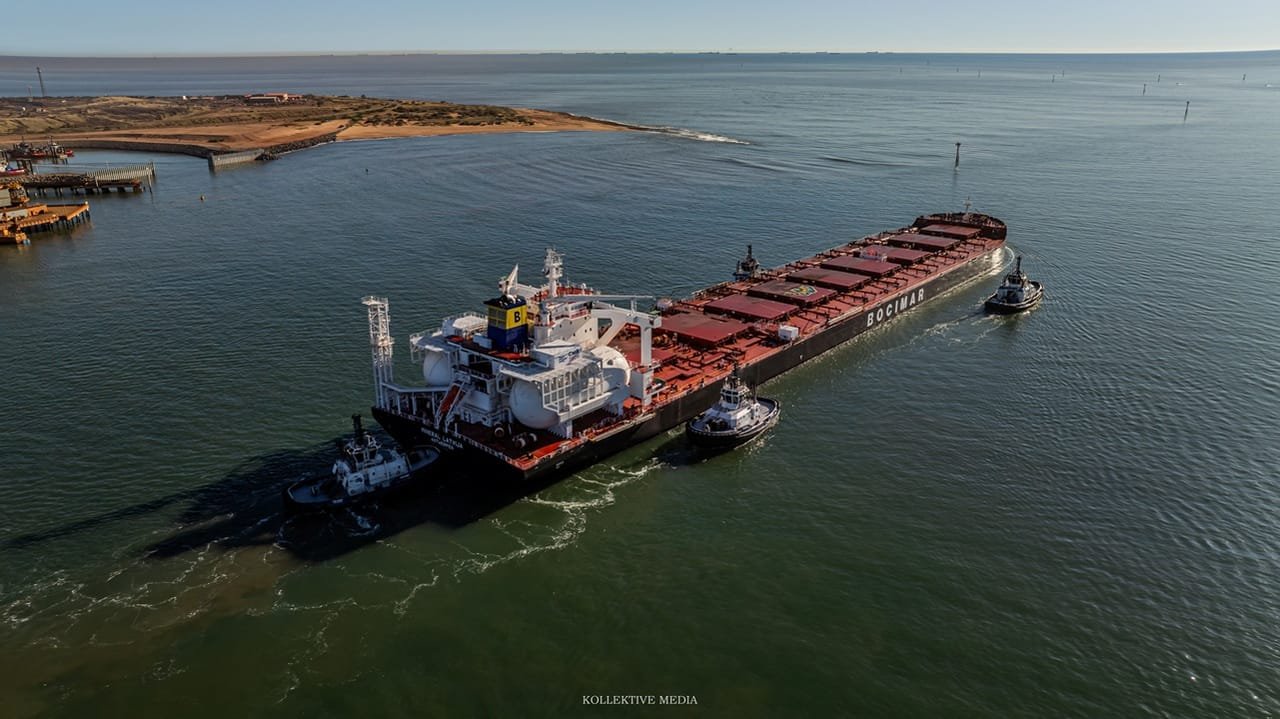
Fortescue is pushing further into ammonia-powered shipping through a new charter agreement with CMB.TECH, covering up to 12 Newcastlemax bulk carriers designed either for ammonia dual-fuel operation or future conversion.
The agreement includes up to three 210,000 dwt ammonia dual-fuel Newcastlemax vessels, expected to enter service with CMB.TECH’s dry bulk arm Bomicar by the end of 2026. In addition, Fortescue will charter nine additional Newcastlemax bulkers that are ammonia-ready, allowing later conversion to dual-fuel operation depending on infrastructure availability and fuel supply development.
Fortescue continues to position itself as one of the most active industrial advocates for ammonia as a marine fuel. The company has already tested the concept through its Green Pioneer demonstration vessel and a converted offshore support vessel operating on ammonia, aimed at validating real-world feasibility beyond pilot projects.
Katie Charuga, Director Integrated Operations at Fortescue, stressed the company’s focus on execution rather than discussion: “The shipping industry doesn’t need more talk. It needs action.” Ammonia has great potential to reduce emissions but Fortescue admits it also has major safety issues given its high toxicity, particularly in the case of leaks or accidents during bunkering operations, posing dangers to crews and nearby communities.
However, the company says its trials have shown ammonia can be safely applied in controlled maritime environments despite these challenges. The next step, according to Fortescue, is scaling up green ammonia production and expanding infrastructure to support wider adoption in global shipping.
The two companies estimate that if all 12 vessels operate on ammonia fuel, carbon dioxide emissions could be reduced by approximately 250,000 tonnes per year compared with conventional marine fuels.
CMB.TECH is also actively pursuing decarbonisation through alternative fuels. CEO Alexander Saverys highlighted the long-standing relationship between both groups: “Fortescue and Bocimar have built a strong partnership over more than two decades, grounded in shared values and a clear commitment to decarbonise shipping. This agreement marks an important step in showcasing ammonia as a viable marine fuel and advancing the transition to zero-emission shipping. It also sends a powerful signal to the market, particularly at a time when there is doubt about the decarbonisation of shipping: our sector can decarbonise at scale.”
The agreement reinforces growing industry momentum around ammonia as a future marine fuel, while also highlighting the operational, safety, and infrastructure hurdles that will shape its deployment across global bulk shipping.
- Latest
- Trending
ADVERTISEMENT