



Alberta has officially taken a major step toward building a new pipeline to Canada’s West Coast, with Premier Danielle Smith announcing a proposed route and key industry partners only hours after Prime Minister Mark Carney unveiled a new agreement with British Columbia aimed at moving the project forward.
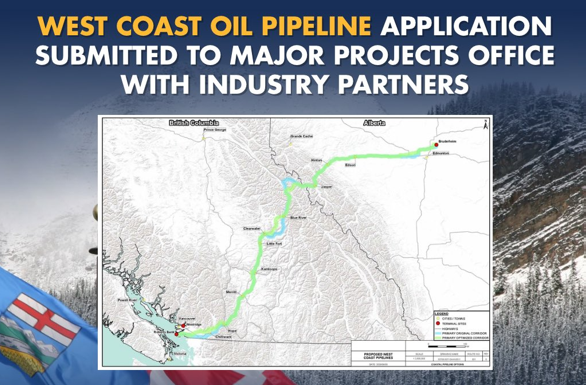
Standing alongside Carney in Calgary, Smith confirmed that Alberta has submitted its proposal to Ottawa’s Major Projects Office. The project, now known as the West Coast Pipeline, is expected to follow much of the existing Trans Mountain corridor, running from Bruderheim, northeast of Edmonton, to a marine terminal in Delta, British Columbia, just south of Vancouver.
If completed, the pipeline would be capable of transporting more than one million barrels of oil per day, giving Canadian producers greater access to fast-growing Asian markets.
Smith described the project as a long-term economic opportunity for both Alberta and Canada, saying it has the potential to generate billions of dollars in revenue while creating new opportunities for Indigenous communities that choose to participate in the development.
According to Alberta’s proposal, the project is expected to cost between $35.2 billion and $43.7 billion, including contingency funding. The province has already invested $18.3 million in planning work.
The Alberta government also confirmed it intends to develop the pipeline in partnership with Trans Mountain Corporation, the federally owned pipeline operator, and Pembina Pipeline, one of Canada’s largest energy infrastructure companies.
Carney said using a route that largely follows the existing Trans Mountain pipeline makes practical sense because much of the infrastructure is already in place and the corridor provides direct access to international markets.
Earlier in the day, Carney and British Columbia Premier David Eby announced a separate agreement designed to reduce provincial concerns surrounding the project.
While Eby stopped short of endorsing the pipeline, he said British Columbia would not challenge the project in court if it proceeds. In return, Ottawa agreed to maintain the oil tanker ban along B.C.’s northern coast, assume financial responsibility for potential environmental liabilities and spills, and provide compensation to British Columbia for the environmental risks associated with hosting the pipeline.
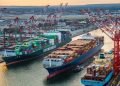
As part of the agreement, the federal government has pledged $10 billion to upgrade Roberts Bank Terminal in Delta, where the proposed pipeline would terminate. The investment is designed to boost the terminal’s capacity, strengthen Canada’s trade links through the West Coast and help accommodate rising export volumes.
According to Alberta’s submission, the terminal would also require new infrastructure capable of handling large crude oil tankers, including two additional loading berths.
Smith and Carney also confirmed that negotiations are progressing on the Pathways Alliance carbon capture project, another major energy initiative that has been closely linked to Alberta’s broader strategy for expanding oil exports while reducing emissions.
The proposal has already become part of Canada’s wider political debate. Conservative Leader Pierre Poilievre welcomed the idea of another pipeline to the West Coast but criticised Carney for keeping the northern oil tanker ban in place. He argued that Canada should be doing more to expand its export infrastructure and allow the private sector to move projects forward more quickly.