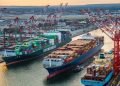




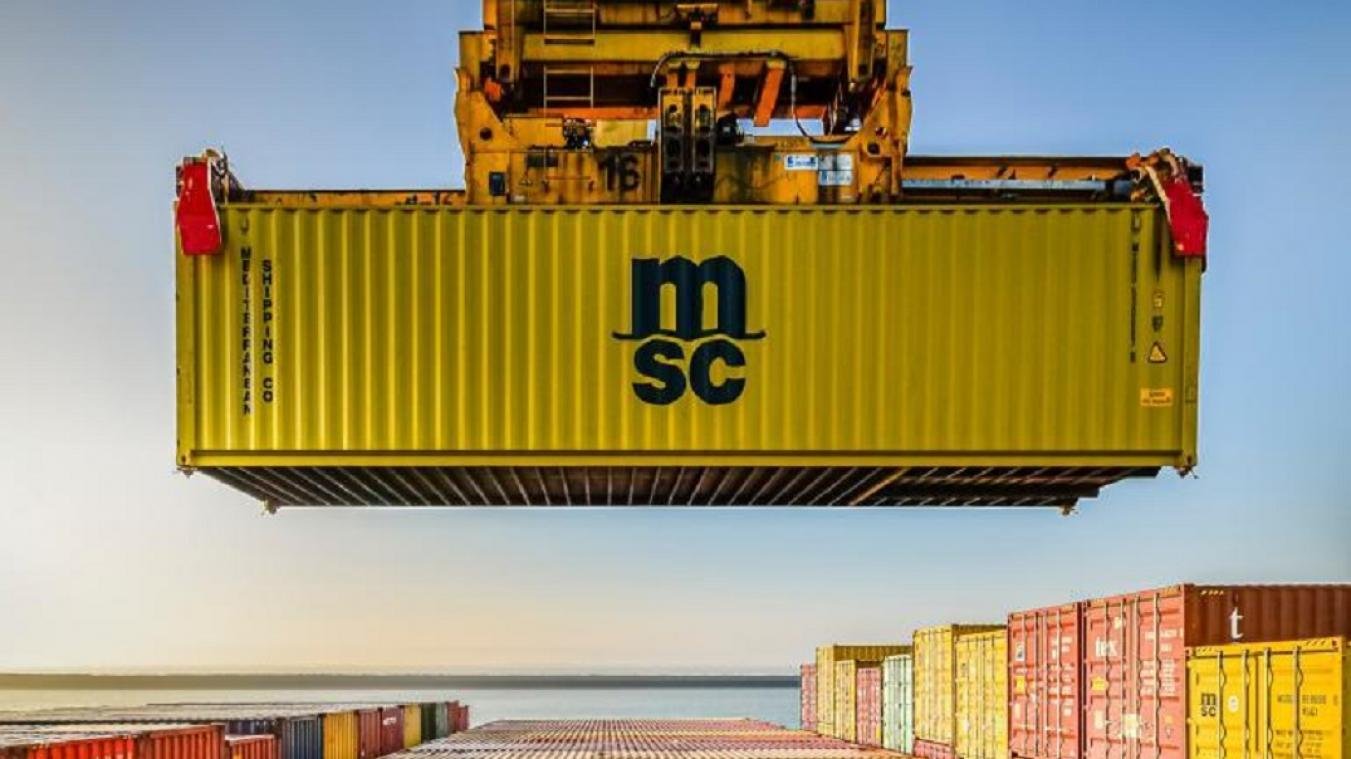
Container shipping capacity on the main export routes from Asia has largely recovered after the disruption caused by the Iran conflict, but that has done little to bring freight rates back down.
According to market analyst Xeneta, capacity on both the Asia-Europe and Asia-U.S. trade lanes has returned to levels comparable with those seen a year ago. On the transpacific route, available capacity from the Far East to the U.S. West Coast has even reached a record high, averaging around 350,000 TEUs over four weeks.
Normally, additional capacity would ease pressure on prices. Instead, spot rates have continued to rise. By July 3, rates from Asia to the U.S. West Coast had climbed to $6,639 per FEU, up 14% in just one week and 253% higher than they were before tensions escalated around the Strait of Hormuz at the end of February.
Peter Sand, Chief Analyst at Xeneta, said the transpacific market remains exceptionally strong despite the return of vessel capacity.
The increase in available space has been driven in part by MSC’s decision to reinstate its Pearl service in mid-June, adding around 6,200 TEUs of weekly capacity between Yantian and Long Beach. Yang Ming and ONE have also introduced additional sailings to meet demand.
The picture is similar on the Asia-Europe trade lane.
Although capacity there has fluctuated less than on the transpacific route, freight rates have continued to move sharply higher. Spot rates reached $5,377 per FEU on July 3, more than double the levels seen in early March, when prices were hovering around $2,500 per FEU.
Other major routes have followed the same trend.
Capacity from Asia to the U.S. East Coast increased by 9% over the past week, while spot rates are now 215% higher than they were before the Iran conflict. On services to the Mediterranean, capacity edged up by 1.7%, yet freight rates have still risen by 103% since the beginning of March.
Even westbound Atlantic services have seen prices recover. Spot rates climbed 7% over the past week to $2,523 per FEU, leaving them 71% above pre-conflict levels.
According to Sand, the additional capacity is helping cargo move more reliably, but it is not yet enough to reverse the upward trend in freight rates. He expects prices on the main east-west trades to continue rising at least through the middle of July.
Drewry shares a similar outlook.
The consultancy noted that carriers continue to introduce General Rate Increases (GRIs) and Peak Season Surcharges (PSS) in anticipation of strong cargo volumes. Among them, HMM plans to introduce a $3,000 per 40-foot container peak season surcharge from July 15.
Drewry also pointed to strong seasonal demand and higher operating costs linked to geopolitical tensions as the main factors keeping rates elevated across east-west trades.
Although the temporary agreement between the United States and Iran has allowed shipping through the Strait of Hormuz to resume to some extent, uncertainty remains.
Vessel movements through the strategic waterway continue to be closely monitored, particularly after ship escort operations were suspended following an attack on a container vessel near Oman. According to Drewry, the ongoing security risks in the Middle East continue to weigh on market sentiment and are helping to keep freight rates at unusually high levels.